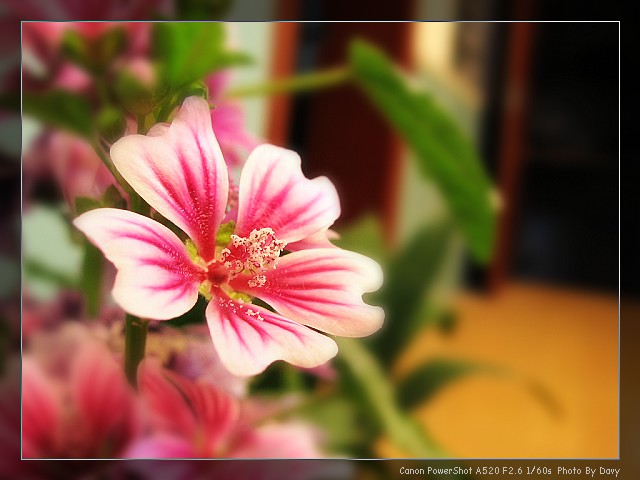
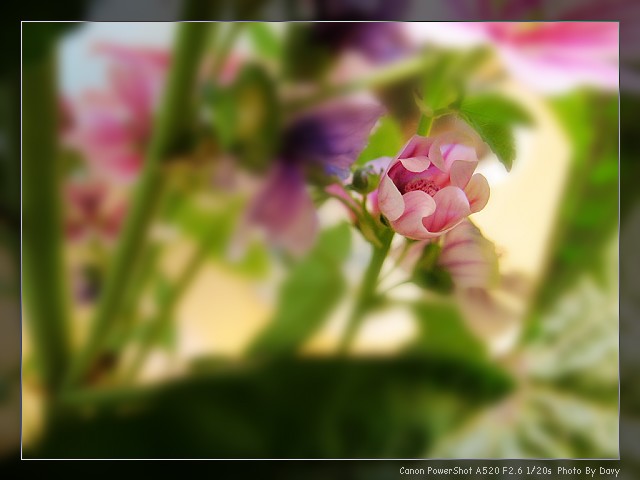
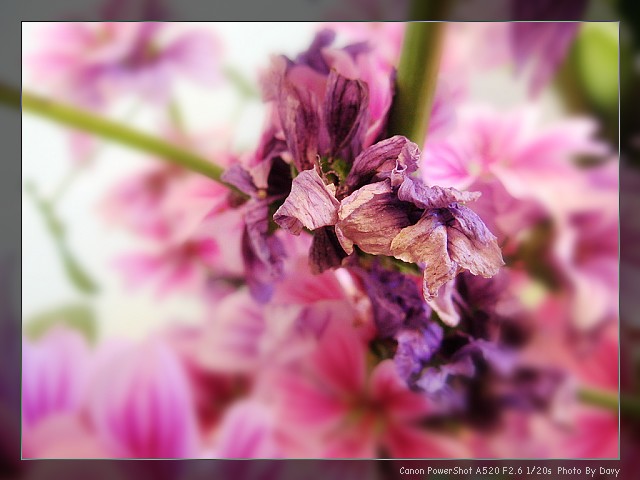
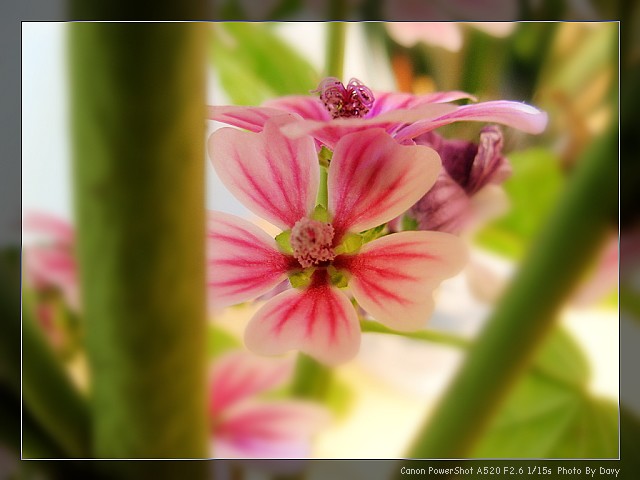
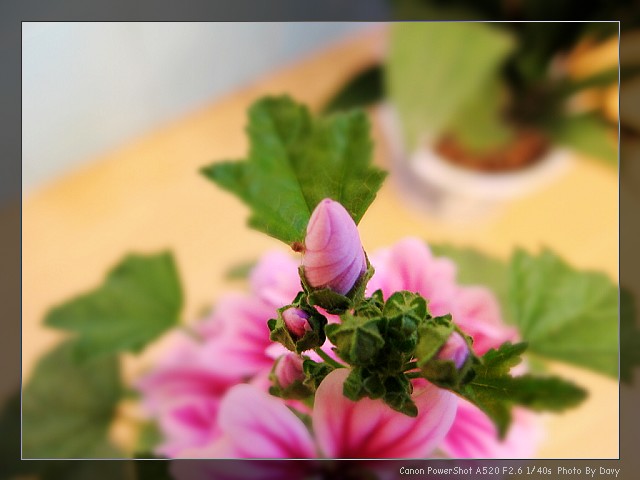
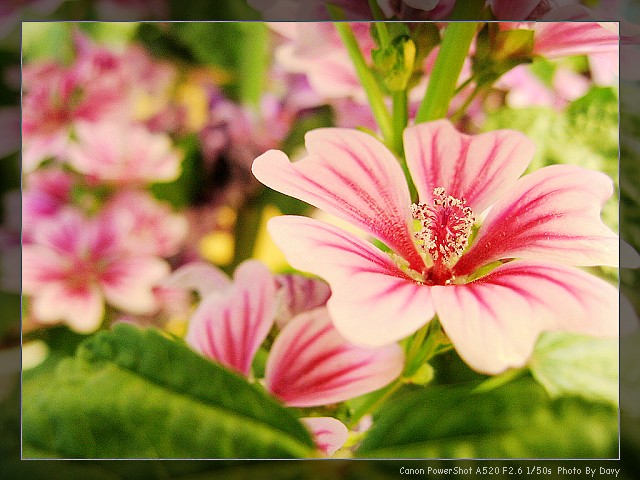
My father has planted a few things in the courtyard and tends to them now and then with a bit of watering and care. Today I noticed one unfamiliar flower blooming with startling brightness. I ended up spending nearly an hour taking several photographs of it, simply because I wanted to keep that moment.
My wife said the flower was called biāngǎnhuā. That name led nowhere when I searched for it, but later I found a plant listed as hollyhock. She was certain that was what it was. I was less sure. The pictures I found did not look exactly like the flower I had photographed, so I remained half convinced and half doubtful.
There was another reason this day felt worth remembering: my daughter Yufei had reached her hundredth day.
We do not have a great deal of money, but we still decided to take her to a photo studio and have a proper set of pictures made. The temperature climbed to 31°C that day, and the heat made it a poor time to be out, especially with such a small baby. Even so, for the sake of giving Yufei beautiful photographs on this particular day, we went.
Our town is small, yet there are several children’s photography studios here. That is probably because there are so many children in the town and the nearby villages. We chose the best studio in town.
We arrived at 9:30 in the morning, only to leave in disappointment for a while. There were too many customers, and Yufei was not in the mood to cooperate. We returned around noon, when the studio was less crowded, and continued the session then. It was not until 3:30 in the afternoon that we finally finished and went home. Yufei did not smile much that day, but the photos still felt satisfying.
On the way back, I kept turning over a question in my mind: now that digital cameras are so common, why do so many parents still choose to take their children to a studio for portraits?
At home, taking pictures would cost less and save time. It would also spare everyone the ordeal of going out in oppressive heat. Yet after looking again at the photos of that flower on my computer, I felt I understood the answer.
Even the most ordinary life has the right to long for beauty.
Parents go through the trouble of bringing their children to a studio because of a simple, unadorned wish: that on some particular day in their child’s life, the child might look especially beautiful. It is not vanity so much as tenderness. It comes from the most straightforward kind of love.
So on this same day, the flower in our courtyard—if it truly was a hollyhock—and my daughter Yufei at one hundred days old seemed to witness the same thing together: the beauty of ordinary life.
That beauty is plain in the way both the flower and the child are plain—common, unremarkable, part of everyday life. And yet in the eyes of the person who loves them, they can be deeply moving, as if all the brilliance in the world had gathered there for a moment.
A few old literary notes about the hollyhock also came to mind.
One Tang poem praises the flower in rich colors and graceful imagery:
South of Jianmen grows the tree,
transplanted beside the Pavilion of Gathering Immortals.
The Jin River is full of splendid blossoms,
while Min Mountain sets off its green leaves.
Wenjun would blush before such softness,
even a goddess would yield in elegance.
Crimson and purple bloom in profusion,
and fragrance drifts into embroidered chambers.
There is also an old anecdote from the Ming dynasty. A Japanese envoy visiting China saw hollyhocks blooming beyond a railing and, not recognizing them, asked what they were. After learning the name, he wrote a poem comparing the flowers to hibiscus and noting that even a five-foot railing could not hide them, with half the plant still rising above it. Because the stalk could grow to around ten feet, the plant was also known by a name that literally means “ten-foot red.”
In older custom, people not only believed in eating seasonal foods during the Duanyang Festival for health, but also placed hollyhock, pomegranate, and cattail in bottles at home to ward off evil. There is even a record of making paper from hollyhock leaves: the leaf juice was ground out, rubbed onto bamboo paper with cloth, left to dry slightly, then pressed flat with stone to create what was called kui jian. During the Tang dynasty, such paper was once made and shared among poets for exchanging verses. It was said to be green and smooth. No one seems to make such paper with that old kind of elegance anymore.