Cases in which someone helps an elderly person who has fallen, only to be accused afterward, keep surfacing. At first the targets were adults. More recently, even elementary school children have been dragged into such disputes. If this keeps going, one could almost imagine a day when even babies are blamed—perhaps for crying loudly enough to startle someone into falling.
In public discussion, many people trace the turning point to the well-known Peng Yu case in Nanjing. A young man, Peng Yu, saw an elderly woman surnamed Xu fall and suffer a fracture while waiting for a bus at Shuiximen Square. He stepped forward to help her up. She then accused him of having knocked her down and demanded substantial medical compensation. The matter went to court, and on September 4, 2007, the Gulou District Court in Nanjing ruled in the first instance that Peng Yu should bear 40% of the liability and pay the plaintiff RMB 45,876 within ten days after the judgment took effect. The ruling caused an uproar. Many people saw it as a dangerous signal: once a case like this appeared to validate an accusation against a helper, it became easier for similar claims to follow.
That fear was reinforced by later incidents.
On October 21, 2009, in Tianjin, driver Xu Yunhe was traveling along Hongqi Road in Hongqiao District when he encountered an elderly woman, Wang Xiuzhi, who had fallen while crossing the central barrier from west to east. Xu said he got out of his car to help her. Wang insisted he had hit her. On June 16, 2011, the trial court ordered Xu to pay more than RMB 100,000 in compensation. With no conclusive eyewitness or physical evidence, it was never clearly established whether Wang had been struck or had fallen on her own. Public criticism focused heavily on the reasoning behind the judgment, and many described it as a replay of the Peng Yu affair.
Another case followed in Chongqing. On November 14, 2009, a second-year middle school student named Wan Xin, from Fenshui Middle School in Wanzhou District, helped an elderly woman who had fallen while he was on his way to market. She and her children later accused him of being responsible for the incident and sued his parents for compensation. Because the evidence was insufficient, the court rejected the elderly woman’s claim in the first instance. She and her children appealed to the city’s Second Intermediate People’s Court, but on the day of the hearing she voluntarily withdrew the case.
Then there was the Jinhua case. On November 23, 2010, a driver surnamed Wu in Jinhua, Zhejiang, was operating his three-wheeled motorcycle with a fellow villager as passenger. While passing through Yingzhou Village in Wucheng District, he sounded his horn and overtook two elderly people riding an electric bicycle. About 20 meters after passing them, the two suddenly overturned and fell. Wu immediately stopped, took them to the hospital, and advanced RMB 1,000 in medical expenses. The elderly riders, however, insisted that Wu’s vehicle had struck them and caused the fall. Wu’s passenger testified that the driver had only overtaken them and had not made contact. On June 3, 2011, the Wucheng District Court ruled in the first instance that Wu bore primary responsibility for the accident and should cover 70% of the plaintiffs’ losses, amounting to RMB 69,602.4, while the plaintiffs bore secondary responsibility. Wu appealed, but on August 30 the Jinhua Intermediate Court upheld the original judgment, and on December 15 the ruling was forcibly enforced.
The pattern did not stop with adults helping adults. On December 11, 2013, on a crowded bus in Chengde during rush hour, there were no empty seats when an elderly woman boarded, unsteady on her feet. A teenage girl who looked like a student immediately stood up to offer her seat. Before the elderly woman could reach it, the bus, which had already started moving, suddenly braked. The still-standing woman lost her balance and fell. The girl hurried over to help her, but the woman refused to get up and complained instead: if the girl had not offered the seat, she said, she would not have needed to walk over and would not have fallen; therefore the girl should take responsibility and pay medical costs. The frightened student called her mother. After hearing what had happened, the mother believed the girl was not at fault, but the elderly woman would not let the matter go. In the end, the mother handed over RMB 200 and left with her daughter.
There are many more such stories. Since the Peng Yu case, each new accusation has seemed to push the same message deeper into public consciousness: if an older person falls, helping them may place you in danger. The consequence has been obvious. People hesitate. Some stand back. And in that atmosphere of fear, there have also been cases in which elderly people collapsed from sudden illness and no one dared to help, with fatal results. Public opinion has repeatedly reacted with alarm, as if the moral fabric of society were fraying before everyone’s eyes and the image of the elderly as sincere, gentle, and trustworthy were gradually being damaged.
So what is really happening? Have elderly people somehow become worse?
One common explanation says that modern society worships money, that everything is now guided by profit, and that this is what has made some elderly people behave this way. That argument is too simple. If society truly had the power to turn the elderly bad, it would turn the young bad as well. And if both young and old were equally corrupted, then the problem would not be old people in particular but society as a whole. Yet that clearly does not describe reality. Society has not become uniformly rotten, and the elderly who behave in these ways are still only a small minority. It makes little sense, then, to say that “the elderly have turned bad.”
The so-called “bad elderly” do share one recognizable trait: they seek a specific benefit, usually money. But the vast majority of older people do not abandon decency simply because there is money to be gained. Their character does not change just because an opportunity presents itself. That is why it is hard to accept the idea that age itself, or society in general, has transformed the elderly into something worse.
A harsher possibility is more convincing: it is not that the elderly have gone bad, but that some bad people have simply grown old.
Bad people exist in every era, every social system, and every age group. In the past, some may have softened with age or learned restraint. But among those who have now entered old age, not all became better, and not all became more restrained. That is one reason “bad elderly” appear so visible today.
Many people now in old age were born around the 1950s. Their formative years unfolded amid repeated political campaigns that brought out some of the darkest impulses in human behavior. The movements ended, but not all of the moral damage disappeared with them.
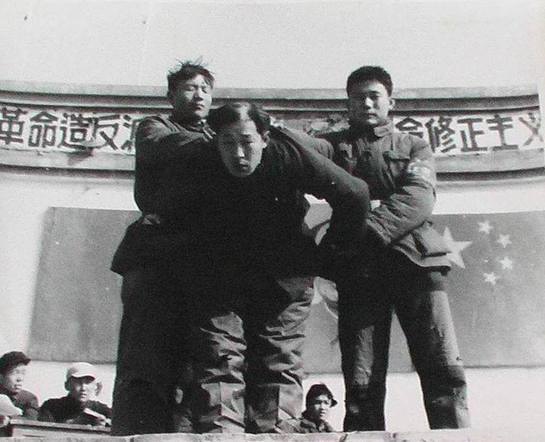
A defining feature of that generation’s youth was scarcity—material scarcity and spiritual scarcity at the same time. During the years when they were growing up physically, they lived through the Three Years of Difficulties. Food shortages and hunger shaped their understanding of material life in profound ways. Even later, when conditions improved and goods became more available, the memory of deprivation could still produce a kind of panic about not having enough. For some, that panic became a drive to seize and hold as many resources as possible, even at the price of conflict or risk.
In times of shortage, petty theft became widespread: grain, vegetables, fuel—whatever could be taken. Individuals had very little, while collective stores often seemed to hold more, so stealing from the collective became normalized. Later, in the Cultural Revolution, theft could turn into outright seizure and violent struggle over possession. In that environment, taking by force was not necessarily experienced as immoral; it could appear normal, even justified. Over time, habits formed under those conditions remained embedded in parts of some people’s personalities.
Material deprivation had its counterpart in an even deeper spiritual deprivation. Under long-term scarcity, mere survival became the overriding goal of life. At the same time, repeated political campaigns shattered traditional moral values without replacing them with a stable new ethic. If survival was everything, then almost any method could be rationalized. In that climate, moral boundaries were dangerously thin. Respect for the elderly and the young, respect for teachers, filial duty, harmony among neighbors, willingness to help others—these were not nurtured but often undermined. The only real bottom line was survival.
People denounced teachers, exposed their parents, and spouses informed on each other. It is hardly surprising that those who grew up in such an atmosphere might carry deep flaws in character. Their world was filled either with struggles for survival or with monotonous political propaganda. They had little chance to absorb either traditional culture or Western culture, little opportunity to feel social care, little exposure to new ideas, and often limited access to education.
Human beings learn virtue socially. Moral development depends heavily on what is modeled in families and by elders nearby; it is learned through example, habit, and daily influence. Yet for this generation, many of those channels were broken. Their upbringing was marked by absences and blind spots. At the very stage of life when people most need moral nourishment, emotional guidance, and civilized example, many instead lived through upheaval—or through conditions that actively reversed those values. Later, when they themselves became parents or grandparents, acting as moral examples was no simple matter. In some cases, age brought not dignity but a loss of it.
Seen in that light, the present phenomenon has causes. What we are witnessing is less the corruption of old age than the aging of people whose moral formation was already badly damaged.
That does not excuse extortion, false accusation, or the climate of fear these acts create. It means only that the problem is historical and social as well as personal. If such behavior is left unchecked, the damage goes beyond individual cases. A society in which extortion becomes habitual and indifference becomes self-protection is one in which moral life turns unhealthy.
For that reason, public guidance and institutional safeguards matter. People need confidence that helping someone in distress will not automatically expose them to ruin. False claims need real deterrence, and decency needs support from more than sentiment alone. Once extortion and coldness become accepted parts of social life, the consequences will not be limited to one generation or two.