A question came up in a consultation I was helping with: What actually counts as real attention?
It's a good question, and it still has no fixed standard. The principle I fall back on is that anything without a fixed standard requires people to be on the same wavelength. But getting on the same wavelength can run into a refusal to communicate, or into someone who is a giant black box: he doesn't need discussion; he needs you to guess what he expects.
That creates an interesting situation. Take the 'black-box personality.' When the other person decides to guess, it usually means they have already sensed that the black box is upset and that the emotional problem needs to be handled first. So they ask: 'Is something bothering you?'
The question looks like it belongs to the present, but what it asks about is a cause in the past—what happened before that made the black box feel bad now. How does the black box answer? 'Don't you know why I'm unhappy?' That is also a present question, but once again it sends the search back into the past. And then the two of them are off to the races.
The key point is this: by the time someone suddenly realizes in the present that the other person needs attention, too much neglect has usually already happened in the past. The hardest part of solving the problem is that neither person can change the past, and the pile of messy stuff dragged up in the present is all tied to the past.
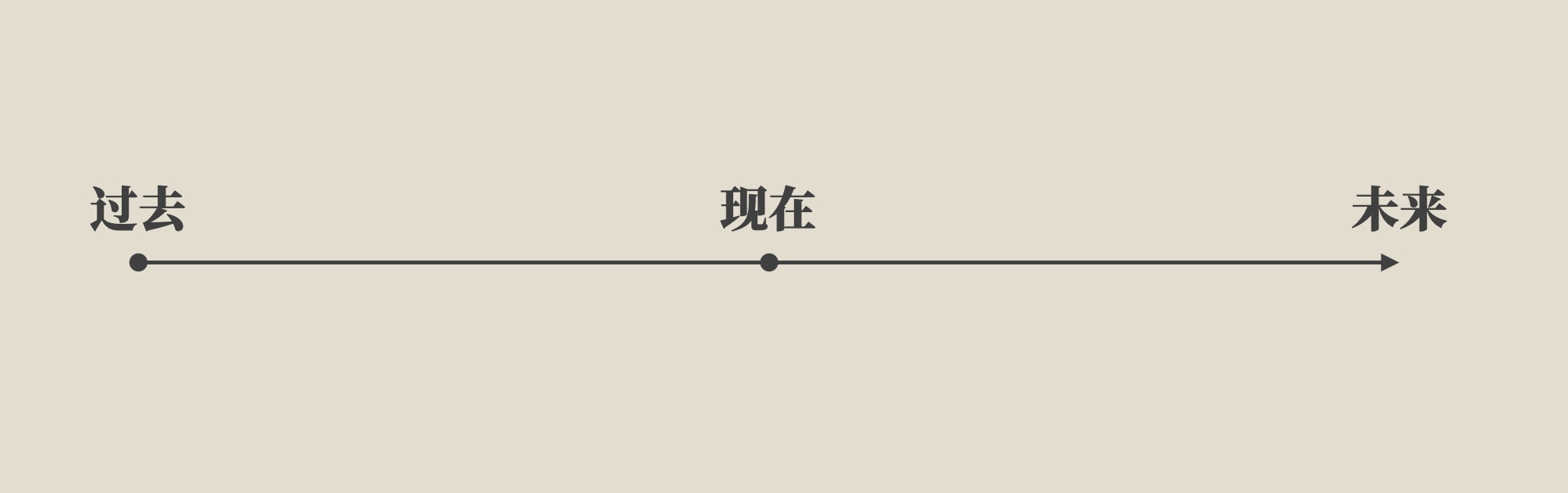
This may still sound abstract, so let's make it concrete.
Two people get into a fight because the dirty clothes were not put away in time.
One asks: 'Why didn't you put the clothes away?' The question is asked in the present, but it is about something that happened in the past. The other answers: 'I haven't been feeling well these past two days, so I didn't get to it.' Now they have a cause from the past.
The first person keeps going: 'Where doesn't it feel good?' That is still a present question about the past. The other answers: 'I've been feeling awful these past two days. Couldn't you tell?' A rhetorical question is a standard way of using the present to ask about the past—unless it is a literary device for getting on the same wavelength, as in 'I think this is delicious. Don't you?'
And now the war can start at any moment, because the trouble is in the question itself.
When we ask questions—especially in conversation—we often use the present to ask about the past. But tracing the cause rarely changes what has already happened. So when people answer a question about the past, they start making excuses, bringing up old scores, or giving subjective accounts that cannot be verified. The advantage of the past is that everyone agrees it happened, so it can be used to assign responsibility and decide who was right and who was wrong.
What if we ask a question about the future? For example: 'Where should we put the dirty clothes from now on, so we can deal with them in time?' Well, that is not a good question either, because if the other person is still angry, it can still start a fight. That is a problem of arguing off the point, and it is not what I want to deal with here.
Step away from the question for a moment, and attention runs into the same problem. When people realize something is wrong in a relationship and want to start paying real attention to the other person, they also tend to look into the past for the moments when attention was not given in time. 'Better late than never' is a nice saying, but the reason it works is that the sheep have already been lost—and sometimes they were lost so long ago that it is already too late.
Noticing a problem and then becoming aware of the problem itself is not a bad thing. It may even be a necessary path. But when the sheep really have been lost, people instinctively get tangled up in analyzing the loss itself. This comes from loss aversion: losing 100 yuan hurts more than gaining 100 yuan feels good. When people ignore the dimension of time, they easily get stuck in a loop of asking present questions about the past. Then a new problem happens, turns into another past loss, and the present repeats the same questions.
This is one of the behaviors I dislike most: falling into the same pit three times and still failing to see what the pits have in common.
But people cannot simply ignore loss aversion. You cannot start lecturing someone who has just fallen about the importance of non-slip shoes. Ignoring how someone feels in the moment turns you into what people call 'acting like a dad.' So even when you want to ask future-oriented questions, you cannot ignore the feelings in the present. This connects to what I have been writing about in the past few days.
Rational people find it easier to 'restore the facts' because they are not asking a question of the past; they are using the restored facts to ask a question of the future—namely, what is the solution. Emotional people, by contrast, need to spend a lot of time 'aligning feelings,' because feelings are built from a large pile of things that have already happened in the past. You will not find a solution by going straight to the future.
So while aligning feelings in the present, if both people can also enter the future to look for solutions, that may be the mental model that actually solves the problem.
For example: 'I can see you haven't been feeling well these past few days. Leave the laundry for now and rest. If something is bothering you, tell me. I'm here whenever you need me.' Feeling unwell is a state from the past. The unwashed clothes are an established fact from the past. So for now, set the past aside. If you need me in the future, I am here.
Of course, I am talking about effective communication, not correct communication.
Back to the original question: What actually counts as real attention?
If you cannot align feelings in the present, then go to the past to align them. Bringing up old scores will eventually lead to some original stumbling block. If every fight between the two people can be traced back to that moment, it means someone cannot get over that block. It is not something that can be solved by pretending to be magnanimous or by what people call forgiveness. Often that block is tied to the most basic trust. No matter how well the other person behaves now, the missing trust is the anchor point that every present question unconsciously points to.
Once you set aside 'aligning feelings,' you have to return to the rational level to understand attention.
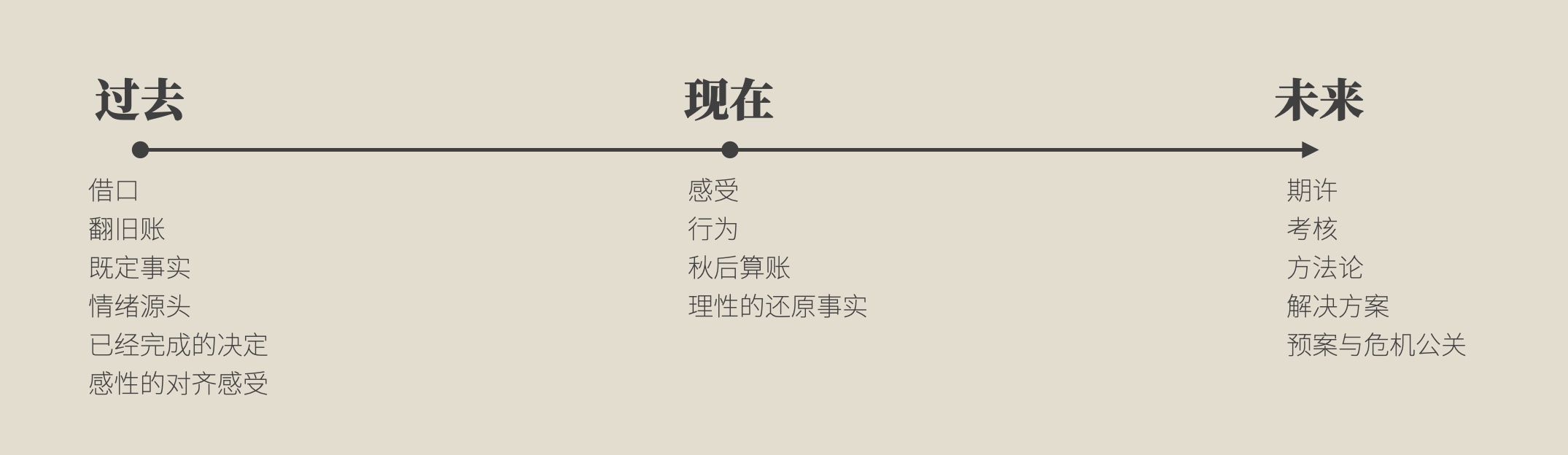
A simple formula for understanding it is: attention = present - past + future.
- Present
- Get on the same wavelength as the current emotional experience—return to the same dimension of time.
- Stop. For example, set a cooling-off period before an argument. This does not mean silent treatment; it means both people know they need to calm down first.
- Stop at any time to confirm that you are communicating, not giving a speech.
- Past
- Avoid letting an unprocessed past keep having a negative effect on the present.
- Respect decisions the other person has already made.
- Check your assumptions about the other person. For example, I think he must be angry, so I choose to shut up. But what if he is not actually angry?
- The reasons behind each other's emotions. Of course, here it is also appropriate to bring up old scores to some extent.
- Things you have already done that may cause greater harm need to be disclosed to the other person. For example, I did cheat, but now we need to have a serious conversation about whether and how our relationship continues.
- Future
- Add constructive future-oriented plans.
- Solutions. The word may sound cold, but it could be as simple as the two of you cooking a meal together after a fight, or as cruel as getting a divorce so that both of you can calm down properly. But a solution means both people have to make a decision about the future, and that decision also needs to be understood and respected.
When the things in the past have been resolved and there is no conflict requiring you to imagine the future, attention becomes something to build in the present dimension of time.
By the way, this same framework also applies to avoiding internal friction.