Among Chinese fantasy dramas with supernatural themes, Soul Ferry has always stood apart.
It never relied on gaudy visual effects or the assembly-line thrills of disposable genre television. What made it endure was something much rarer: a gentle, compassionate way of telling stories about death and life, karma and reincarnation, longing and human frailty. That is why, even after ten years, it still lives vividly in people’s memory. For many viewers, it remains one of those irreplaceable dramas that time simply cannot wash away.
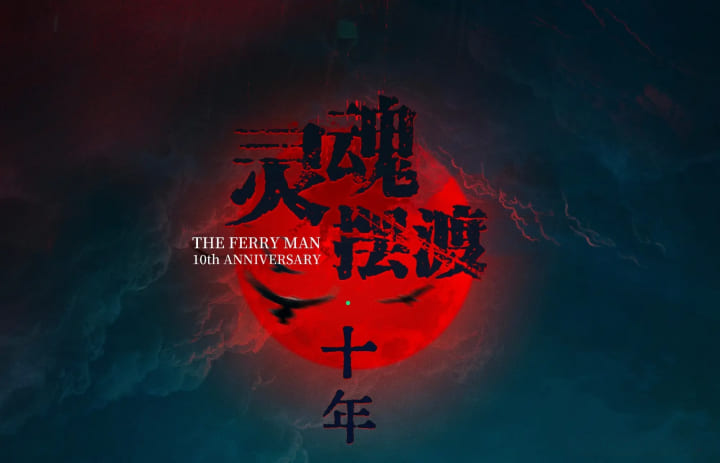
I have never liked reducing it to easy labels like “the best Chinese supernatural drama.” That kind of praise is too generic for a work like this. My connection to the story has always been more personal, and that is also why I feel I understand its fatalistic core a little differently from most people:
I was Xia Dongqing’s university classmate.
Most people watched the series from the outside, following one uncanny encounter after another, watching the entanglements of fate unfold across centuries. I did not experience it that way. I had seen, up close, the loneliness and restraint hidden beneath Dongqing’s ordinary campus life. Over the years, I revisited the whole series again and again, tracing its clues, its foreshadowing, its quiet emotional undercurrents. That left me with a strange double perspective: part witness, part fan of ten years. Because of that, I can feel both the helplessness written into these characters’ destinies and the tenderness, grief, and weariness hidden behind so many of the show’s lines.
Back in college, Xia Dongqing was the kind of boy who always seemed slightly removed from the crowd. He disliked noise, avoided social circles, rarely joined group activities, and often disappeared on his own after class. Even late at night, he was frequently out alone. We were young then, and ignorance makes distance easy. Most of us simply thought he was withdrawn and difficult to approach, so we kept our distance in return.
What none of us knew was that from the moment he was born, he had already been burdened with something few people could even imagine.
The drama itself explains that burden with precision:
“The Buddhist scriptures record that there are five kinds of eyes in this world: the heavenly eye, the wisdom eye, the dharma eye, the Buddha eye, and the fleshly eye. The eyes of the flesh are dim and unclear. They see what is near but not what is far, what is before but not what is behind, what is bright but not what is dark.”
Most people move through life with ordinary eyes. We see the bustle of the human world, the routines of peaceful days, the small certainties we call normal life. But Dongqing was born with yin-yang eyes. He did not have the luxury of ignorance. He had to face wandering spirits, hidden darkness, and the endless partings between the living and the dead.
As the series puts it:
“People fear the unknown, and so they fear ghosts and gods.”
For most of us, that fear comes from rumor, imagination, and distance. For him, fear came from reality—something present every day, impossible to evade. What he lived with was not superstition, but a constant intimacy with darkness and solitude.
That is also why it is a mistake to treat Soul Ferry as nothing more than a horror or ghost drama. It was never interested in manufacturing fear for its own sake. Strip away the supernatural shell, and what remains is a sustained, humane meditation on obsession, kindness, evil, grief, separation, and the turning of reincarnation.
Its deepest idea is summed up in one of the drama’s most memorable lines:
“Of all things in this world, only love does not die; thus it becomes eternity.”
Across three lifetimes, meetings, debts, farewells, reunions, and sacrifices are all born from feeling and sustained by attachment. That emotional foundation is what gives the entire story its unusual weight. It is also what allows the show’s mythology—spread across a vast timeline—to feel unexpectedly complete.
Unlike many lightly sketched short-form dramas, Soul Ferry built a coherent screen universe: three main seasons, two original theatrical films, a Republican-era side story, and several related spin-offs. With the release of the canonical sequel in 2026, the unresolved ache that audiences had carried for a decade finally found its answer.
Seen as a whole, the story’s thousand-year arc can be traced clearly:
the ancient conflict of the three realms → the origin of the Yellow Springs karma in the Eastern Jin → the foreshadowing of a three-life bond in the Republican era → the modern reunion of the central trio → the ending completed ten years later
A destiny stretched across a thousand years
The ancient age: where the tragedy begins
In the earliest age, after heaven and earth had just been ordered, Kunlun ruled the balance of the three realms, while the Proto-Human tribes multiplied and lived apart from the heavenly order. Their leader, Chiyou, refused to submit to the constraints of heaven and led a rebellion against it. War spread across the world, bringing devastation, exile, and ruin to countless lives.
Chiyou was eventually defeated. His spirit was sealed forever, becoming a vessel of endless reincarnation—forced to inhabit body after body, unable to find peace or release.
No one emerged untouched from that catastrophe.
Chacha, Chiyou’s younger sister, was trapped in the cold stillness of the underworld. There, through endless centuries among drifting souls, she became the ruler of the dead, the Pluto of the nether realm, hardened by loneliness and power alike.
At the same time, Jiutian Xuannü Ya descended by heavenly command to suppress the chaos. She cut down the source of war, but in doing so became bound by heaven’s laws and entangled in a mortal tribulation from which she could never truly escape.
The drama expresses that merciless structure of fate in a single line:
“Heaven’s will is always too lofty to question; destiny is never in human hands.”
The grief, regrets, love, resentment, and shackles borne by the later characters all begin here. The roots of every later tragedy were planted in this primordial conflict.
The Eastern Jin: the battle of the Yellow Springs
If the ancient age is the origin of fate, then the Eastern Jin storyline is the emotional center of the entire saga—and the true beginning of Zhao Li’s thousand years of desolation.
Wuming was a highly cultivated monk, nearing the state of an arhat. Compassionate and disciplined, he entered the suffering world to guide the countless restless souls left behind by an age of chaos. He was detached, ascetic, and devoted to saving others.
And yet he had one weakness, one attachment: Ah Chun, the beloved spirit dwelling within the Zao Yue zither.
Chacha, enchanted by Wuming’s music, forcibly took the zither away and tore the lovers apart. In order to recover the one he loved and demand justice, Wuming abandoned the fruit of a lifetime of cultivation and entered the desolate Eight Hundred Li of the Yellow Springs alone.
The series gives that journey an unforgettable image:
“One day you will pass through the Yellow Springs and see the crimson flowers stretching for eight hundred li, each one rooted deep in love.”
At that time, the Yellow Springs were not the sea of red blossoms viewers later remember. They were a wasteland of blowing sand—barren, leafless, flowerless, empty—the final destination of all dead souls.
It was there that Wuming’s destiny broke.
In the blood-soaked battle of the underworld, he slew Meng Po Meng Qi, taking on immense karmic consequence and destroying his own cultivation in the process. Even so, he could not overcome the authority of the underworld ruler. His soul was forcibly stripped away. His body remained behind in the underworld and became Zhao Li, a soulless ferryman doomed to guide spirits forever. The one lingering trace of his gentle soul fell into the wheel of reincarnation and was reborn in the Republican era as the famed performer Bai Mudan.
From that moment on, Wuming ceased to exist. In his place remained only Zhao Li: a shell drifting between the worlds of yin and yang, ferrying spirits for a thousand years.
No line captures his emptiness better than this:
“I have lived for a thousand years. My greatest pain is that I can no longer feel pain.”
He saw countless partings and endings, but could never deliver himself from his own incompleteness.
The Republican era: human warmth in a ruined world
By the Republican period, the world had become a place of war, instability, and ordinary suffering. Zhao Li, after centuries of wandering, was blind and destitute, pushed close to utter darkness. At that moment he encountered A Jin, a soldier with sincerity, courage, and a deeply human sense of kindness.
In an age when everyone was struggling merely to survive, A Jin treated him with gentleness and generosity. That simple human warmth reached someone who had been lonely for a thousand years.
The drama says it plainly:
“Humans are warmer than ghosts and gods.”
Gods and spirits, after centuries, become numb. They have seen too much, lost too much, outlived too much. But the goodness of an ordinary person—gratitude, compassion, selflessness—can still move the heart more deeply than divine power ever could.
War, however, grants no lasting mercy. A Jin was gravely wounded and knew he had little time left. Unable to save himself, he chose to give his eyes to the blind Zhao Li. With a mortal body, he gave another being a future.
That act planted a debt and a redemption that would span three lives.
And that pure-hearted soldier A Jin was the previous life of my classmate, Xia Dongqing.
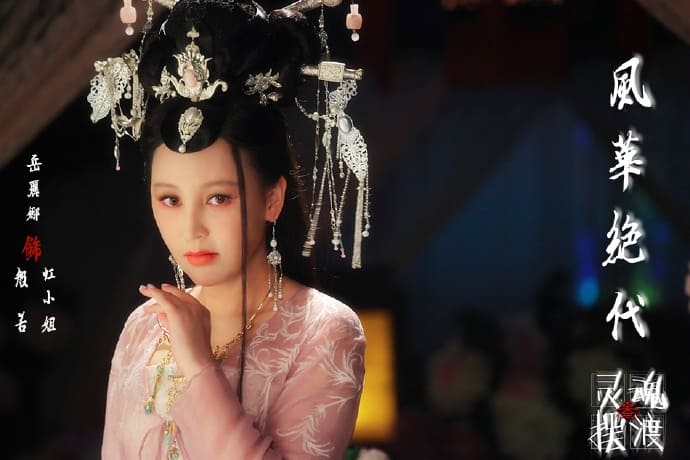
Karma in this story is never careless. The soul-fragment of Wuming reborn as Bai Mudan still had old debts to settle. Meng Po Meng Qi was reincarnated as Pipa player Banya, and through the workings of fate she personally ended Bai Mudan’s life. In the turmoil of the Republican era, a blood-stained grudge that had crossed centuries finally came to an end.
The modern city: the night shift at Convenience Store No. 444
When the wheel turned again, A Jin was reborn as Xia Dongqing, a young man born with yin-yang eyes and left alone early in life. The death of his close family and the isolation that followed pushed him into the narrow seam between the living and the dead. Day after day, he witnessed farewells, regrets, unfinished wishes, and the sorrow people leave behind.
That is why he was so silent in college. Not because he was cold, and not because he looked down on others. He had simply seen too much too soon.
And yet destiny did not crush him completely. All that hardship also made him the person capable of connecting the three realms and carrying a mutual redemption much larger than himself.
Sooner or later, bonds that span lifetimes return to each other.
Struggling to make a living, Dongqing eventually found work at the late-night Convenience Store No. 444, a place standing at the border between yin and yang. There he reunited with Zhao Li, the spirit ferryman, and met Ya, the Nine-Heaven Mysterious Maiden, living quietly in the human world under the name Wang Xiaoya.
At that point, debts, gratitude, protection, and affection accumulated across three lives converged at last. The central trio of Soul Ferry was complete.
Zhao Li often appears playful, lazy, even frivolous, as if life and death mean little to him. But beneath that surface lies a being carrying the weight of kindness received in two lifetimes, someone who has quietly protected Dongqing year after year.
More than freedom or power, his greatest obsession has always been much simpler:
“I want my soul back. I want to feel joy and sorrow, to be flesh and blood. I want the tears that fall from me to taste salty.”
Ya’s journey moves in the opposite direction. As a heavenly deity, she originally descended with a single purpose: to monitor and restrain Dongqing, whose body held Chiyou’s sealed spirit. She obeyed heavenly law, viewed living beings with divine detachment, and seemed untouched by ordinary emotion.
But life among humans changed her. Daily warmth, companionship, and the ordinary texture of mortal existence softened what heaven had made cold.
The show gives that transformation a striking line:
“Gods are born from the human heart and die in human nature.”
Heaven may be indifferent, but the human heart is not. In the end, she abandoned divine glory and godhood itself, willing to descend fully into the mortal world in order to stay beside Dongqing through its ordinary sorrows and joys.
Among the trio, Dongqing is the smallest figure in one sense: just a mortal, powerless against the machinery of fate, forced to endure a life of loneliness and suffering that few could imagine. But he never loses the purity at his core. His warmth heals Zhao Li’s thousand-year wasteland, and his humanity even shakes the cold, ancient order of heaven.
One line in the series seems written for him more than anyone else:
“Sometimes, simply staying alive is itself a kind of cultivation.”
His life—buffeted by fate, but still gentle—is the truest embodiment of that thought.
Ten years of waiting: an ending finally completed
In 2016, Soul Ferry Season 3 came to an end, temporarily closing the original story. During the ritual of Mount Tai’s Lord of the Underworld, Zhao Li chose to sacrifice himself in order to strip Chiyou’s spirit from Dongqing and protect him for the rest of his life.
He vanished quietly into heaven and earth.
The trio separated abruptly. There was no proper farewell, no complete emotional landing, no sense of real closure. For many viewers, that became one of the most painful unresolved endings in recent Chinese fantasy television.
And then came ten years of waiting.
Ten years is long enough for most youthful obsessions to fade. Long enough for countless once-popular series to disappear into the past. Yet the attachment viewers felt toward Soul Ferry never really disappeared.
For years, I kept returning to the whole series—reexamining the clues, the dialogue, the karmic loops, the emotional echoes. And as someone who had once watched Dongqing’s loneliness from nearby, I knew that what people could not let go of was never just the plot itself.
What remained unresolved in everyone’s heart was Zhao Li’s long-lost soul, Ya’s abandonment of heaven for love, Dongqing’s lifelong helplessness before fate, and above all the loyalty between three people who never truly let go of one another across three lifetimes.
The Yellow Springs monologue says it better than anything else:
“By the banks of the River of Forgetfulness, may I rest long beside you. In the mud, may our hair become entangled. What lies in my heart cannot be spoken; only a wisp of soul remains.”
Deep feeling was not betrayed by time. Waiting was not wasted either.
In 2026, the canonical sequel, Soul Ferry: Ten Years, finally arrived and answered a decade of longing, bringing the thousand-year tangle of fate to a belated but complete conclusion.
Looking back now, I feel I finally understand that quiet boy from university.
The shadow in his eyes was never affectation, never a performance of loneliness. It was the exhaustion of someone who had seen too many separations between life and death—and learned, somehow, to accept them. His silence was not indifference. It was clarity, and a kind of exhausted tenderness born from seeing too much of the world’s impermanence.
That is the true power of Soul Ferry. Its emotional center has never been the eerie business of ghosts and strange tales. What makes it unforgettable is the way it speaks, with patience and compassion, about the suffering of ordinary beings.
Everyone has an attachment. Everyone has a weakness.
As the series says:
“Everyone has a fragile side. If that fragility is magnified, no one would want to go on living.”
All living beings suffer; every obsession carries its own wound. What allows people to endure, in the end, is often no more than simple kindness and the presence of someone who stays.
That is why this drama still matters. If formulaic, fast-made series have long since exhausted you, and what you want instead is a story with warmth, depth, and the heavy pull of destiny, then the world of Soul Ferry is still worth entering.
The lights of Convenience Store No. 444 are still on in the night. And inside that light waits a story of companionship, redemption, and reunion, stretched across a thousand years and completed only after ten long ones.
The best viewing order for the main storyline
Because the timeline can feel scattered and the spin-offs sometimes intimidate new viewers, the clearest way to experience the full arc is to follow both the narrative logic and the original release rhythm.
- Soul Ferry Season 1 — the ideal entry point, introducing the yin-yang worldview, the main trio, and the key long-term foreshadowing.

- Soul Ferry Season 2 — expands the scale of the three realms and gradually reveals the deeper truths behind the gods, the underworld, and fate itself.
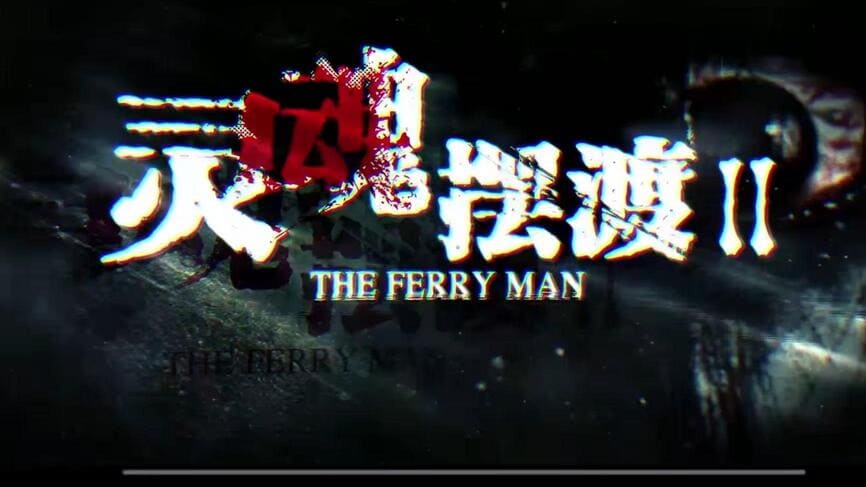
- Soul Ferry Season 3 — concludes the main drama arc and fully unlocks Chiyou’s fate and the central importance of the Mount Tai ritual.
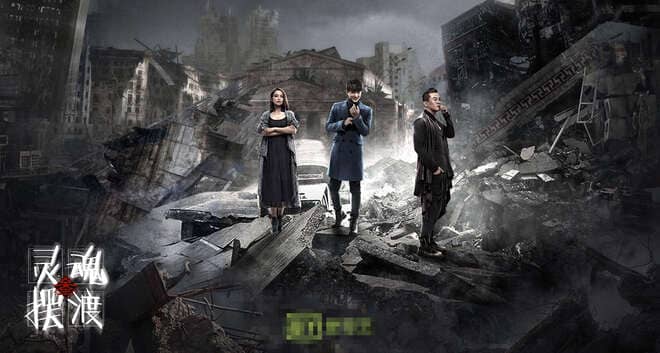
- Special Side Story: Peerless Elegance — fills in the Republican-era branch and completes the karmic link between Zhao Li, Bai Mudan, and Banya.
- Original Film: Soul Ferry — Yellow Springs — tells the Eastern Jin origin story in full and restores Wuming’s transformation into Zhao Li.

- Canonical Sequel: Soul Ferry — Ten Years — continues from the ending of the three seasons and finally resolves the decade-long heartbreak.
A side note for anyone sorting through the franchise: Nanyang Legend (the remake version) and Dream of Floating Lives (the AI-derived film) are independent side works and not part of the main continuity, so they do not need to be included in a core viewing order.