The Summer Palace began in 1750, the fifteenth year of the Qianlong reign, and took fifteen years to complete. Its first name was Qingyi Yuan. British and French forces later burned it. Reconstruction started in 1886, the twelfth year of Guangxu. In 1888 Empress Dowager Cixi diverted funds raised in the name of the navy to restore the garden, and it was renamed Yihe Yuan—the Summer Palace—from the idea of 'nurturing harmony.' The project ended in 1895. The restoration is tied to the well-known diversion of Beiyang Fleet funds. A poor and weak country was cut by just such small knives, and the sleeping giant nearly failed to wake.
From outside the East Palace Gate—today the main entrance to the park—the visit begins.
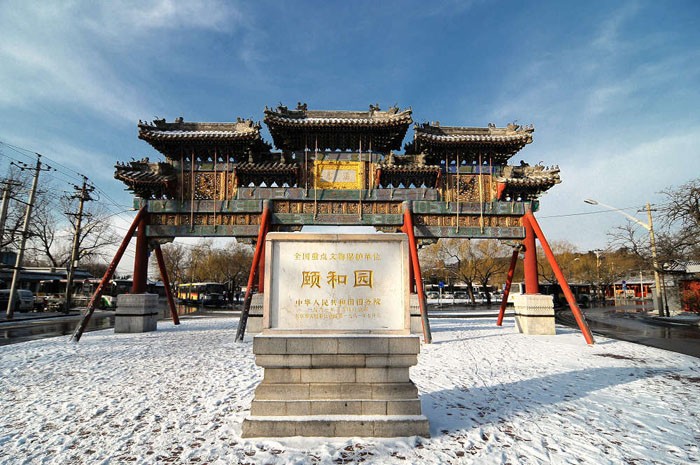
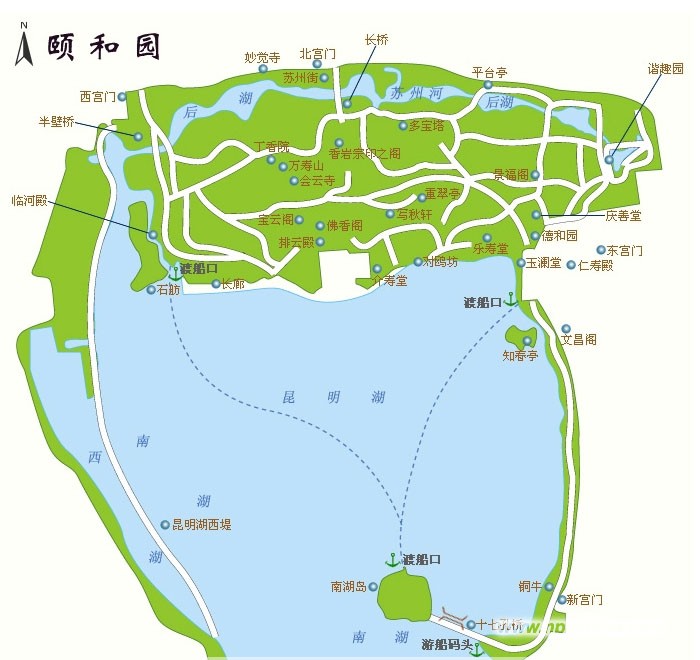
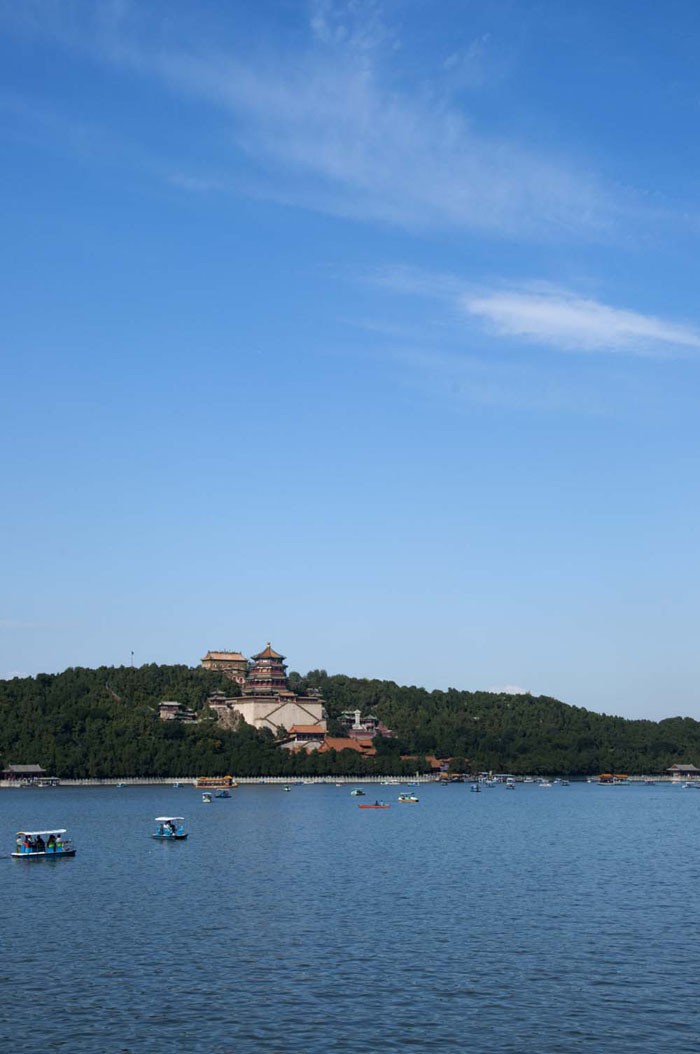
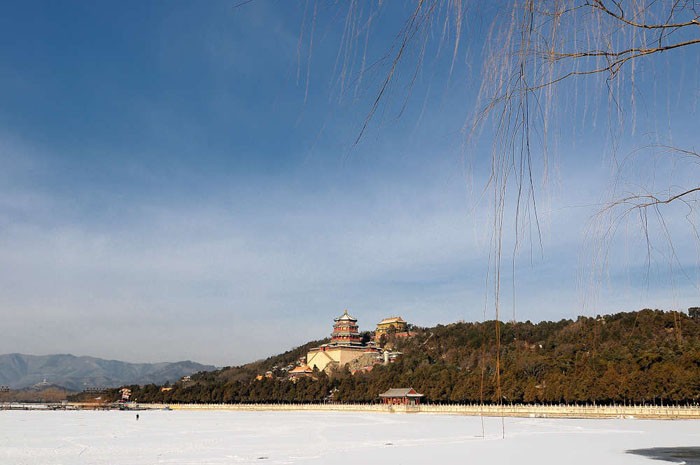
The Summer Palace is made up mainly of Longevity Hill and Kunming Lake. Water covers three quarters of the park, about 220 hectares. The buildings are centered on the Tower of Buddhist Incense, and the garden holds more than a hundred scenic structures and over twenty courtyards of different sizes. It gathers the achievements of traditional garden art. Longevity Hill and Kunming Lake form its basic frame, and it borrows the surrounding hills and water. It has the grand, rich air of a royal garden and also a strong sense of nature, embodying the principle 'made by human hands, yet seeming to open from heaven.' Pavilions, covered corridors, halls, temples, and small bridges are brought into harmony with the hills and the open lake. The whole design is ingenious, a masterpiece that sums up Chinese garden architecture.
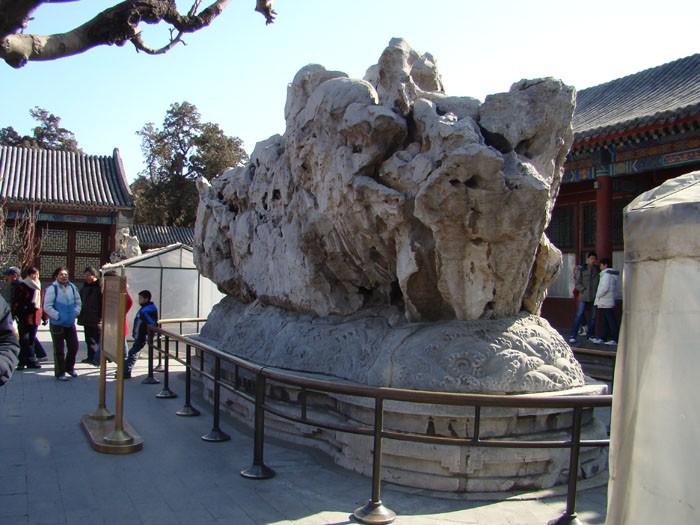
The Family-Wrecking Stone is a warning piece in Leshou Hall. In the Ming dynasty, Taipu Mi Wanzhong found a strange, intensely green stone in Fangshan County. He hired more than a hundred men and forty horses to haul it to Shaoyuan. His money ran out halfway, the stone was left by the road, and his family declined. More than a century later, Qianlong found the stone and ordered it moved to Qingyi Yuan. It was so heavy that a gate had to be broken open. Empress Dowager Xiaoduan was very displeased and saw it as an ill omen. She said it had ruined the Mi family and now broke my gate—truly a family-wrecking stone. That is how it got the name.
The Grand Theater in Dehe Garden was built for Cixi's sixtieth birthday and used only for her opera viewing. It is 21 meters high, second in the garden only to the Tower of Buddhist Incense. The theater has three stories, with a two-story backstage makeup building. The ceiling has seven 'sky wells,' and the floor has 'earth wells.' Beneath the stage are water wells and five square pools. When gods and ghosts appeared in a play, actors could descend from 'heaven,' emerge from 'earth,' and water could be drawn onto the stage.
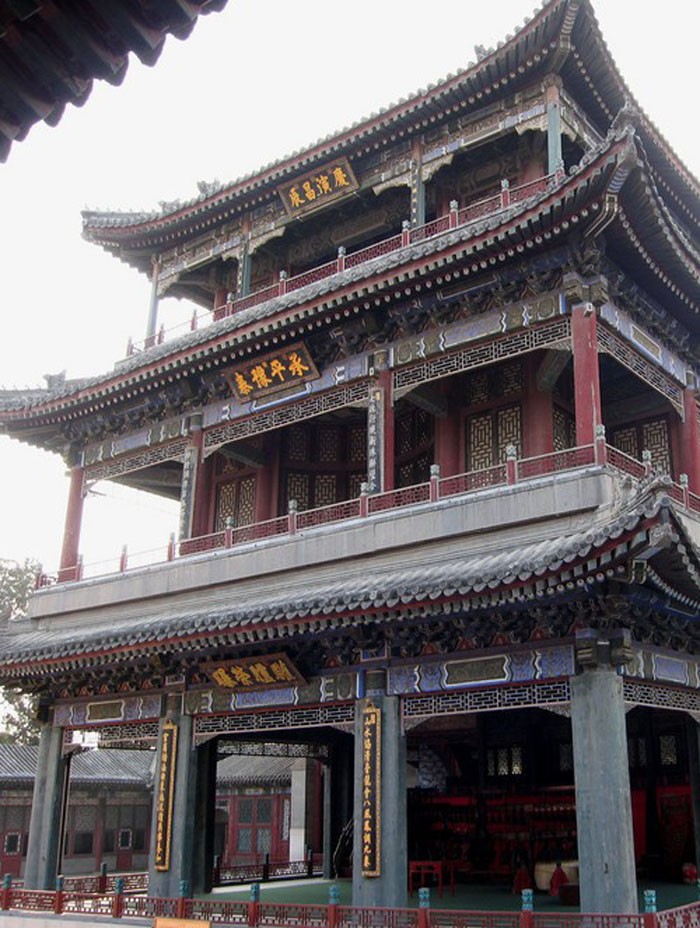
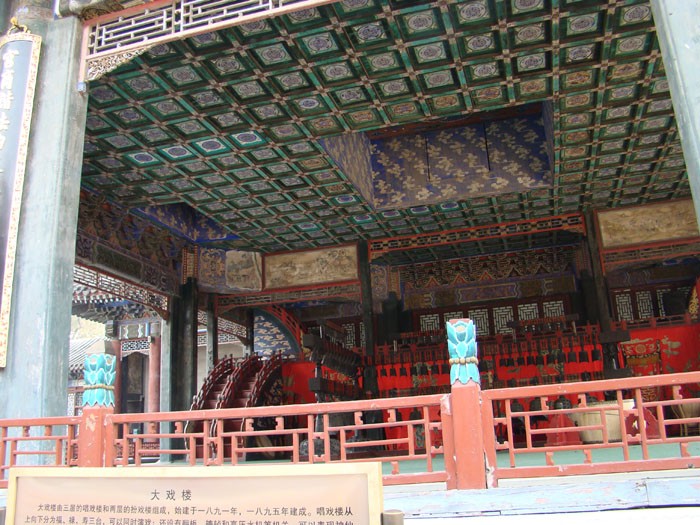
The hole in the lower ceiling is the doorway through which gods and ghosts came and went during those plays. At a time when other countries were pushing into industrialization, the court was still absorbed in invented, misty lives of gods and ghosts. It would have been hard not to fall behind.
The Long Corridor is 728 meters long and has 273 sections. It is the longest covered walkway in a Chinese garden. Every beam carries painted decoration—more than 14,000 pictures in all. They include landscapes, flowers, birds, insects, figures, and stories, and the figure paintings are drawn from Chinese classical novels.
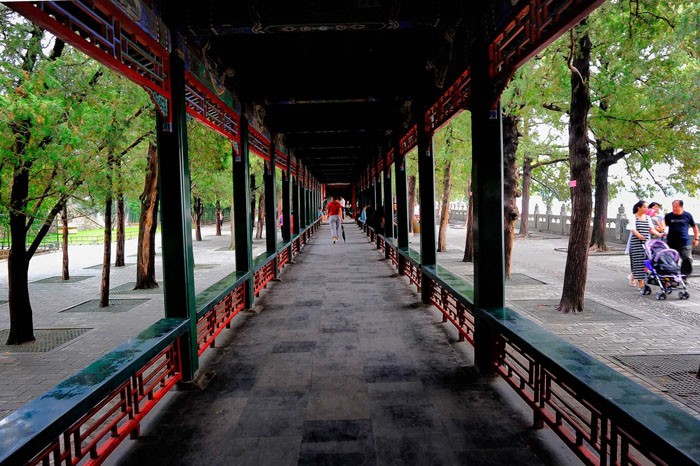
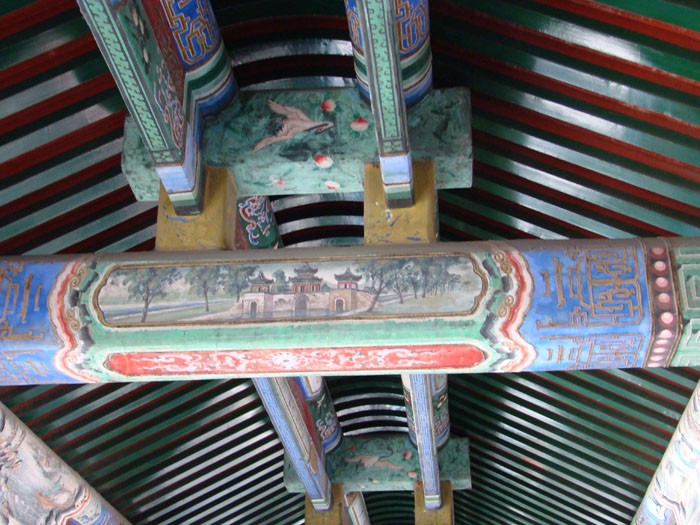
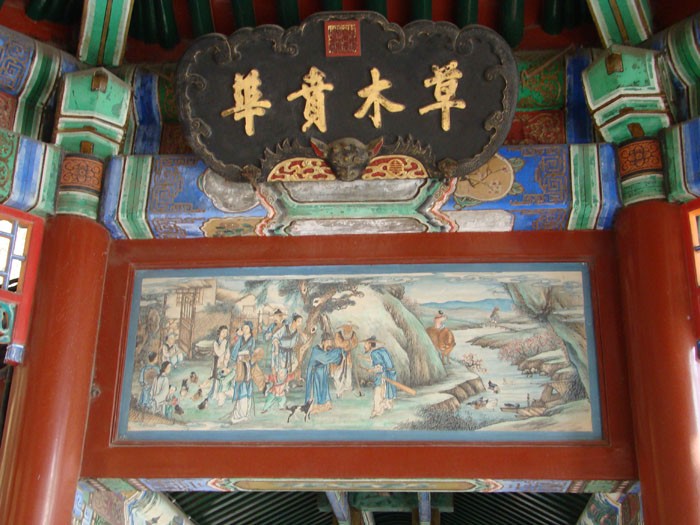
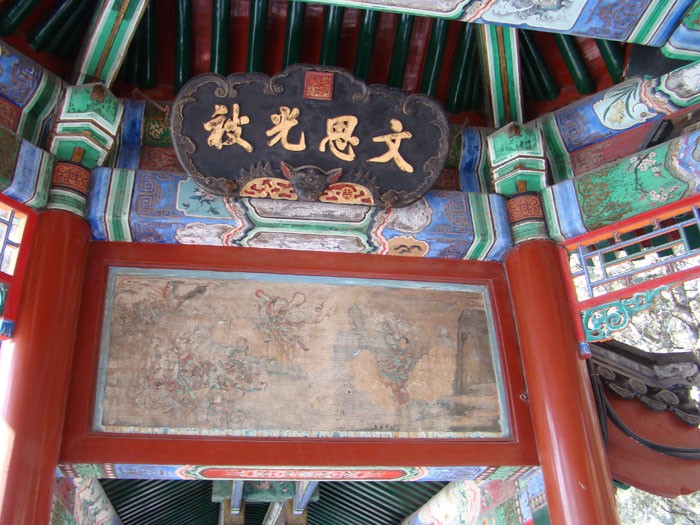
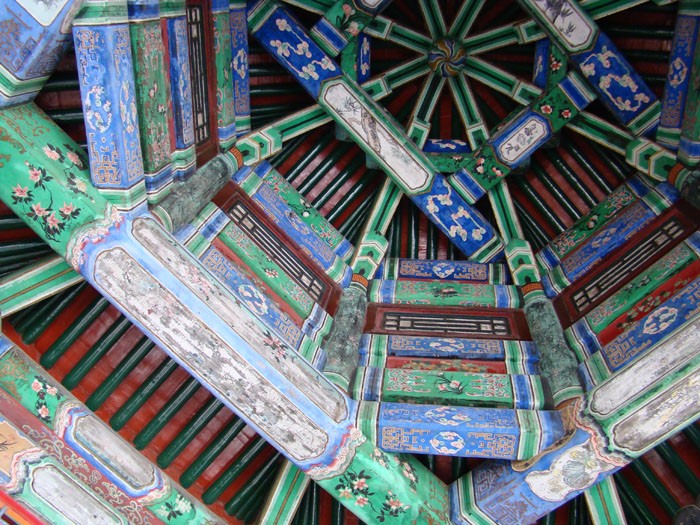
Look at the Long Corridor and you learn what 'carved beams and painted rafters' means.
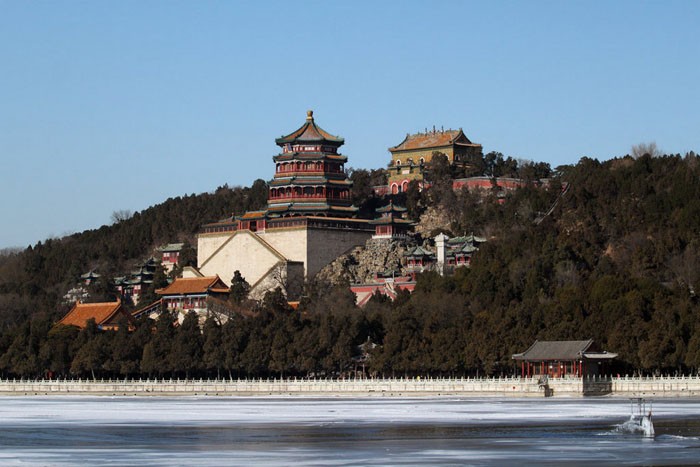
The Tower of Buddhist Incense stands midway up the central front slope of Longevity Hill. It was the place where Empress Dowager Cixi worshipped Buddha. What use was such ruinous devotion?
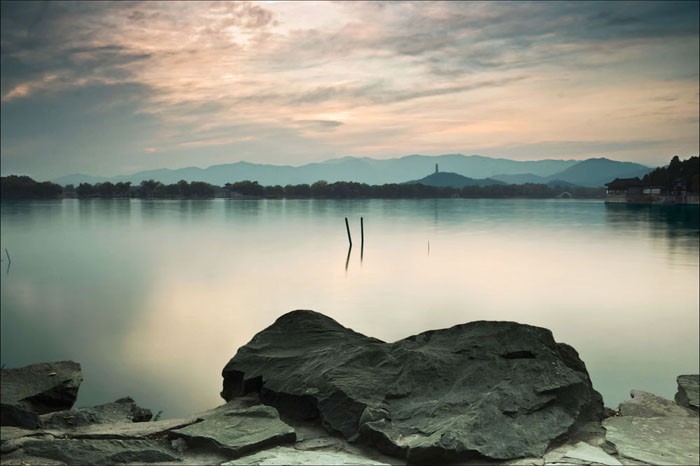
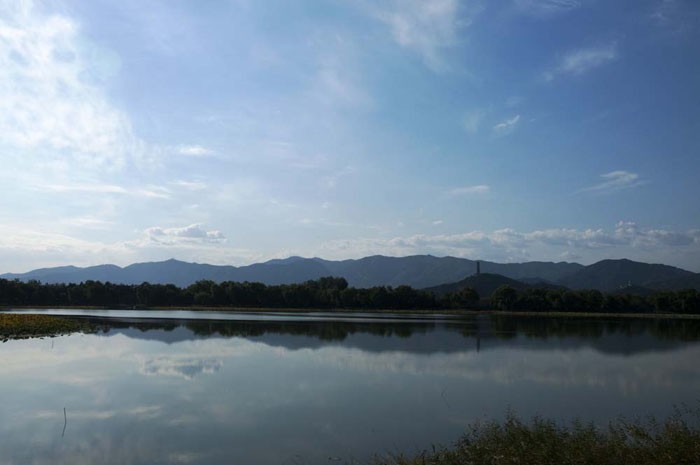
Kunming Lake is the main lake of the Summer Palace and covers three quarters of the whole garden. It is the largest lake among the Qing royal gardens. The long West Causeway in the lake was built in imitation of Hangzhou's West Lake, and it gives the place something of the spirit of southern waterscapes.
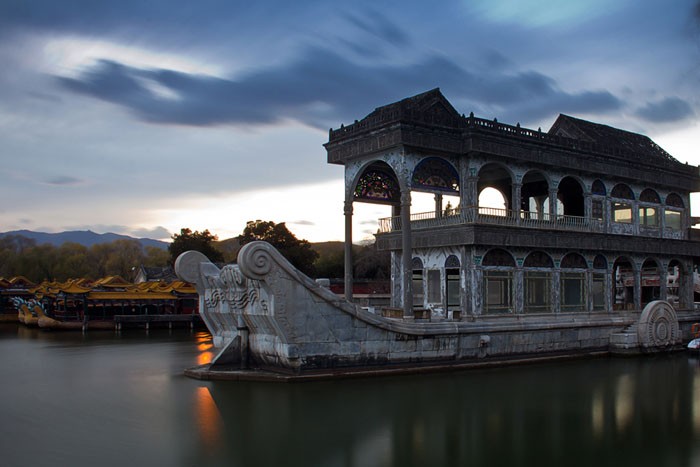
The Painted Boat is a large stone ship, carrying the meaning 'seas calm and rivers clear.' It was originally a wooden boat that could sail. After British and French forces burned it, it was rebuilt as a stone boat—meant, this time, to be impossible to burn. Instead it became a ship fated to sink. Compared with such carefully made unsinkable boats, perhaps the things that truly do not sink are those that belong to ordinary people.
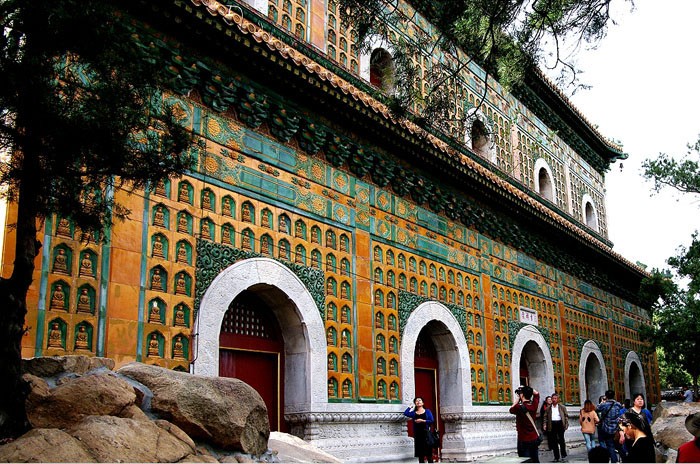
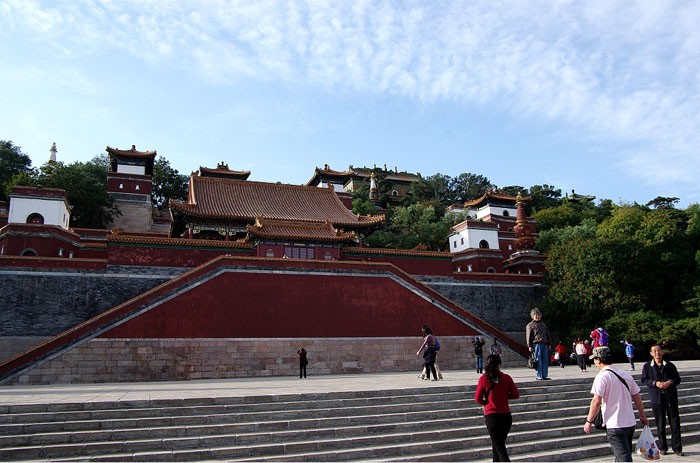
The Four Great Continents are a Han-Tibetan building complex in the middle of the back hill, covering 20,000 square meters. The four great continents and eight small continents are arranged around the Xiangyan Zongyin Pavilion, which symbolizes Mount Meru at the center of the world. To the southeast, southwest, northeast, and northwest of the pavilion stand four lama towers—red, white, black, and green—representing the 'four wisdoms' of Buddhist sutras. The complex shows how flourishing Tibetan Buddhism was in the Qing dynasty.
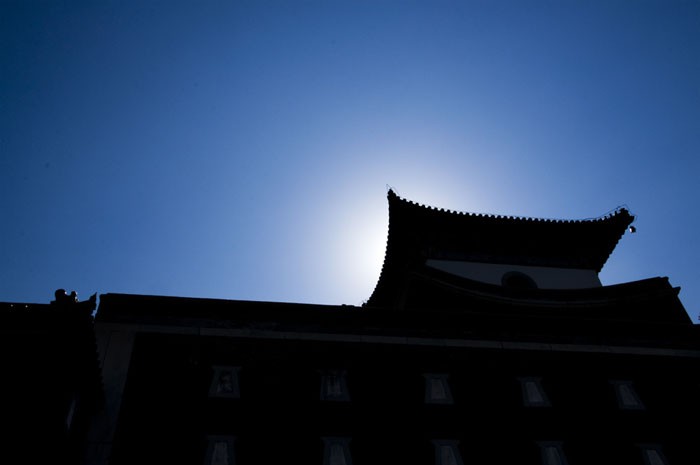
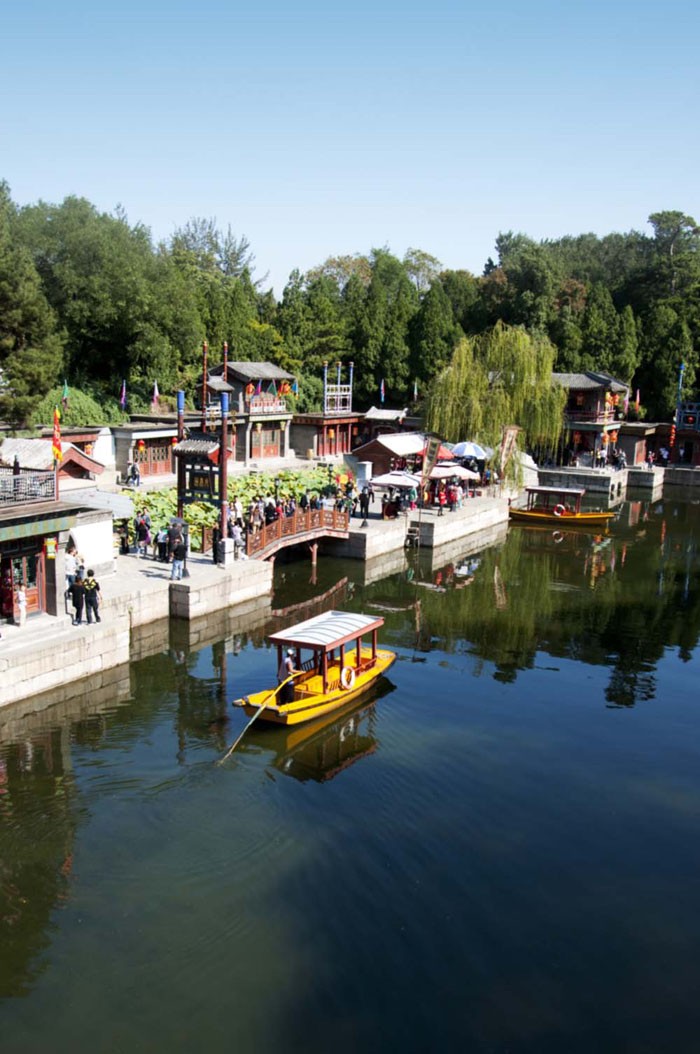
Suzhou Street, also called Merchant Street, was built on both banks of the Back Lake in imitation of the Jiangnan water town of Suzhou. In the Qingyi Yuan period there were all kinds of shops along the banks: jade and antique shops, silk shops, pastry shops, tea houses, and gold and silver jewelry shops. The shop assistants were eunuchs and palace maids in disguise. Business began when the emperor came to visit.
Near Suzhou Street, a sugar-figure blower works calmly, a quiet cultivator hidden in the middle of the busy market.
The Seventeen-Arch Bridge is the largest stone bridge in the garden. It is 8 meters wide and 150 meters long, with 17 arches. The balustrades on both sides carry more than 500 stone lions of different sizes and forms. It is one of the most beautiful views in the Summer Palace.
There are countless views and limited time. The Summer Palace is different at dawn, noon, and dusk, in clear, foggy, overcast, and rainy weather, and in spring, summer, autumn, and winter. It is also different in joy, anger, sorrow, and happiness. To discover its beauty, you have to go with your own heart, in the season, weather, and hour you think best. But see it with a calm and benevolent heart, and the Summer Palace is beautiful everywhere and at every hour.