On Lunar New Year’s Eve, the sky over Chengdu was unusually clear, the sunlight mild and generous as it spread across the streets. On the way to Wuhou Shrine, the blue overhead seemed almost washed clean. A few ancient cypresses stood by the roadside in silence, like hands reaching across a thousand years to brush against history. When the wind moved through their tops, it carried that particular softness of Shu’s air, and with it came a rush of associations: the smoke of the Three Kingdoms, the bearing of those long gone.
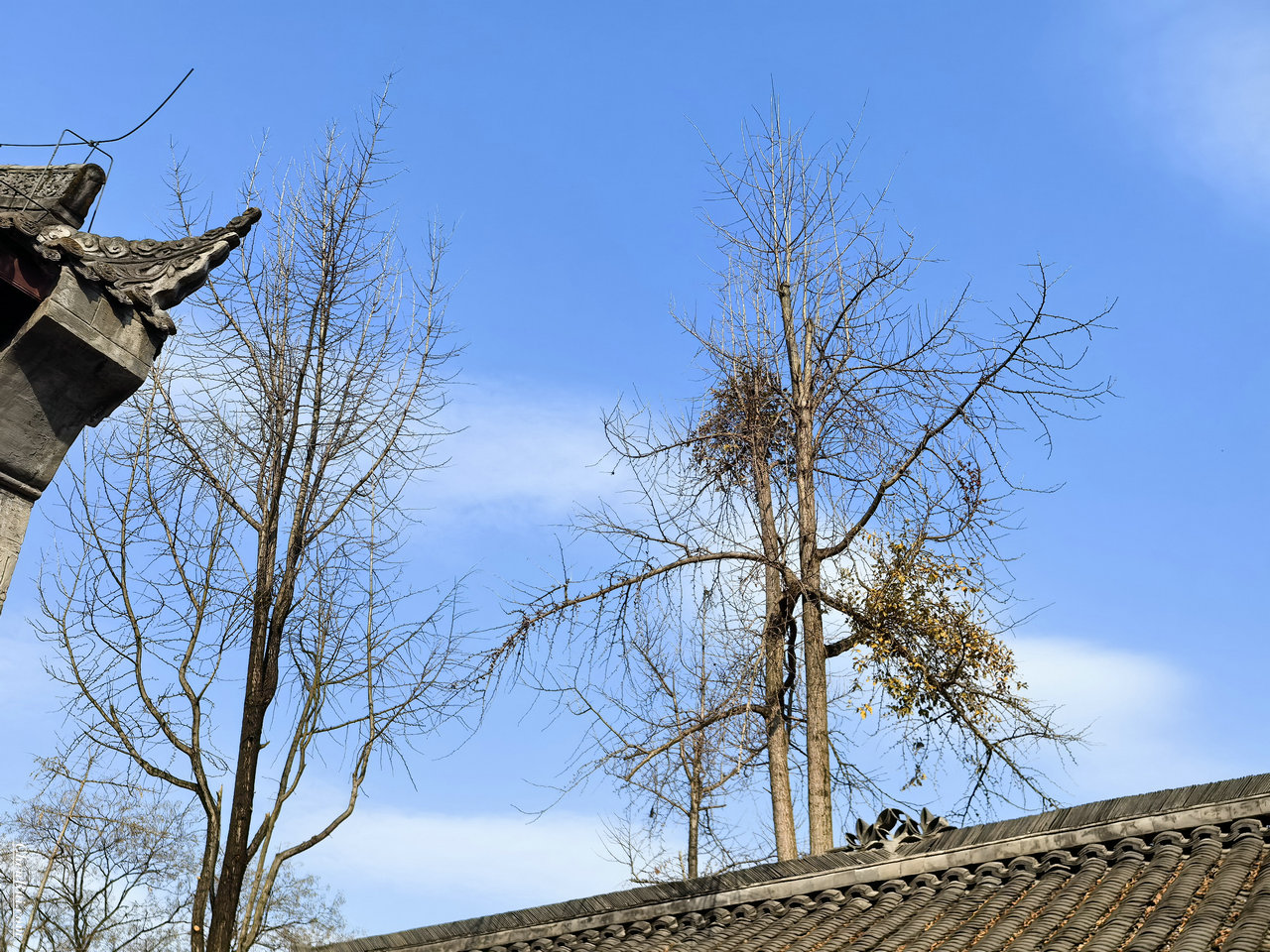
Beneath the plaque of the Temple of Emperor Zhaolie of Han, red pillars and hanging lanterns framed a dense crowd of visitors. People queued in order, waiting to see Liu Bei, to see Zhuge Liang, to see the ancients—and perhaps, in some quieter way, to see themselves. The site was originally a temple dedicated to Liu Bei, the Zhaolie Emperor of Shu Han. In the early Ming period, it was merged with Wuhou Shrine and became the only temple complex in China where ruler and minister are worshipped together.
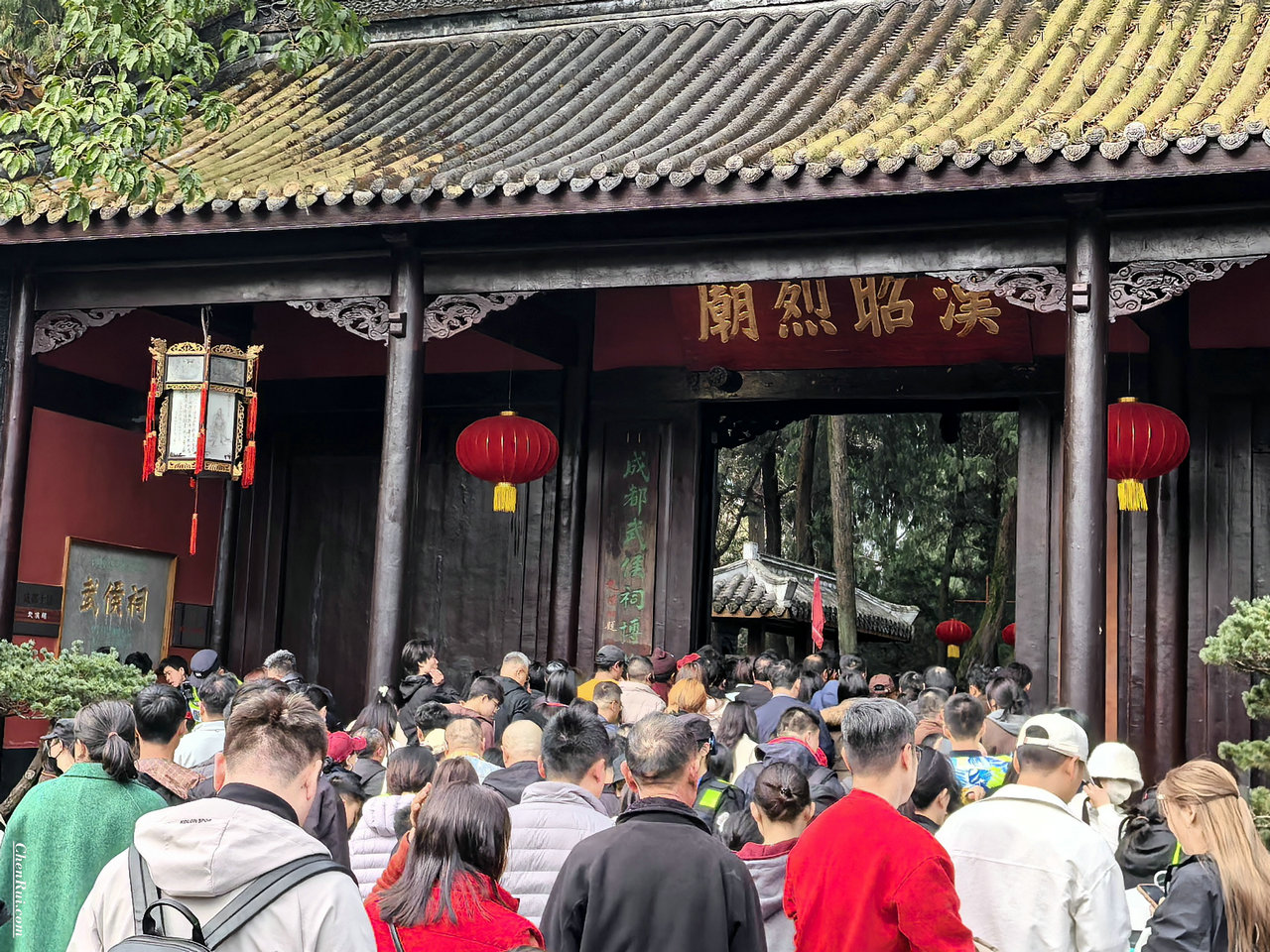
Inside the compound, stone inscriptions set into the walls stood out in white characters on black backgrounds. Many bore the signature of Liu Xi of Fuping. Liu Xi, courtesy name Yikan, was an official from Fuping in Shaanxi during the Qianlong reign of the Qing dynasty. In the fifty-third year of Qianlong, 1788, he served as the Financial Commissioner of Sichuan and oversaw a major restoration of Wuhou Shrine. Reading those inscriptions, it was hard to think of them as cold carvings in stone. They felt closer to a pulse still carrying heat.
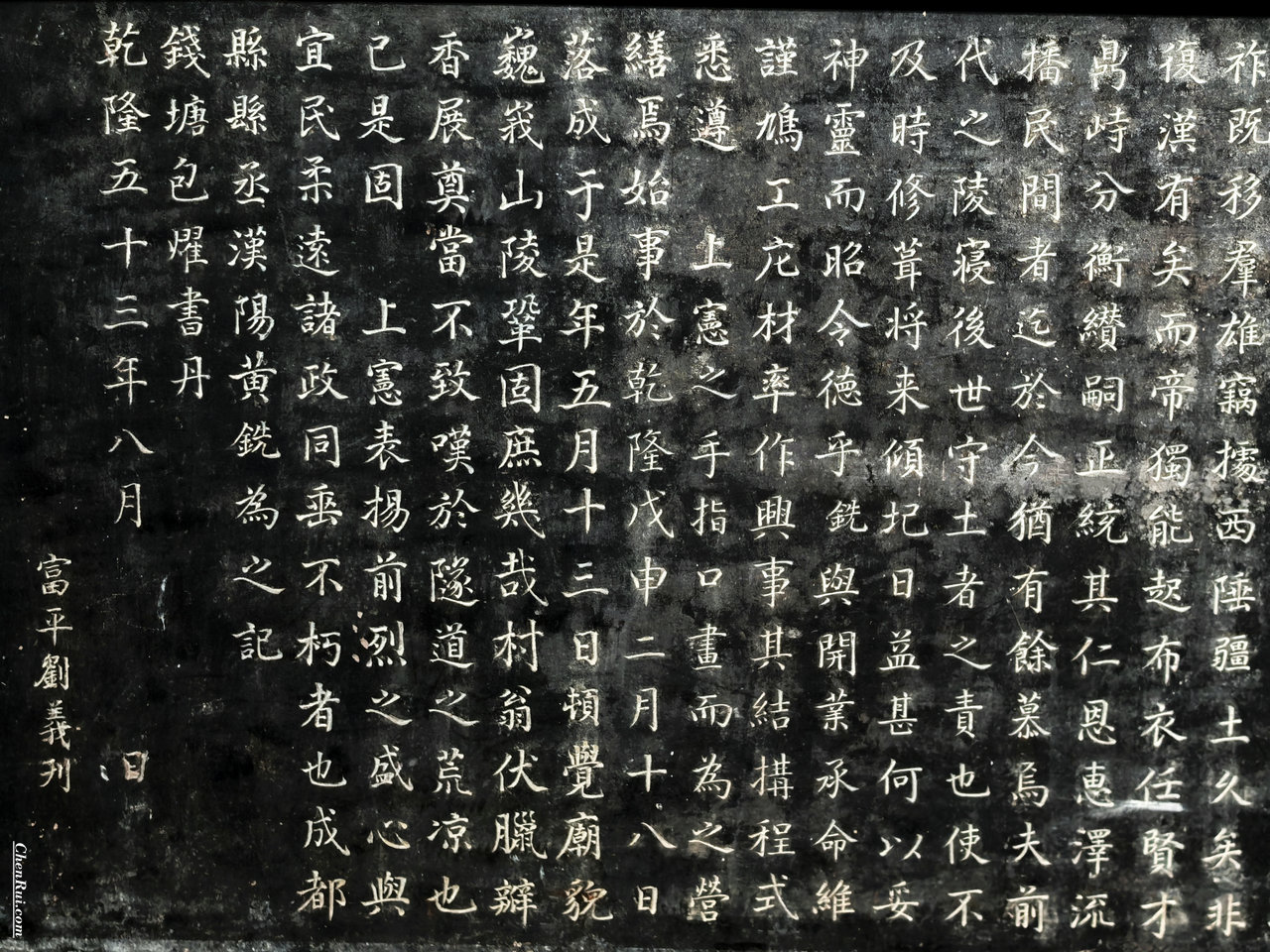
In the main hall, the gilded figure of Zhuge Liang sat upright, feather fan lowered lightly in one hand. The pose called up all the familiar layers of memory: the Records of the Three Kingdoms, the Romance of the Three Kingdoms, and that famous lament—“Since Heaven gave birth to Yu, why also Liang?” Their stories have traveled across centuries. Some remain enshrined together, some vanished into the long river of history and became dust. But all of them lived, and for a time, all of them burned brightly.
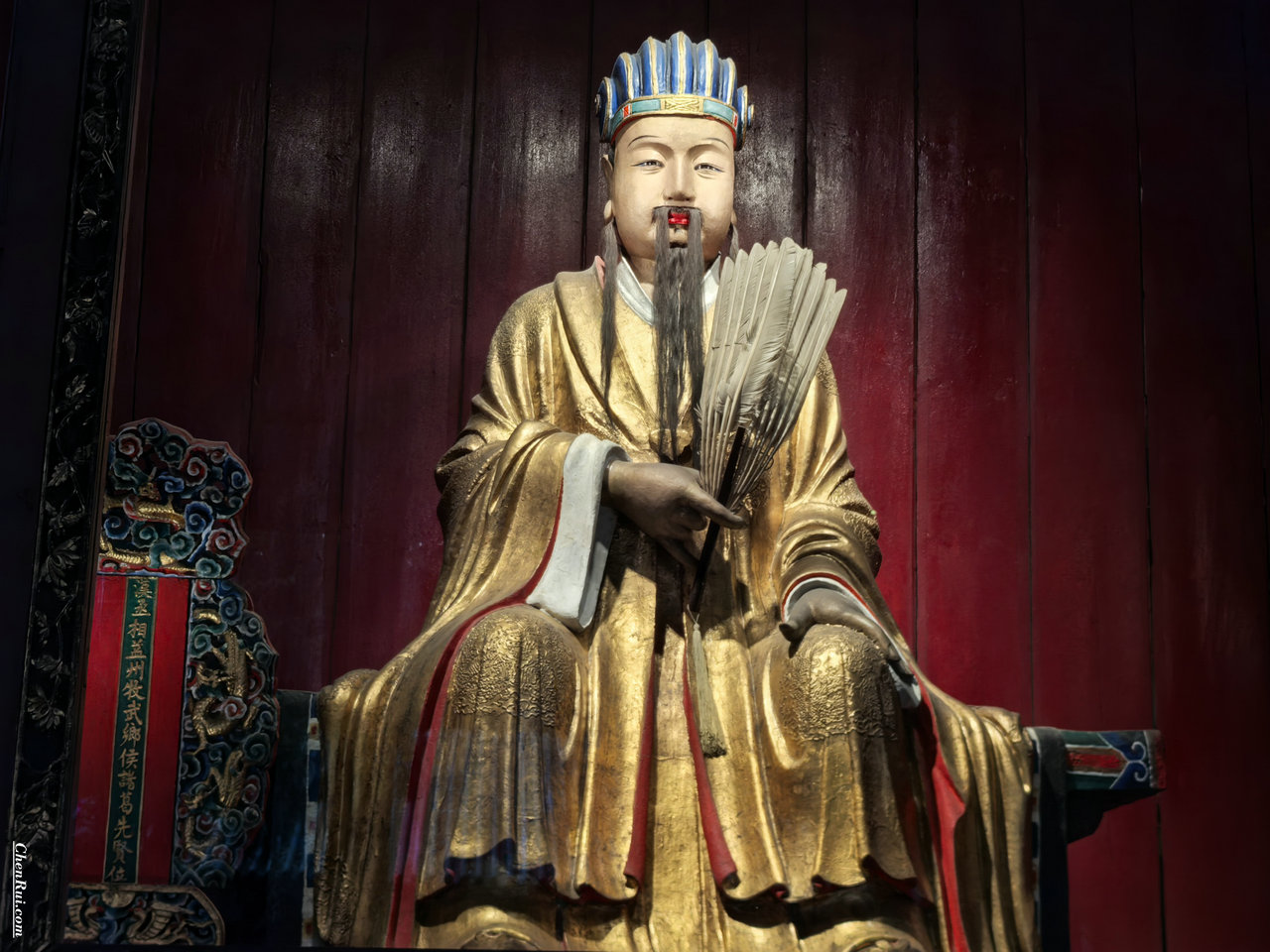
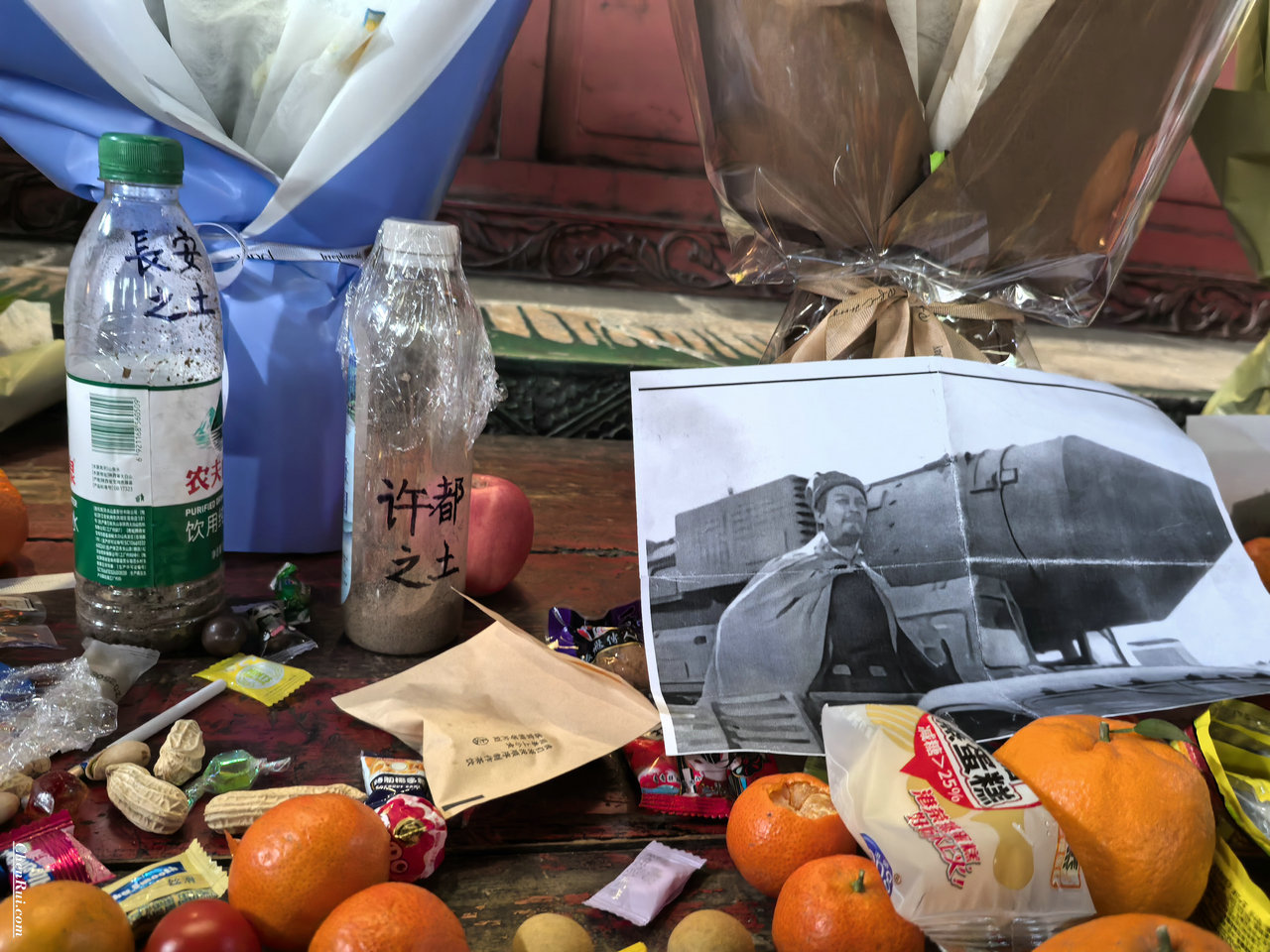
On the offering table lay a black-and-white photograph of a Dongfeng missile. It was impossible not to think: Master Zhuge, the missiles have arrived; China is strong now. Beside it stood two plastic water bottles filled with soil, labeled soil from Xudu and soil from Chang’an. Chang’an had been the old capital of the Western Han; Xudu was where Cao Wei first rose. Zhuge Liang spent much of his later life launching northern campaigns, never managing to recover the Central Plains. And yet here, before his image, were the lands he had longed for all his life.
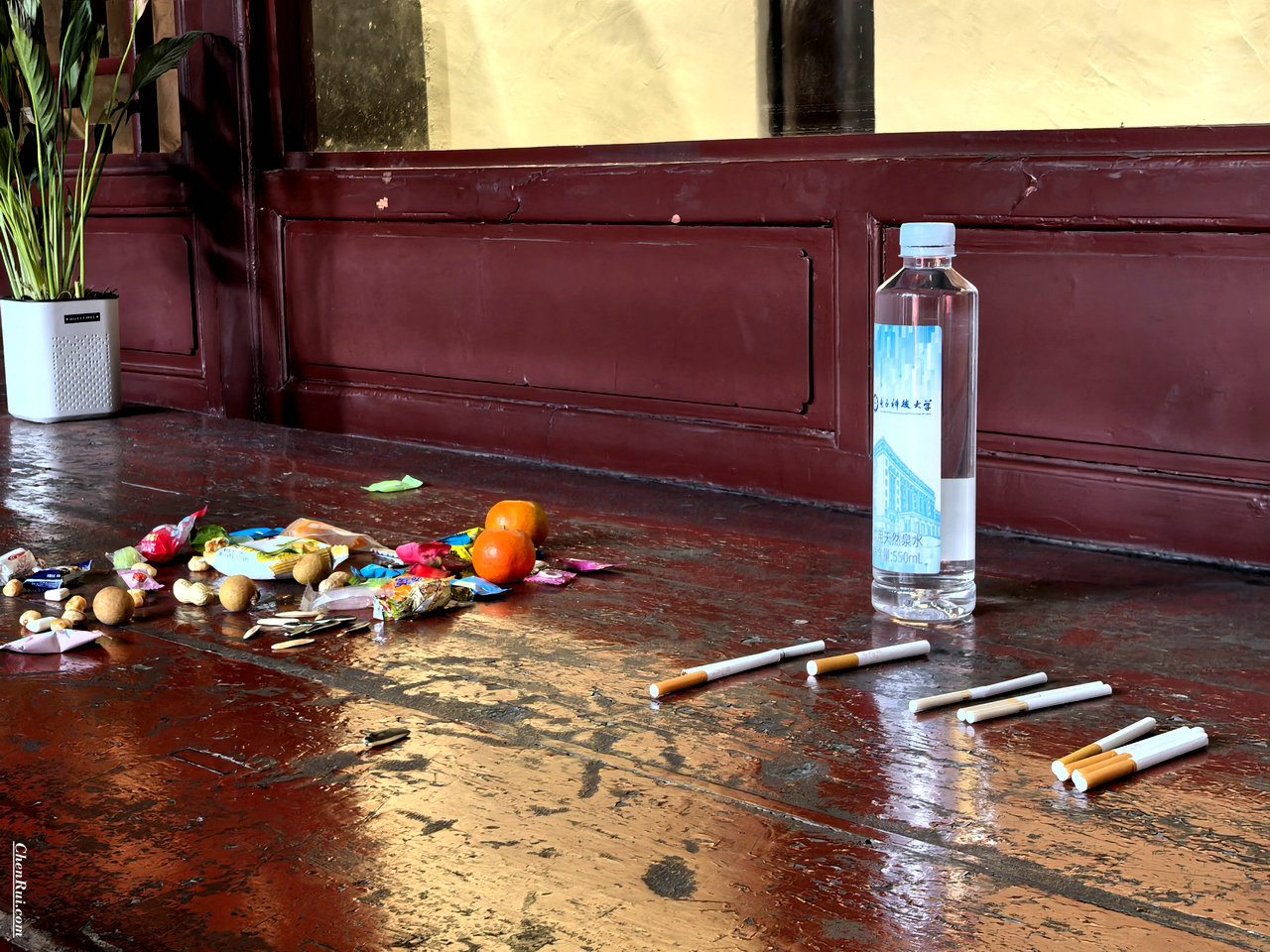
Leaving the Hall of Wuhou, the path leads to the Temple of the Three Oaths, first built in the early Kangxi period of the Qing dynasty. In the 1980s, because of urban construction, it was moved here from Tidou Street. On its altar were the same plain offerings seen elsewhere—melon seeds, fruit, candy, bottled water—and a few cigarettes laid out quietly beside them. A thread of smoke for the heroic dead, for the great figures people have revered for generations, and also for ordinary lives that are no less fervent for being ordinary. Dust rises, years pass. Whether world-shaking heroes or common people, lives are brief, but each leaves behind some singular trace of warmth and brilliance.
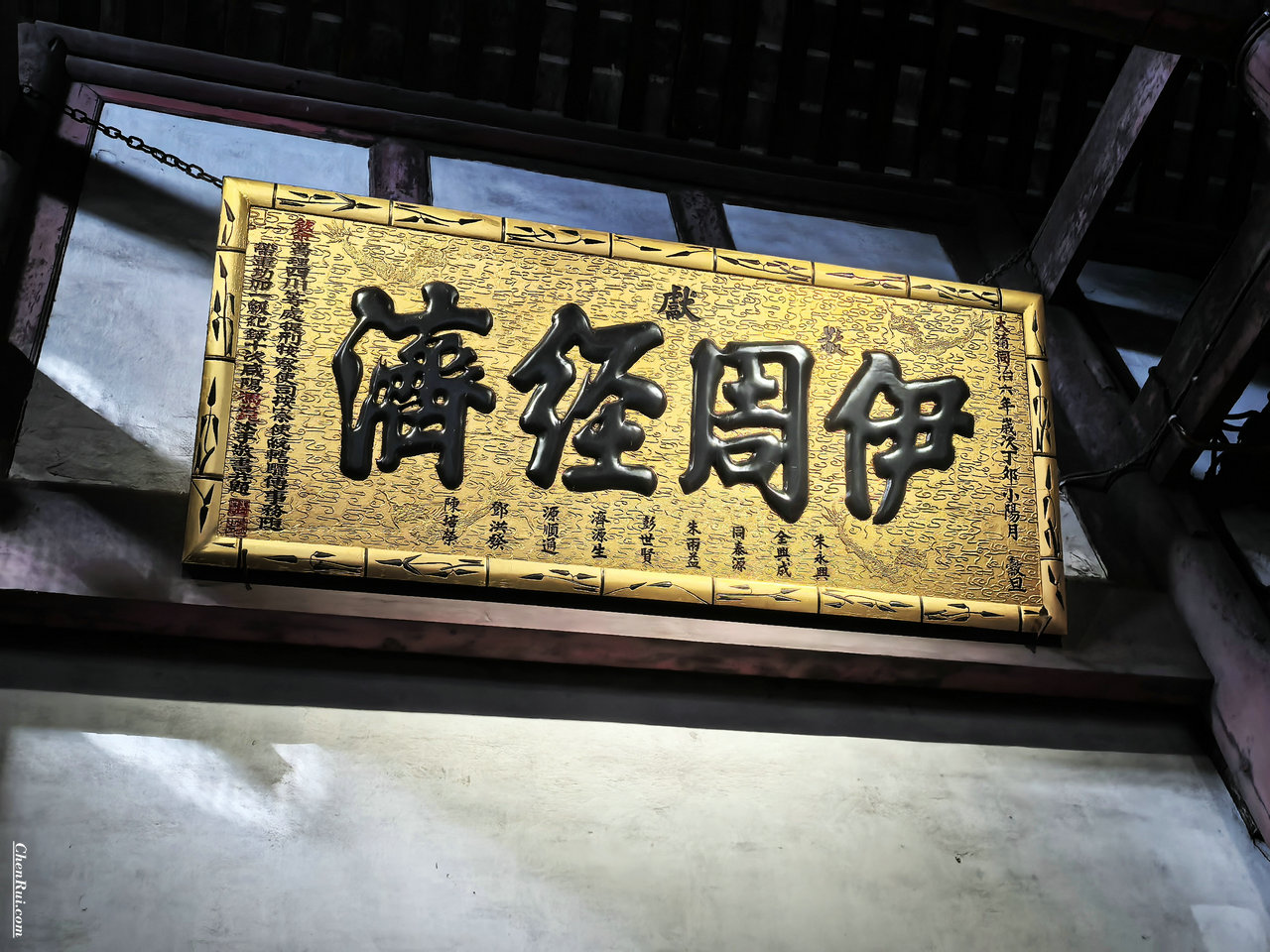
Back in Zhuge Liang’s hall, a gilded plaque on the side wall drew the eye: “Yizhou Jingji”. The phrase was a Qing-era appraisal by Feng Kun. “Yi” and “Zhou” refer to Yi Yin and the Duke of Zhou, exemplary ministers of antiquity; “jingji” means ordering the world and bringing relief to the people. In four characters, it captures more than the image of Zhuge Liang as a brilliant strategist at Longzhong, a planner of campaigns, or a mind behind Chibi. He was also a statesman: effective in governing Shu, attentive to the people, careful in setting standards, clear in reward and punishment, one who took the realm as his responsibility and the common people as his abiding concern.
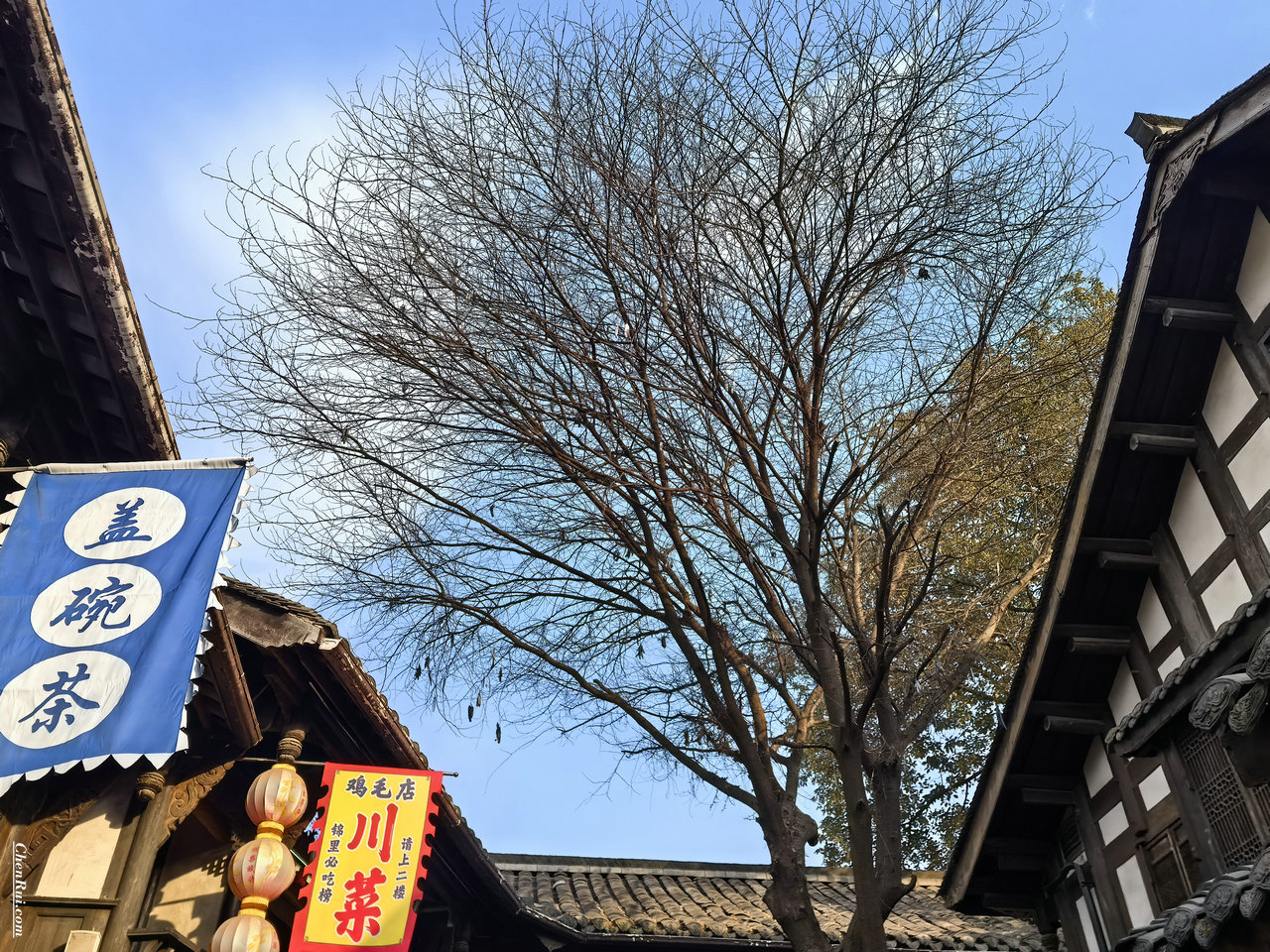
Outside the shrine, the sky opened wide again, and the old trees stretched their twisted branches overhead. A cup of traditional Sichuan covered-bowl tea helped settle thoughts that had been roaming for a thousand years. How many stories of past and present—imperial ambitions, the rise and fall of kings, the grief of heroes—end at last as nothing more than material for later conversation? There is no need to drown in the past, nor to cling too tightly to the sorrow of vanished ages. What matters most has always been the present moment: the breeze before you, the state of your own heart, the vivid and ordinary fact of being alive and trying to live well. Standing there, it was easy to imagine the thunder of ancient warhorses all around, and in the hoarse shouts of battle, something seemed to stir awake in a weary traveler.
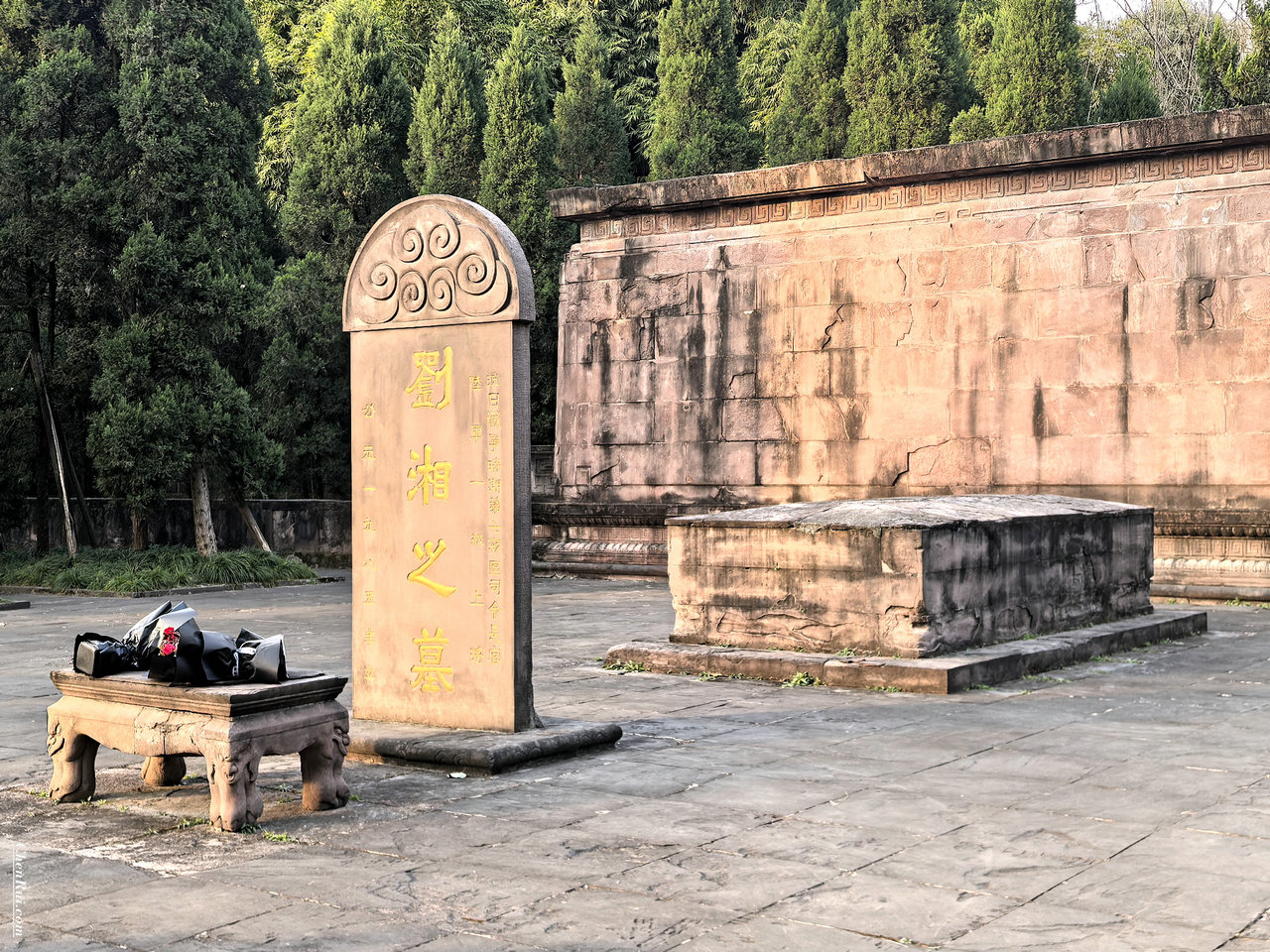
Just beyond Wuhou Shrine’s red walls lies the tomb of Liu Xiang. He was a leading military figure of Republican-era Sichuan. In 1937, he volunteered to lead Sichuan troops out of the province to resist Japan. In total, about 3.5 million Sichuan soldiers took part in the war, accounting for one-fifth of the nation’s anti-Japanese forces, and they fought across nearly every major front. Liu Xiang died of illness in Wuhan in 1938. His final words were said to be: “If the Japanese army does not retreat, the Sichuan army vows never to return home.” During the Cultural Revolution, his tomb was severely damaged, the gravestone smashed and his remains lost. The site today is a cenotaph, containing his clothing and personal effects.
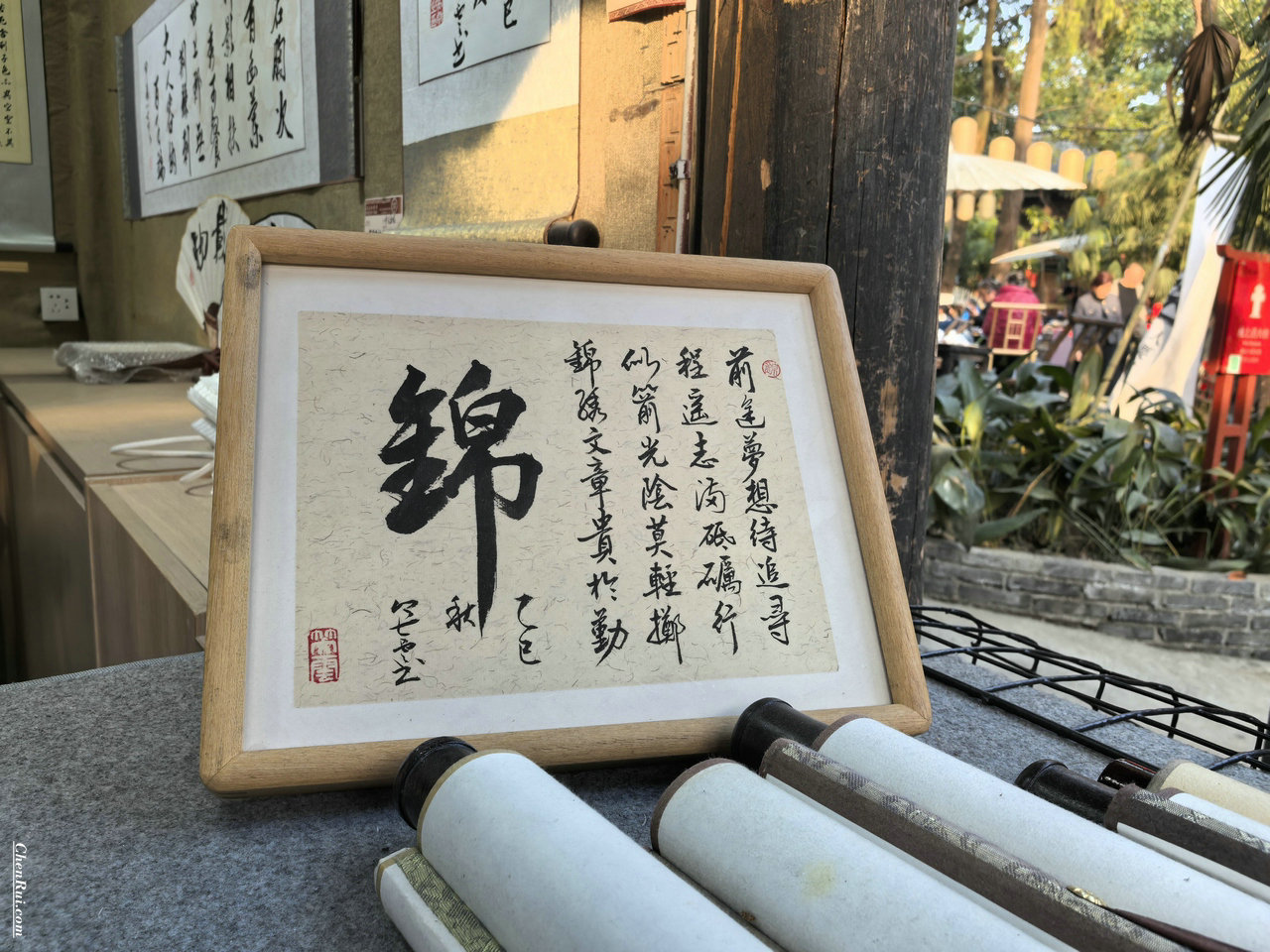
At the end came a large character: 锦—brocade, splendor, Jincheng. Beside it was an inscription:
“Dreams of the road ahead still wait to be pursued; Though the journey is long, resolve must be tempered in effort. Do not throw away time that flies like an arrow; Beautiful writing and splendid achievement are born of diligence.”
With eyes closed, other lines rose unbidden: Li Bai’s “Though Jincheng is a pleasant place, it is not as good as returning home early,” and then his cry from another poem, “Ah! How perilous and high it is—the road to Shu is harder than climbing to the blue heavens.”
In the end, life or death, ancient times or the present—it all comes to seem like one vast dream.