Red Star Over China
Also known in Chinese as Westward Journey, Edgar Snow’s Red Star Over China became remarkable because it looked directly at a place most outsiders only knew through rumor, denunciation, and fear.
At the time, the people Snow went to see were widely called bandits. The land they occupied was described as dangerous, secretive, even wicked. Their cause was often dismissed as an experiment doomed to fail.
Then an outsider arrived, not to repeat what others had said, but to go there himself. What he found overturned the easy judgments of the outside world. The so-called bandits appeared, in many ways, more disciplined and humane than those who loudly condemned them. The closed-off territory was not lifeless or chaotic, but full of energy, order, and expectation. For readers who had accepted the old descriptions, Snow’s account was startling.
Years later, those people would help remake China, and the spark from that isolated region would spread far beyond its original boundaries. In retrospect, the great undertaking had already begun to mature among those who had been slandered and in the blockaded land few outsiders understood. That such a major historical force could grow almost unseen is part of what gives Snow’s journey its weight. He was willing to go where others would not, and to look before judging.
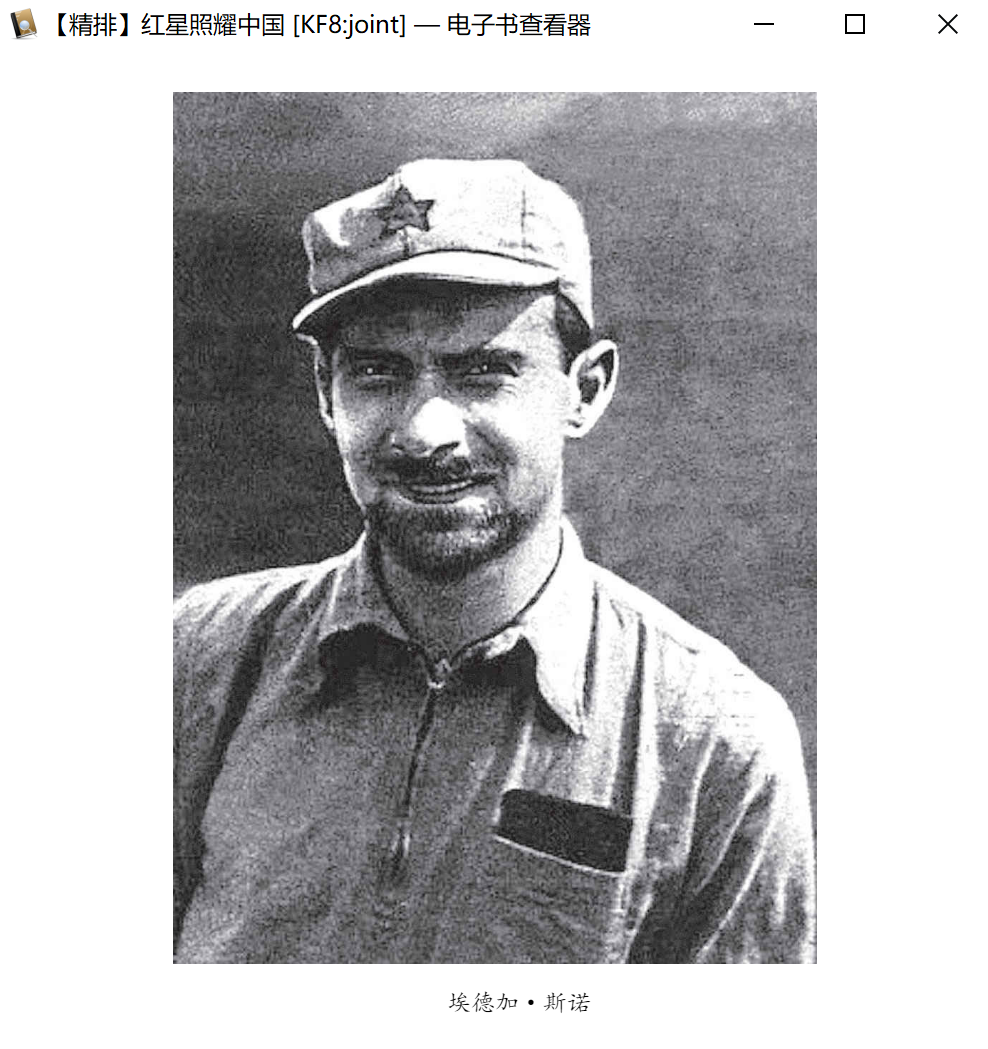
One of the most memorable passages comes near Snow’s departure from Bao’an. The mood is not grand or ceremonial, but intimate, full of teasing, unfinished promises, and the ache of leaving:
The last time I walked down the main street of Bao’an, the closer I came to the city gate, the more reluctant I felt to go. People leaned out of office windows to say goodbye. Every member of my poker club came out to see me off, and some of the “little devils” walked with me as far as the foot of the city wall. I stopped to take photographs of Old Xu and Old Xie, who put their arms around each other like schoolboys. Only Mao Zedong did not appear; he was still asleep.
“Don’t forget my artificial arm!” Cai Shufan called out.
“Don’t forget my photographs!” Lu Dingyi reminded me.
“We’ll be waiting for your air force!” Yang Shangkun said with a laugh.
“Send me a wife!” Li Kenong demanded.
“Bring back the four ounces of cocoa,” Bo Gu complained.
When I passed the Red Army University, all the students were sitting outdoors under a large tree, listening to Luo Fu give a report. They came over to shake my hand, and I muttered a few words in reply. Then I turned, waded across the stream, waved goodbye to them, and soon mounted my horse to follow my small party on the road. At that moment I thought: perhaps I was the last foreigner who would ever see them alive. I felt very sad. It seemed to me that I was not going home, but leaving home.
That sense of farewell gives the book much of its human force. Snow was not merely recording political slogans or military movements. He was watching people in a place the world had been taught to misunderstand, and he recognized that something larger than rumor was taking shape there.