It feels like I haven’t written in ages, though I can’t honestly blame myself for that. September had me in a panic; October buried me alive. Life came on like rapids, and I was no match for it. I kept getting swept so deep into errands, deadlines, and obligations that living itself seemed to go missing somewhere in the process. At night, just before sleep, I would interrogate myself so furiously that I ended up furious at my own existence: how did you manage to live like this? Then I’d quarrel with myself until dawn, cry for an hour, wash my face, and go to class.
This routine, naturally, ran year-round.
Whenever I try to recount my life, books and films tend to take over the whole story. After a while I realized there’s something murky in that habit: I can’t keep borrowing the beauty of other people’s works to cover up the flimsiness of my own days. So I’ll keep that part brief.
I just finished 1587, A Year of No Significance and became thoroughly possessed by the Wanli Emperor/Zhang Juzheng dynamic. I then spent the night reading twenty pieces of ship fic, spiritually full and grateful to the one who made this possible. Only later did someone inform me that this pairing is practically a hot fandom in Ming-history circles. My respects. I hadn’t expected to stumble into such a thriving fandom by accident.
I also started the fourth Hitchhiker’s Guide to the Galaxy book, which I think I like slightly more than the third. As for everything else—odds and ends, scraps and debris—if I can’t remember them now, they’re not worth turning on my laptop hotspot and wasting my phone data to look up.
That image, really, sums up most of my reading life.
September’s major cultural undertaking was a complete Tony Leung marathon. A serious event. Mr. Yee and Mr. Chow; ruthlessness and elegance fighting it out inside the same man; Infernal Affairs facing off against Lai Yiu-fai. A beautiful man, no matter the hairstyle, can still make my heart pound like a drum.
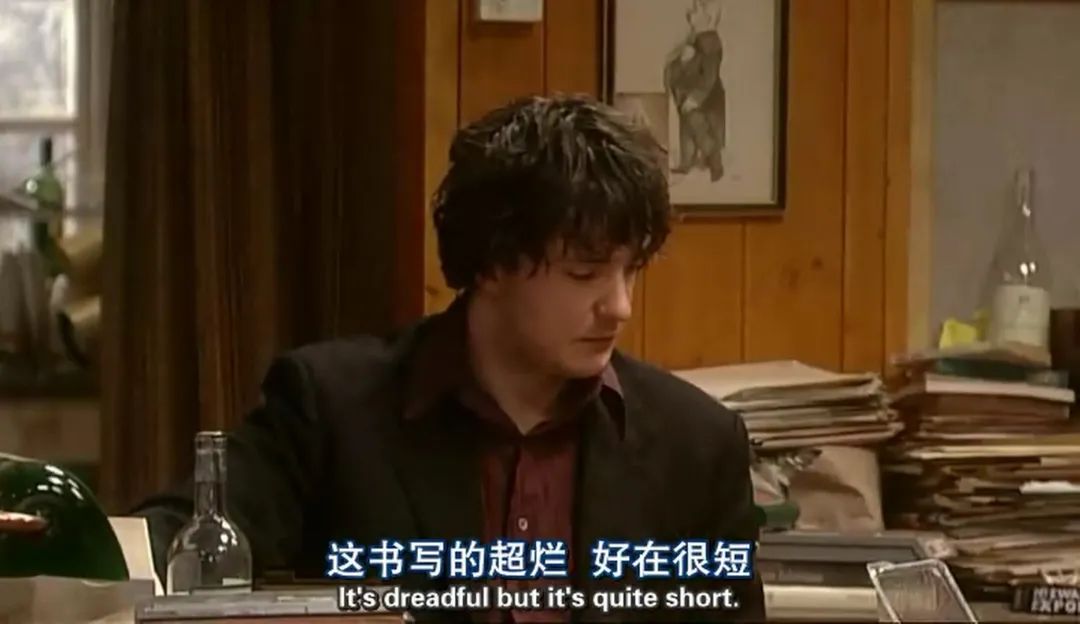
I also tore through Black Books at ridiculous speed and loved it. It gave me the feeling that perhaps a life of loneliness, even one that looked exactly like that, might still be survivable. I watched Portrait of a Lady on Fire too, and especially loved its reading of Orpheus turning back: it was the poet’s choice, not the lover’s. Very good. Very beautiful.
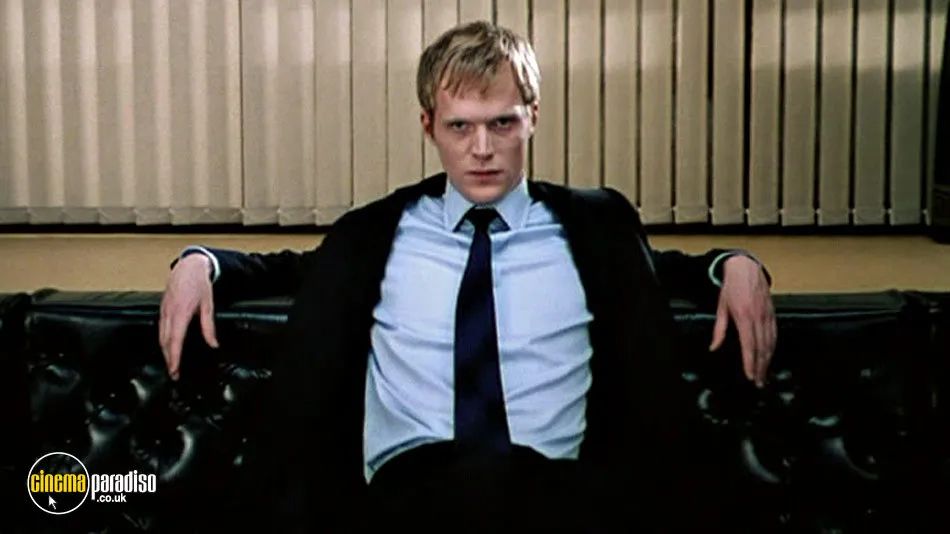
Looking back over my list, I found Gangster No. 1 sitting there as well. Paul Bettany with short blond hair falling over his forehead, gorgeous and cold, with that strange air of a child untouched by the world. Love, in his case, seemed almost like a false proposition. Beautiful, beautiful. A real killer on screen and off in temperament. When I find exactly the kind of beauty I want, I am perfectly content.
My arts calendar in September also included the dance production Deep in Memory and the play Shirley Valentine. The latter made me so happy that even now the happiness still has a dizzy afterglow. What I wrote right after seeing it still feels true:
I came out of the theater and remained helplessly inside that happiness. It was so lovely, so joyful. The theater itself was tucked away in a narrow alley, the kind you can only find after several wrong turns. Before the show I wandered into another little street and ended up in a tiny sushi place so cramped you could hardly turn around in it. I ate tiny sushi at a tiny square table; even the wasabi the server squeezed out for me came in a tiny little lump. It felt as if both the world and I had suddenly become very small.
Shirley Valentine made me absurdly happy. The whole thing was performed by one actor, and line after line sparkled with wit. Mockery, delight, a woman in a long dress spinning on a Greek beach—who is she? How did the woman once soaking in a tub of vanilla ice cream with Joe become “Joe’s mum”? After kissing her husband’s damp forehead, what turned him into that man complaining in front of the refrigerator? Did something happen, or did nothing happen at all? So many moments struck me: the high-achieving girl Shirley bullied as a child telling her, in the rain and in total disarray, that she once wanted to be her. Or the silk robe from the neighbor woman, offered to Shirley with all the warmth due to someone brave and marvelous.
Then, suddenly, rose-colored light flooded the back of the stage. In the next scene she appeared in a red dress, the wall in ruins, saying that dream of drinking by the sea had been foolish, because dreams rarely happen where we think they will. It was beautiful, dreamlike. Long after I left the theater I still felt wonderful. The script was light and adorable, the female voice sharp one moment and coy the next. It began with a ticket to Greece, and in the end returned to a courage that has no external push behind it: without that ticket, would we have had the nerve to live the life we wanted?
That was more or less the grand finale of the past two months.
I started drinking this April. At the time my verdict was: I went looking for an addiction and found none. Boring. But evidently Dionysus had not given up on me. Once the semester started in September and life turned grim, I began drinking heavily every night before bed. I bought gin and discovered, to my surprise, that a clear spirit could carry such a bright fruit scent. Unfortunately I never advanced far enough to learn proper cocktails from those lifestyle experts online. The bottle was half gone before I got anywhere. Sometimes I mixed it with cranberry juice and soda. Most nights, though, every sip was cut only with whatever bitterness and misery I had on hand.
Why I started matters least here. Papers, group projects, one chat after another, endless messages in endless group threads—leave out all the details and it comes to this: everyone, at some point, has to live a life they don’t like.
When I can’t be happy, people often tell me my life just isn’t full enough. After two months of fieldwork, I’ve arrived at an answer: a full life does not make me feel that life is meaningful. In fact, meaning is not even a necessary condition for happiness. An hour ago I was doing a major room cleaning and found a small packet of tissues in the corner of the floor, thick with dust. My roommate asked what I was doing. I crouched there and pulled out a tissue to wipe the outside of the tissue packet.
Using tissues to clean my tissues.
I burst out laughing. Controlled-variable method: hypothesis confirmed. Meaning is not required for happiness.
So what is?
As for drinking, practice has led to insight. I haven’t yet reached the point of total loss of reason, but I have experienced the whole package—smallness, heat, hallucination, loneliness, and that drifting, half-dizzy softness. Broadly speaking, it isn’t all that different from being in love. Consider it a substitute product for the loveless. In fact, I think it has certain advantages over love. Once drunk, I tend to let go of my envy toward good writing. I let go of many of my sourer, more misanthropic parts. I remain myself, but I become a better version of myself. It’s a pity that state can’t last.
A few days ago I decided I would quit. With only four hours left before midnight, a friend came to me miserable over the suffering of writing. We were both instantly overtaken by bitterness. She kept sending crying puppy stickers. I had no choice but to open the bottle again and drink heavily. Then I talked it over with another friend and felt even worse. In my diary, that night is now officially recorded as The Night of the Heartbroken Writers. Needless to say, my quitting plan did not succeed.
Unfortunately, this is where the record has to stop. That not-even-very-difficult deep clean somehow used up every bit of energy I had. I sat back down at the computer, typed barely a hundred words, and immediately felt my eyelids start fighting to close. Looking back over what I’ve written, I see that I’ve already mentioned alcohol and beautiful people, so nothing essential has been omitted. That will do. Until next time, if there is one.
Also: during today’s cleaning I cleared away what must have been at least ten years of dust from the windowsill above my head. I had no idea that when dust accumulates to a certain point, it forms bouncing, floating little spheres, as if the dust itself has come alive. I raided a spider stronghold up there; my roommate helped destroy most of it. A few days ago, by coincidence, a spider descended from above and landed next to my cup. That day I praised it for its elegance. Today I demolished its home. I do feel rather bad about it.
The spider wasn’t there at the time—perhaps it had gone out. It may return furious. If by some chance you see this, please don’t come after me. I had my reasons.
Then again, you can rebuild. My estimate is that the next home invasion won’t happen until two years from now, when I graduate and a new student moves into this room. If you want revenge, go find her instead.
And one more thing: in the nest there was a large insect wrapped in dust and webbing. I had no idea that, while I was living my quiet life below, a meticulous and protracted dismemberment had been underway directly overhead. Living beneath an ancient spider den makes me feel that thirty years from now I may end up living that kind of life myself. I can already imagine becoming one of those dry, lonely old maids from García Márquez—ninety years old, unmarried, keeping more than thirty purple cats. The spiderwebs almost make me look forward to it.
Life is unpredictable. I like that.