Last winter a friend said he would take me somewhere in Yuzhong County. He said the name—Guantangou—and I misheard it. Was he talking about Guan’egou in Longnan? He laughed. Guan’egou is away to the south; Guantangou sits inside Xinglong Mountain, much closer to Lanzhou. I had been there before, though only in passing. As the car went up, trees lined both sides of the road, their leaves gone, branches bare and interlaced. It looked like an ink painting. In winter there were few people. The gully was so quiet I could hear my own footsteps.
Ms. Mao met us. She runs the Guantangou scenic area. She took us to see the waterfall, or what remained of it: the water had frozen against the cliff, hanging there like a huge cloud of ice. In summer, she said, crowds come to escape the heat. She prefers winter. Cold, clear, quiet—she imagines it is much like it was 600 years ago.
What did it look like 600 years ago?
In the twenty-eighth year of the Hongwu reign, Zhu Yang, the fourteenth son of Zhu Yuanzhang, was made Prince Su. He took up residence in Ganzhou, today’s Zhangye. At the time he commanded 50,000 soldiers and was one of the frontier princes guarding the northwest. But in the first year of the Jianwen reign, the court began to strip the princes of their power. The young Emperor Jianwen, Zhu Yunwen, had been on the throne less than a year when he deposed five princes. The Prince of Xiang was driven to burn himself and his household to death. Qi Tai and Huang Zicheng were executed. The pressure finally pushed Prince Yan, Zhu Di, into rebellion. The four-year Jingnan campaign ended with Zhu Di’s army entering Nanjing. Emperor Jianwen disappeared. What followed was a still more ruthless purge. Fang Xiaoru was executed along with ten degrees of kin; 873 people were killed, and tens of thousands were implicated.
Before that bloodshed reached him, Zhu Yang asked to move inland. He left Zhangye for Lanzhou, handed over his military command, and turned to raising horses. In Qilihe there is a place called Matan. According to the Cui family genealogy, the Cui family gave this land to Prince Su for horse breeding. The southern mountains of Yuzhong—Huangping, Mapo Yangzhai, and Guantangou—were all his pastures. The name Guantangou comes from a stele erected in the eighth year of the Wanli reign, inscribed with “Sufu Guantan,” the Prince Su household’s official riverbank. The boundary stone still stands in the gully. It has been there for more than 400 years. It watched the Ming fall and the Qing end; it watched Lanzhou grow from a small city of tens of thousands into a provincial capital of millions. Rain and wind have worn it. No one built it a shelter, and no one moved it into a museum.
Ms. Mao guards that stone. She also guards the plants and trees around it. She grew up in this land, then spent more than twenty years in Hainan. When she came back, she repaired the road through the gully. She also built a temple halfway up the mountain, with seven or eight monks living there. She is devout herself. She wants people from the city to be able to come in and see.
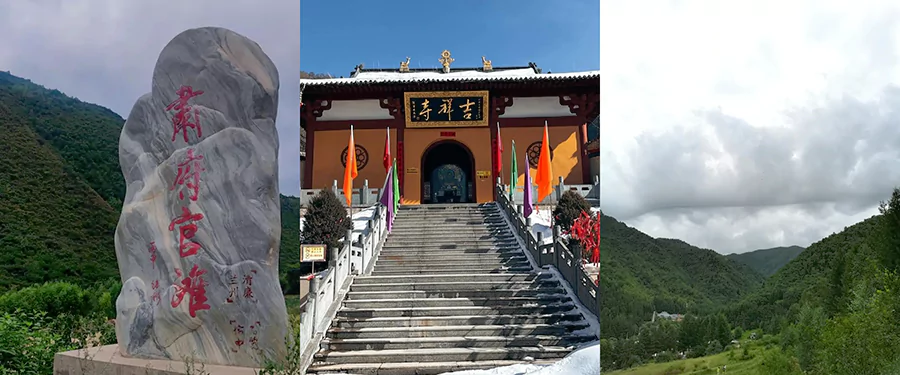
Later I looked up more material and found that Zuo Zongtang also raised horses in this gully when he was recovering Xinjiang. A mounting stone still remains there; it is said that Zuo Zongtang used it. One is Prince Su, the other Zuo Zongtang. More than 300 years separate them, but they were in the same gully, raising horses, both connected to the northwest frontier. One was holding it; the other was taking it back. Six hundred years ago, a prince from Nanjing raised horses here, making a gesture of loyalty to the court and asking for safety. Six hundred years later, a local woman keeps watch here, not for any other reason than that she does not want these things to disappear. The two events are 600 years apart, yet they seem linked.
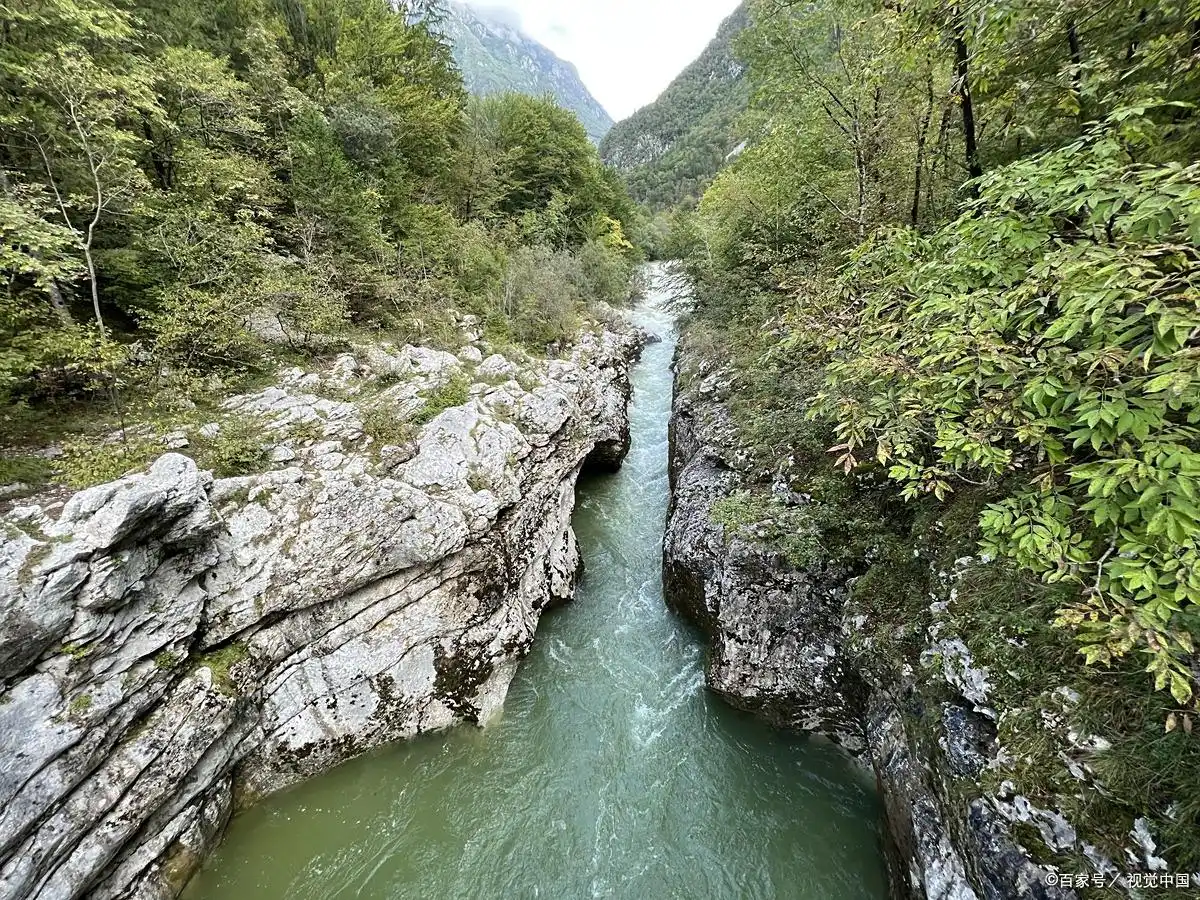
When we left, it was nearly dark. A thin mist had risen in the mountains. Ms. Mao walked us to the gate. Come back in summer, she said. Then the gully is all green. Very beautiful.
On the way back I kept thinking: many people in Lanzhou know Guan’egou, but not many know Guantangou. Guan’egou is natural scenery, beautiful in a bold, open way. Guantangou is history mixed with nature, beautiful in a quiet way. It hides without fanfare in Xinglong Mountain. In the gully there are steles and stones, the sound of horses’ hooves from 600 years ago, and a woman guarding these things so they will not vanish. A city always has a few places left for people who pay attention. Guantangou is one of them.