Before setting out
Once a few long-pending things were finally sorted out, I decided it was time to go somewhere. The sites had been moved over to Tencent EdgeOne, the server had been upgraded to a 4-8 setup, and the PCDN attacks were, at least for now, under control. With all that off my plate, I went out for a trip with my younger brother.
This is my last summer before leaving home. In a little while, I’ll be heading to Shanghai to begin a completely new life, and the thought of that comes with excitement, uncertainty, and a fair amount of unease. Maybe that is exactly why I wanted to spend this holiday looking at Xi’an properly—really looking at it—and saying goodbye in my own way.
It still feels a little embarrassing to admit that after living in Xi’an for more than ten years, I had never truly approached the city as a visitor would. School and daily life took up everything. I always assumed the sights of my hometown would still be there whenever I wanted them, that the stories of the old capital could wait. So I kept passing by. I had never even gone into the Shaanxi History Museum. I had seen the Bell Tower and Drum Tower countless times, but only in passing, never stopping to listen to what a thousand years of history might be saying.
So this time I wanted to slow down: walk through the old streets, taste the flavors that belong to Xi’an, look at the old capital from up close, and revisit the landmarks I had ignored for years. In the end, it felt less like a simple outing and more like meeting both myself and Xi’an again.
The plan, and the heat that wrecked it
At first, the route was straightforward: start at the Shaanxi History Museum around 10:30 in the morning, finish around 1:30, grab lunch, then continue to Daxingshan Temple, the Xi’an Museum, the city wall, Wolong Temple, and finally the Bell Tower before taking Metro Line 2 home.
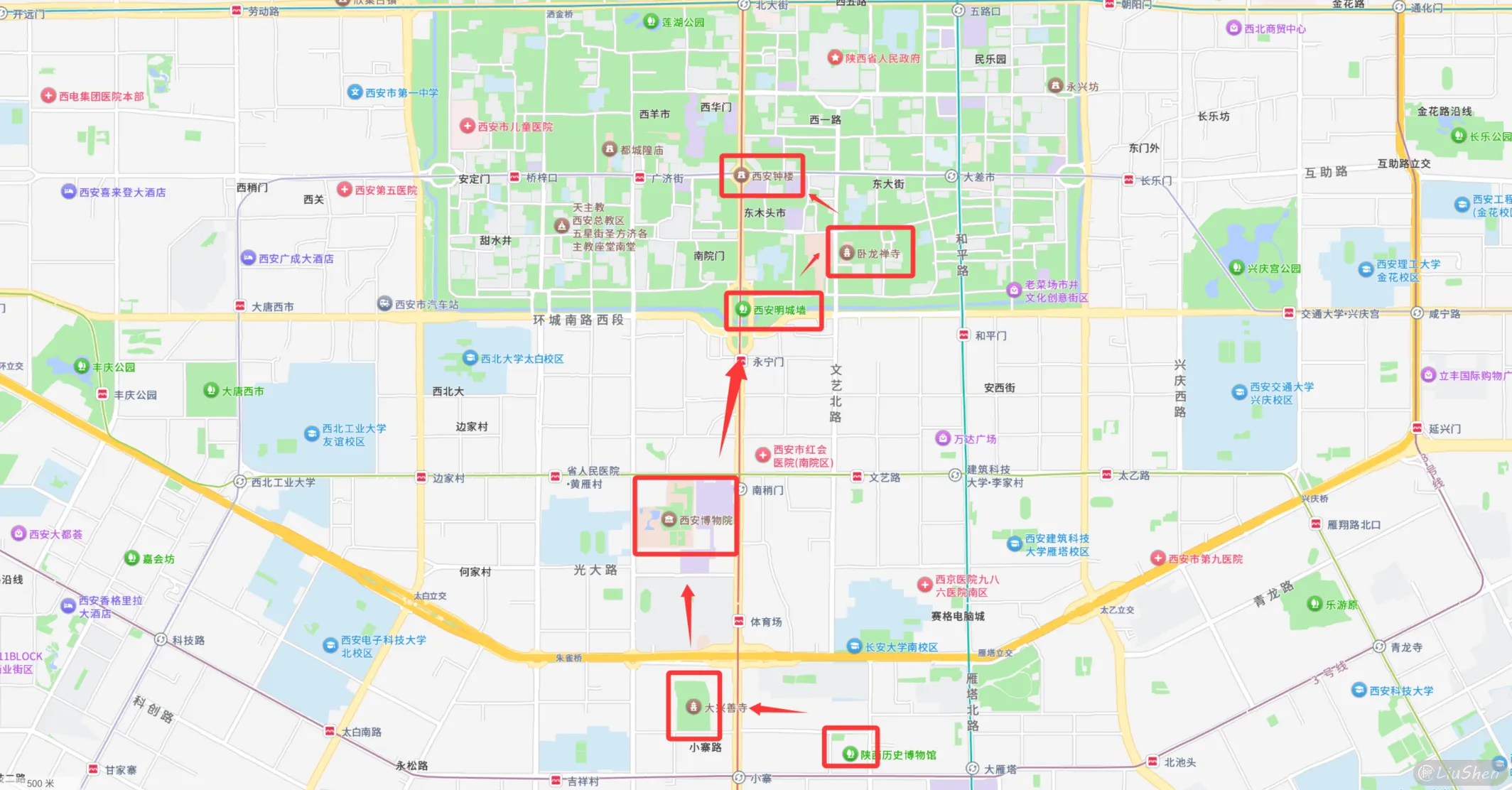
But Xi’an’s summer had other ideas. The heat was far beyond what we expected. Staying indoors every day had not prepared us for the kind of weather that feels like the pavement could fry an egg. To avoid heatstroke, we cut every outdoor stop from the schedule—no city wall, no Daxingshan Temple, no Wolong Temple.
So we rebuilt the day around indoor places instead: the Shaanxi History Museum was non-negotiable, and after that we added the Anrenfang Site Exhibition Hall, the China Qinqiang Art Museum, Xinhua Bookstore, the Bell Tower area, Kaiyuan Mall, and Xi’an MixC.
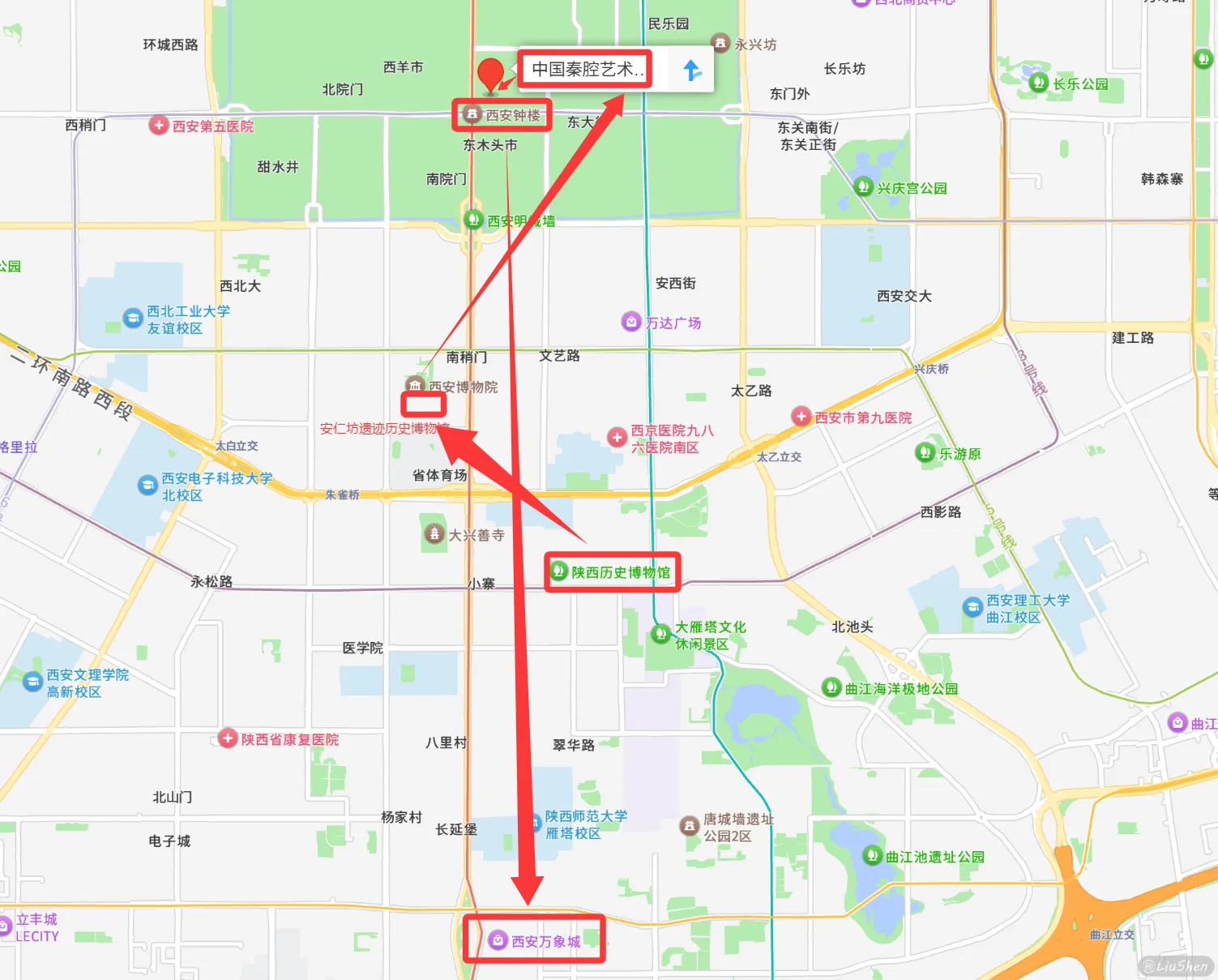
That revised route ended up being ideal for summer: almost entirely indoors, air-conditioned the whole way, and surprisingly affordable. In fact, this trip was practically a model budget outing—almost no spending, but still a full day of wandering across the city. That said, it was still a pretty intense itinerary. Even with the heat-proof redesign, by the end we were definitely tired.
One small regret: the Xi’an Museum sits right beside Anrenfang, but with time running short, we had to leave it for another visit.
Shaanxi History Museum
The Shaanxi History Museum is one of the places people most often associate with Xi’an, and for good reason. Located in the ancient capital, it is often described as a treasury of Chinese civilization—a place where the long development of Chinese history is compressed into a single, immense cultural space.
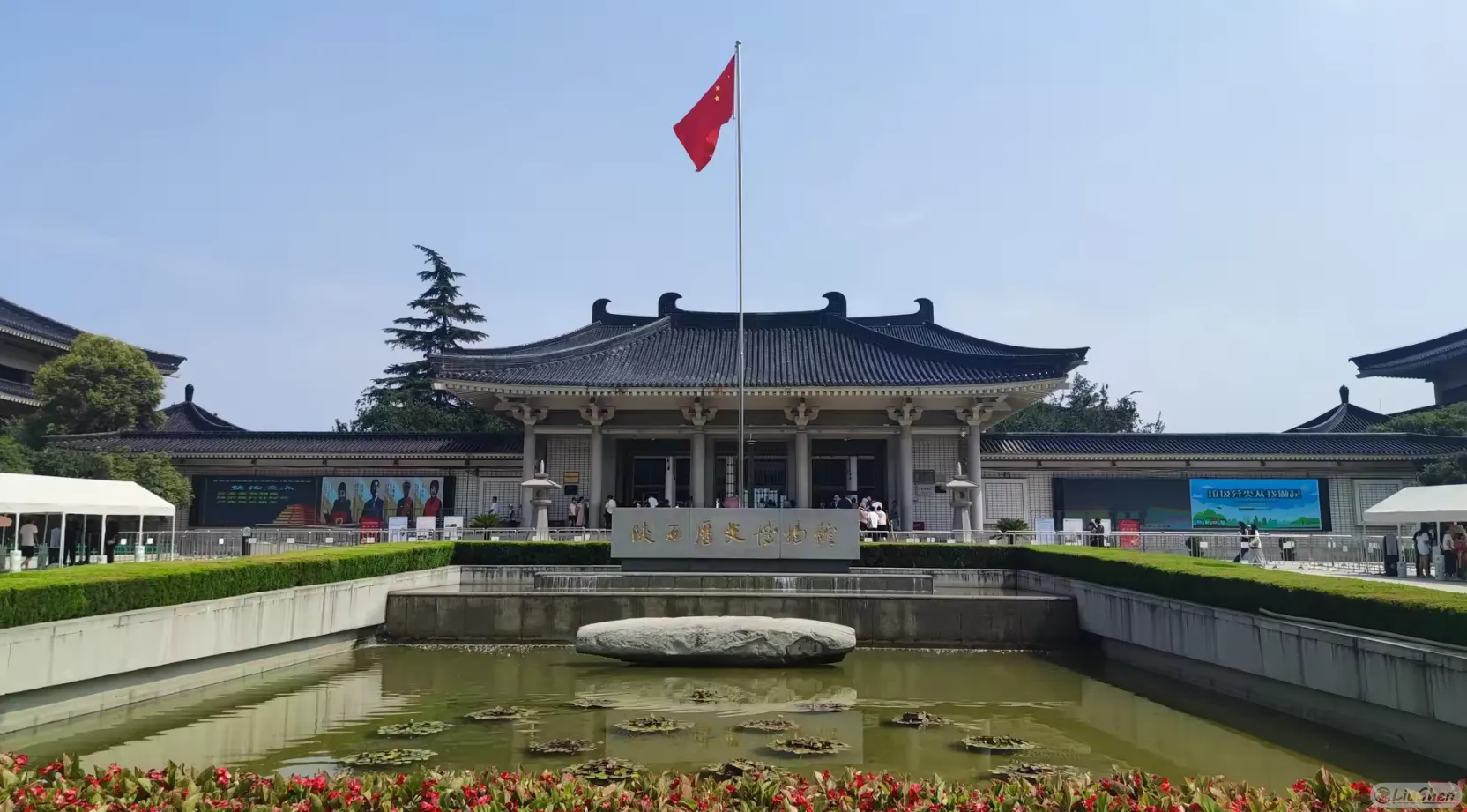
It is not simply a provincial museum in the ordinary sense, but a major national comprehensive museum with an unusually high standing in China’s museum system. In terms of influence and collection scale, it is often placed just behind the National Museum of China and the Palace Museum in Beijing.
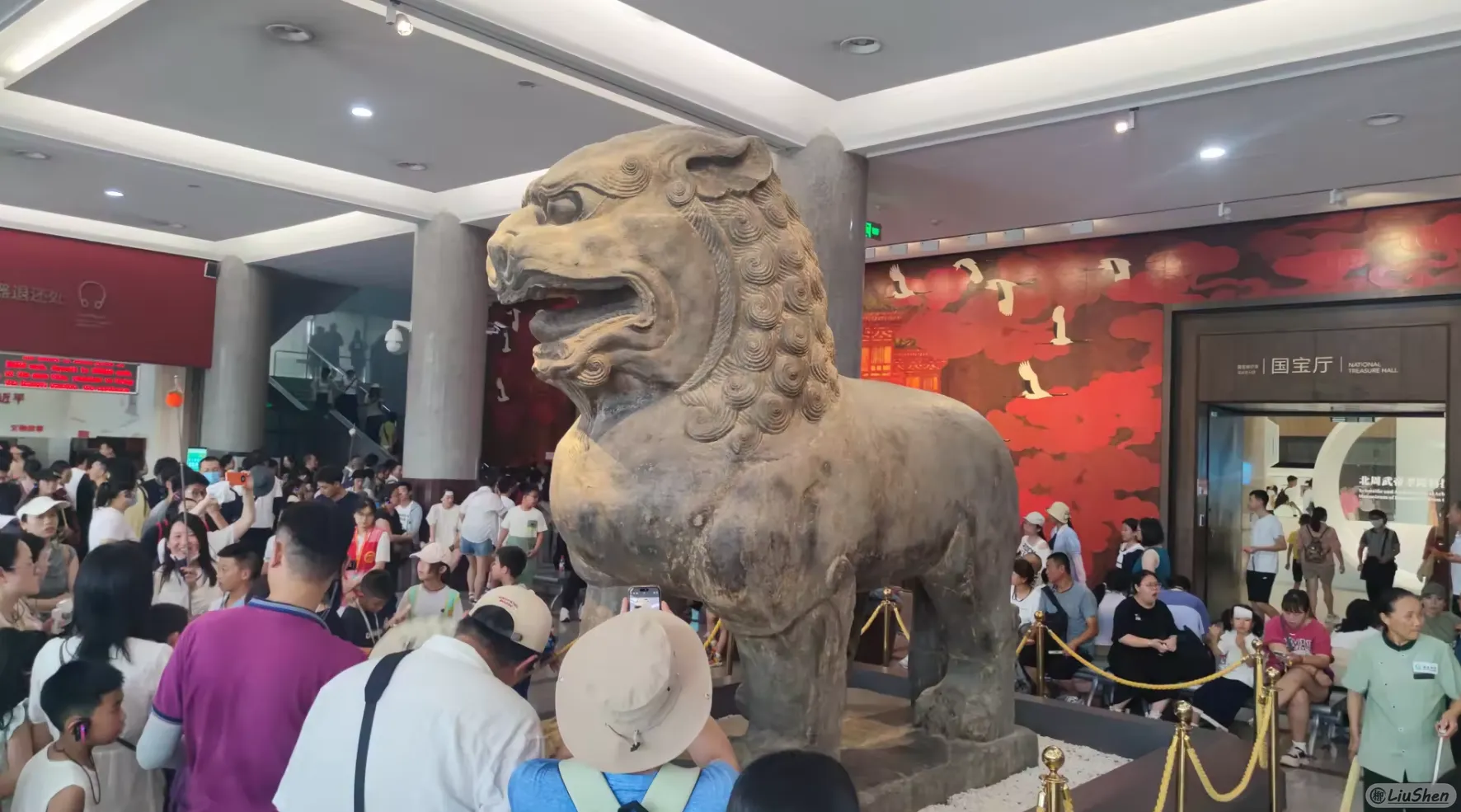
Opened to the public in 1991, the museum covers around 65,000 square meters. Its architecture blends Tang-style grandeur with modern design—grey tiles, white walls, upturned eaves, and bracket sets that make the whole complex feel like a contemporary reconstruction of a Tang palace. The museum was built to present the development of Chinese civilization through the exceptionally rich historical remains found in Shaanxi.
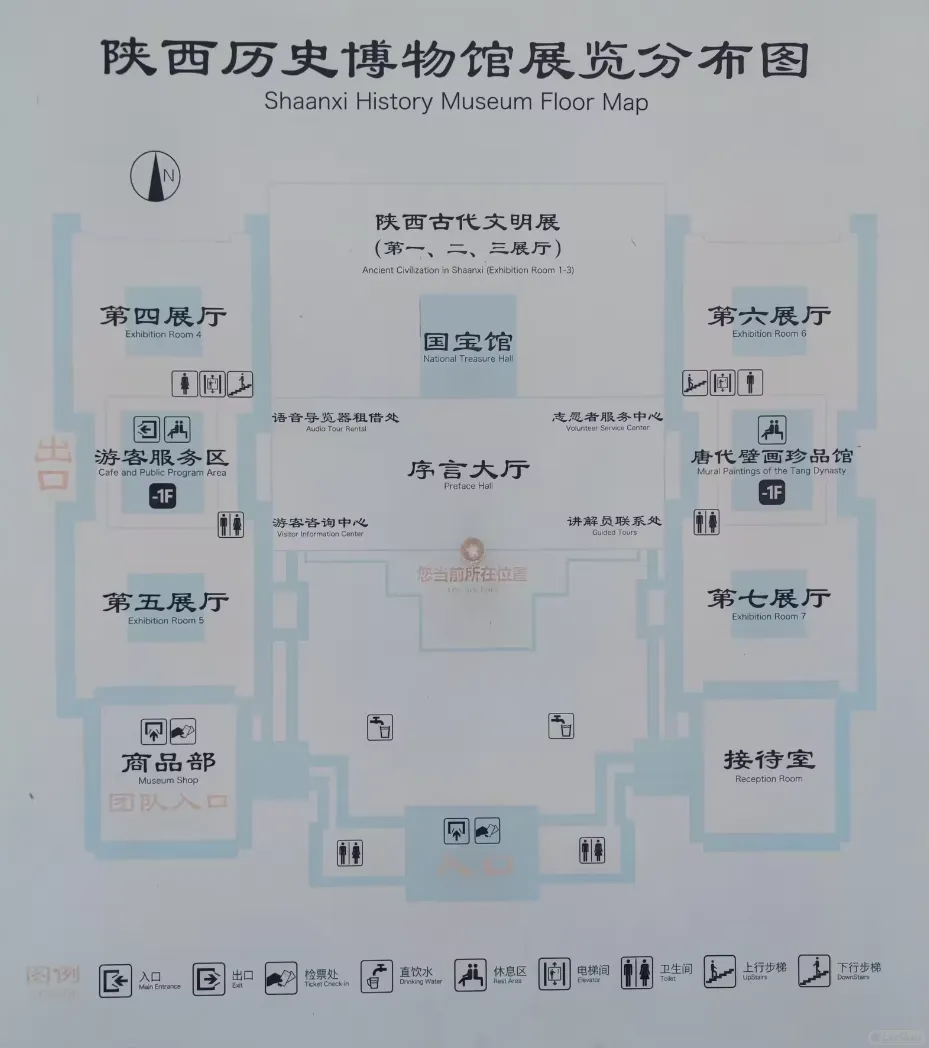
Shaanxi has long been one of the cradles of Chinese civilization. Thirteen dynasties established their capitals here. From Western Zhou ancestral temples and the imperial tombs of Qin and Han to the palaces of the Sui and Tang, the region has accumulated an extraordinary cultural legacy. The museum’s collection exceeds 1.7 million objects, including nearly 8,000 nationally recognized first-grade relics.
A practical note: if possible, it is better to visit between January and April, or from October to December. The weather is more comfortable then, and the experience is much better overall. In summer, the combination of high temperatures and huge crowds can make the galleries feel stuffy very quickly.
Because of the crowd that day, we did not follow the galleries in numerical order. Instead, we moved according to the flow of visitors: Hall 4 → Hall 5 → Hall 2 → Hall 3 → the National Treasures Hall → Hall 1. Halls 6 and 7 were closed for maintenance.
Hall 4: the splendor of the Tang hoard at Hejiacun
The first thing that hit me in Hall 4 was the sense of craftsmanship on display. This gallery showcases some of the museum’s most representative special exhibitions, and among them the Tang treasures unearthed from the Hejiacun hoard are especially famous.
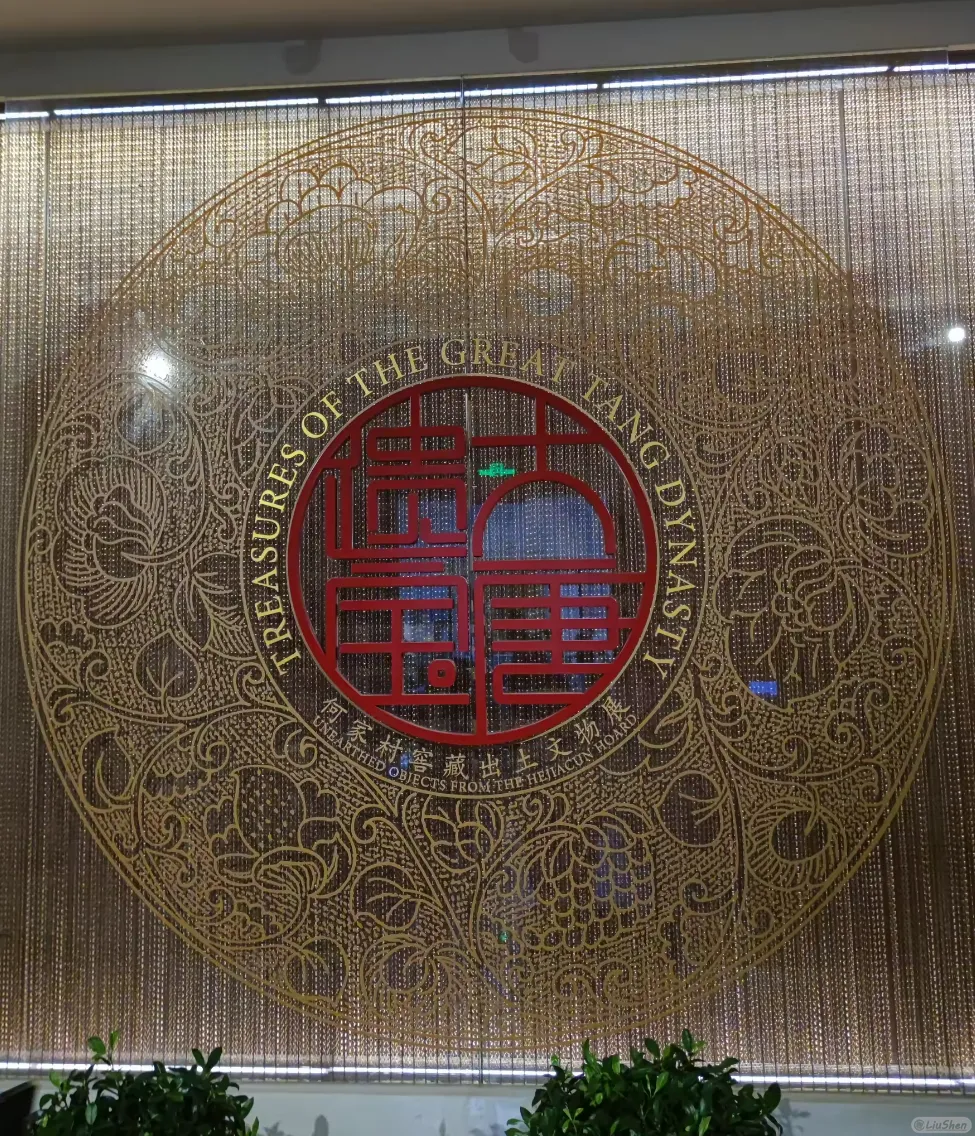
The finds come from a Tang-period cache discovered in October 1970 at a construction site in Hejiacun, in the southern suburbs of Xi’an, corresponding to the former Xinghuafang area of Tang Chang’an. Archaeologists uncovered two large ceramic jars and one silver jar containing more than a thousand precious objects. It is widely regarded as one of the most important archaeological discoveries related to the Sui-Tang period in the twentieth century.
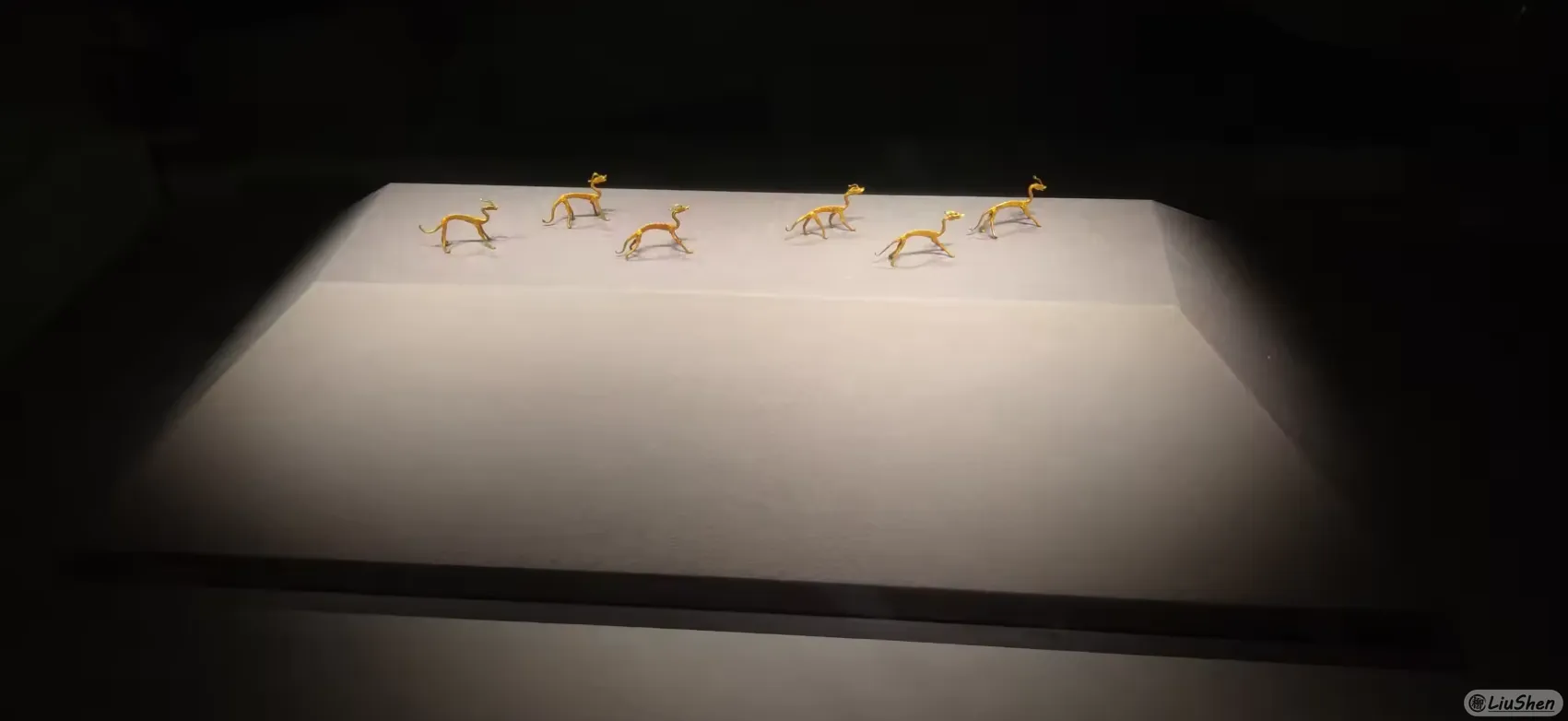
The range of materials is astonishing: gold and silver ware, agate, jade, glass, crystal, coins, and even valuable medicinal materials. The forms and decorative patterns carry both the full confidence of the High Tang and traces of foreign influence. Together they reveal court banquets, ritual systems, fashion, cosmetics, leisure culture, and the broad exchanges enabled by the Silk Road. The exhibition is organized thematically, with sections that help visitors read these artifacts not just as luxury items, but as evidence of social life and civilizational exchange.
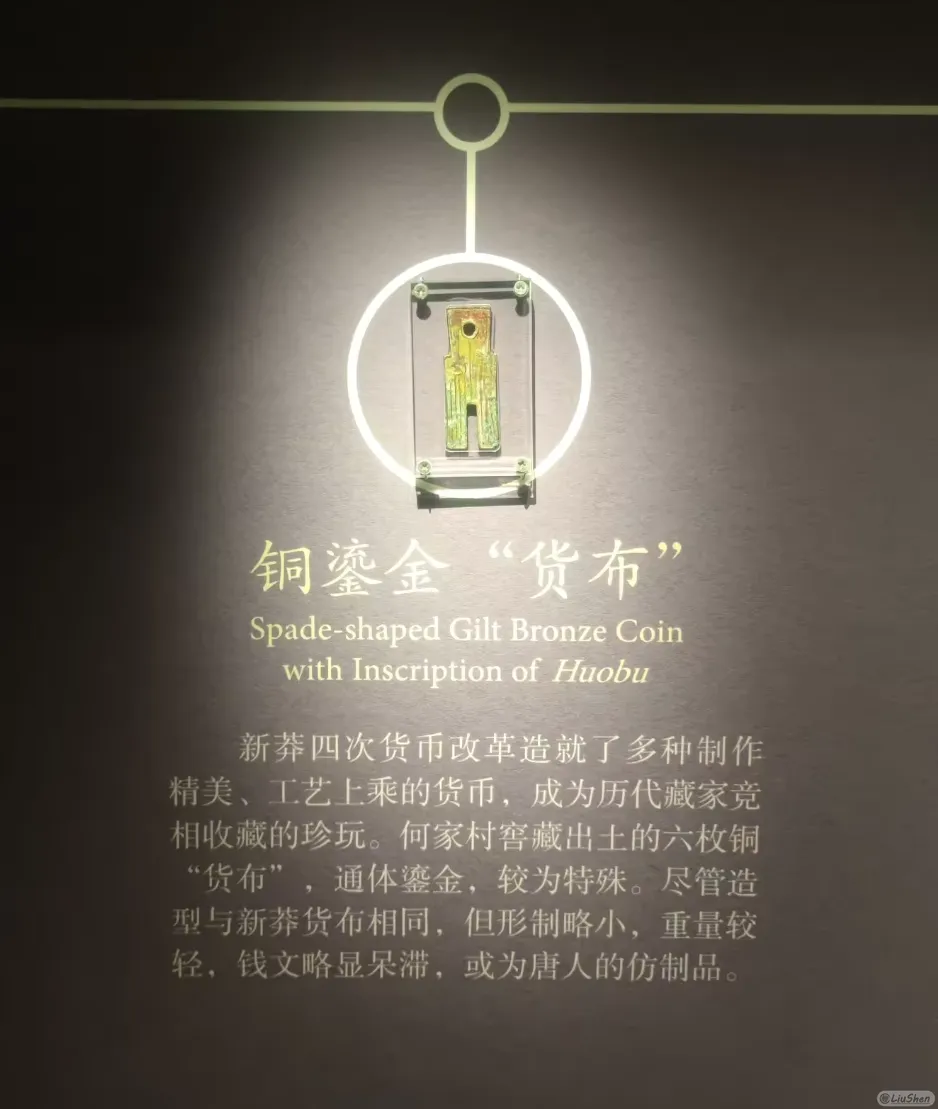
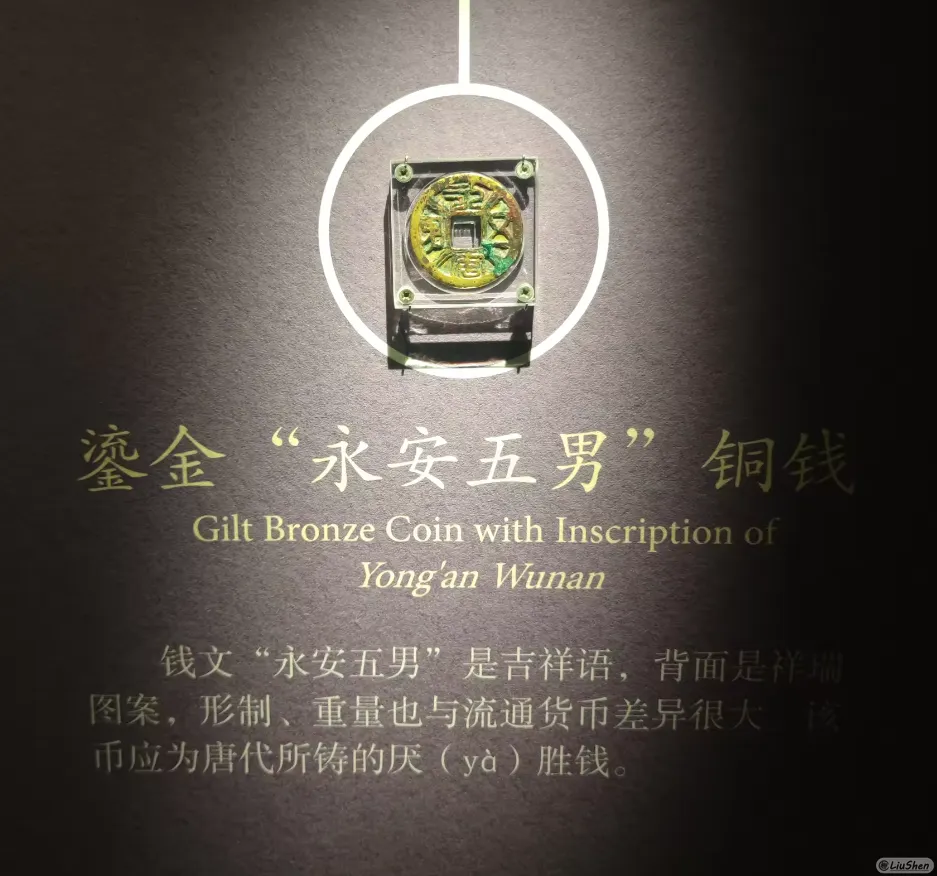
Some of the objects here are nationally important masterpieces, and certain pieces are considered too significant to be sent abroad for exhibition. For historians of Tang material culture and Silk Road artistic exchange, they are core physical evidence.
I do not know enough history to reconstruct exactly what Hejiacun looked like in the Tang dynasty, nor could I confidently place it within the map of old Chang’an. But standing in Hall 4 in front of those treasures, I had the distinct feeling of stepping into a world saturated with the atmosphere of the High Tang.
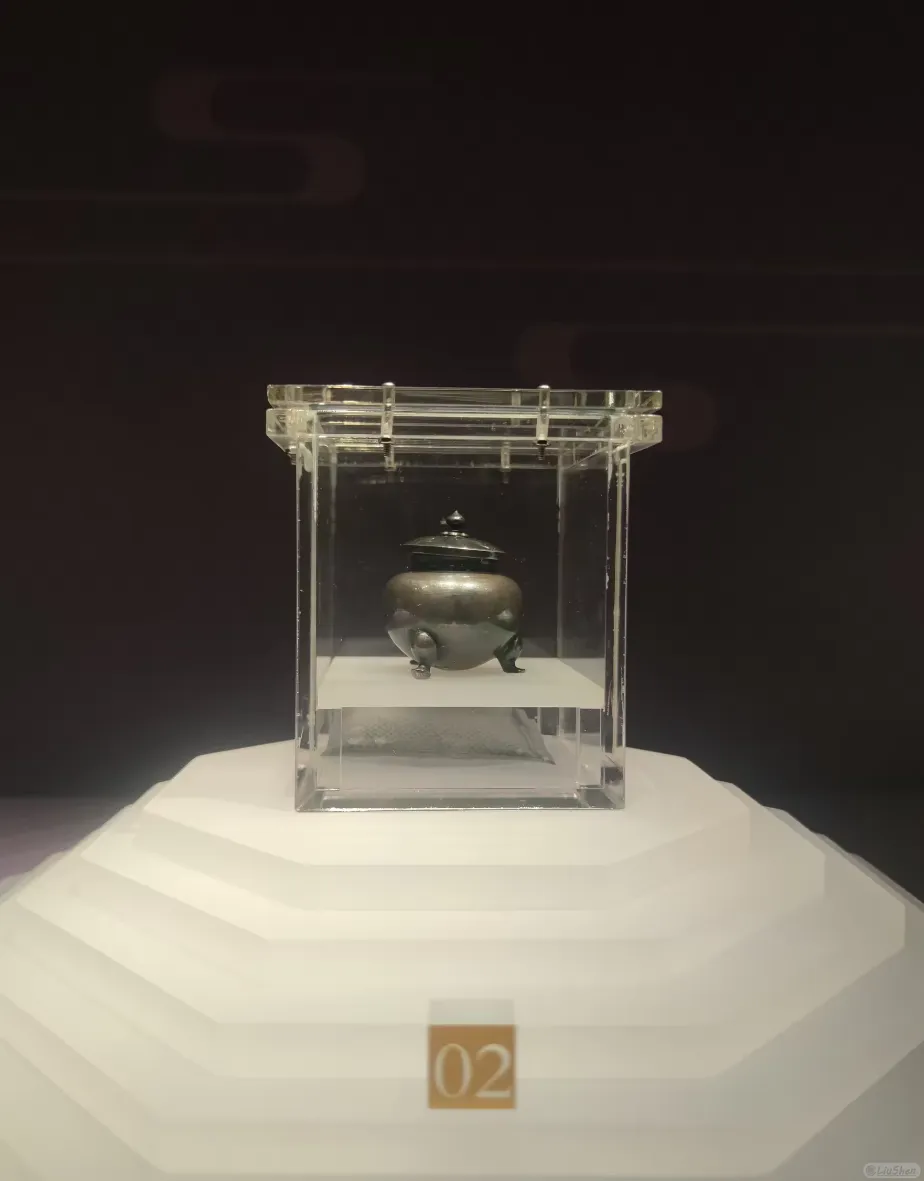
Under the lighting, gilt silver vessels glowed softly. Their carvings and dense ornamental patterns were almost intimidating in their precision. Crystal, agate, and glass pieces shone in bright colors and seemed to speak of unbroken cultural exchange and flourishing trade along the Silk Road. The foreign-looking pieces made it easy to imagine embassies, merchants, and travelers from every direction gathering in Chang’an, carrying rare goods and unfamiliar ideas and helping shape the openness for which the Tang is remembered.
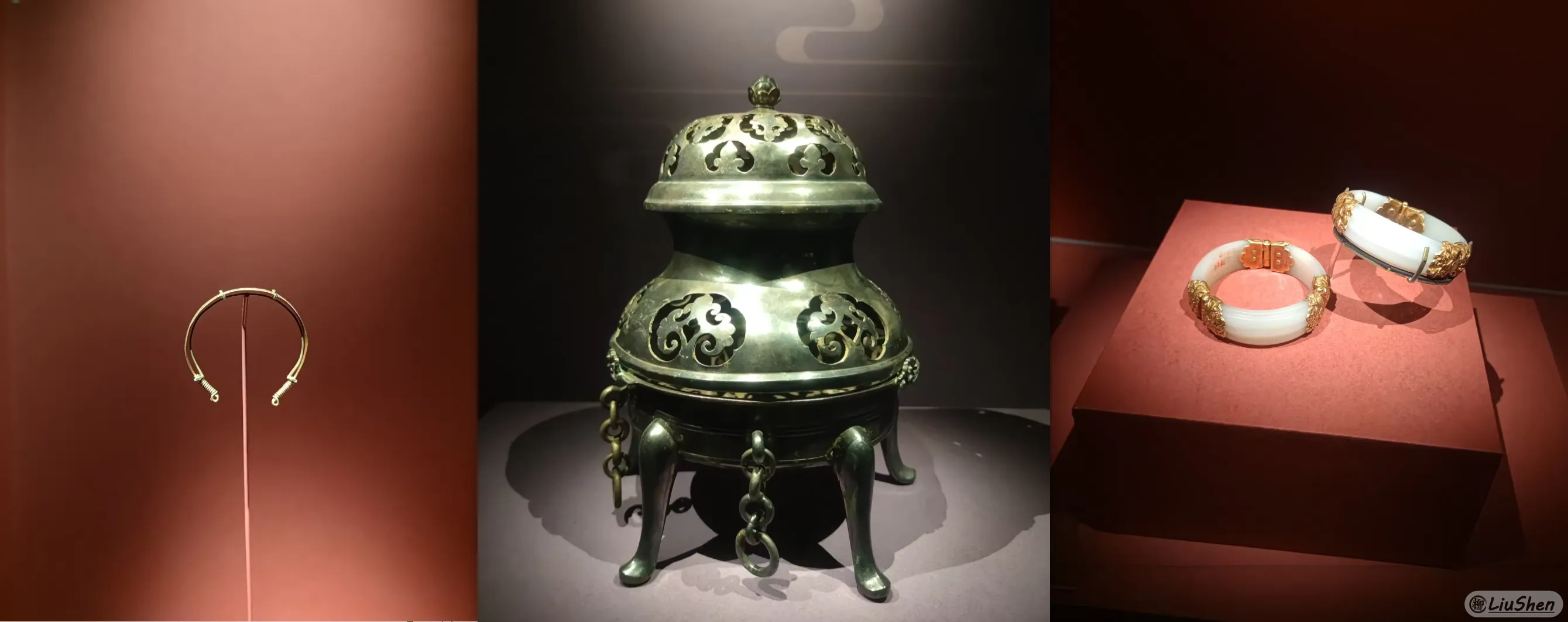
Looking at them, I kept thinking that this was more than a display of wealth. It reflected a whole way of living, an extreme commitment to beauty and pleasure as cultural values. Delicate drinking vessels conjured images of lavish night banquets. Jewelry and adornments hinted at the rich clothing of aristocratic women. For the first time, history stopped feeling remote and textual. It felt vivid, warm, and almost physically present.
The section often described as adornment and dress left a strong impression too. The prosperity of the Tang and its open social climate allowed women to present themselves in ways that stood apart from many other periods. The aesthetic was bold, varied, and confident.
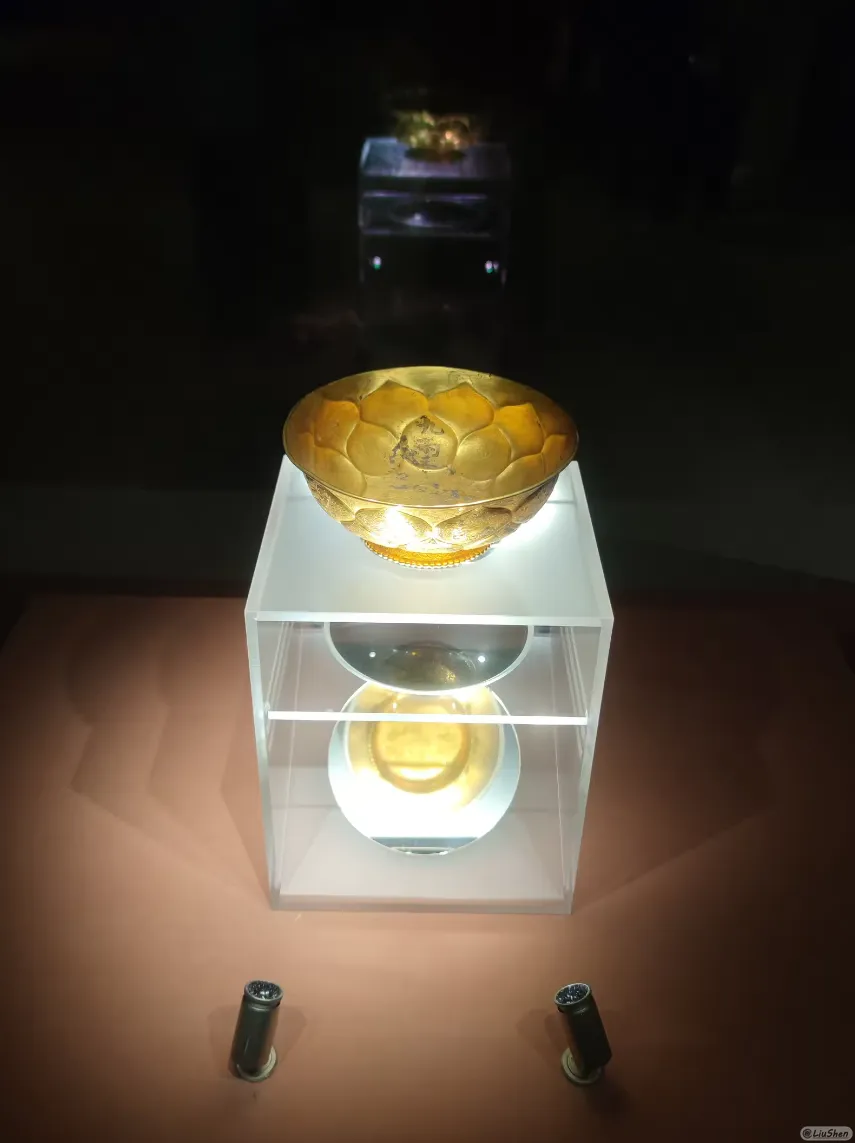
Tang women embraced both luxurious native styles and newly fashionable foreign garments. High coiffures, golden hairpins, jade combs, bracelets, rings, and carefully designed cosmetic tools all point to a culture in which beauty itself became a major social expression. The female ornaments found in the Hejiacun hoard—gilt hairpieces, gemstone earrings, jade rings, gold bracelets—served not only as decoration, but also as markers of rank, wealth, and identity.
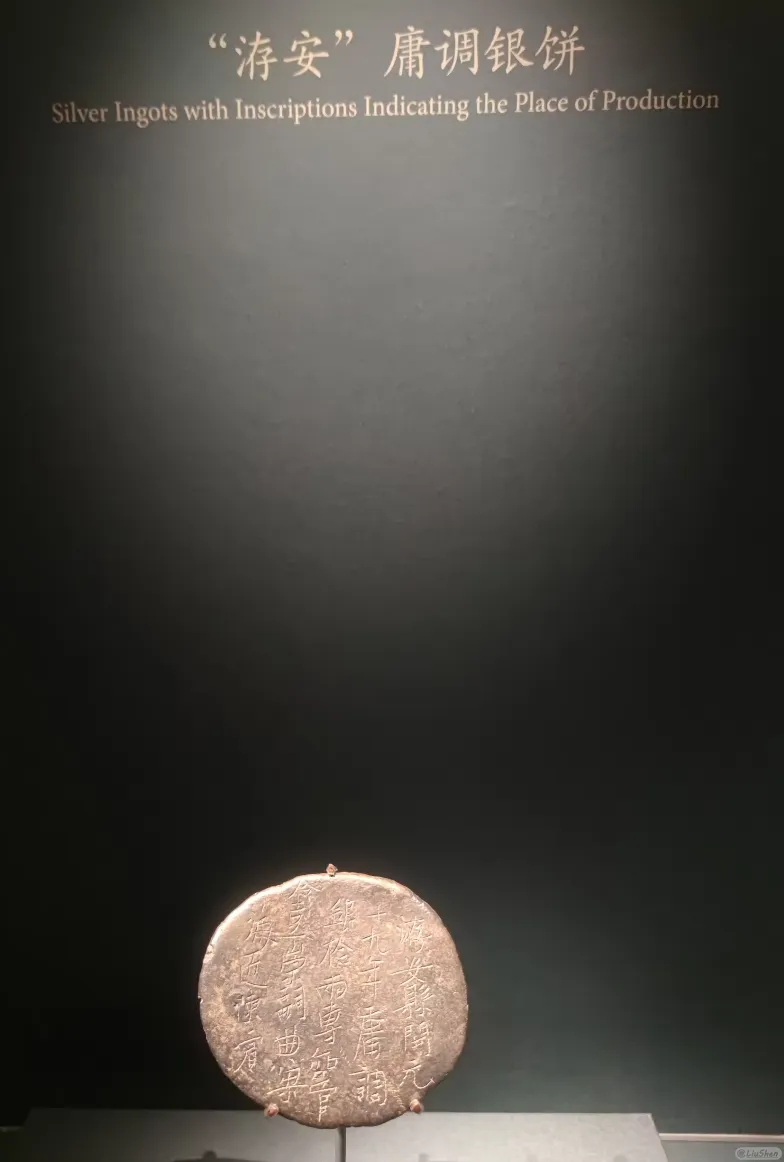
Another section of text in the gallery explains that gold, silver, and jade objects were essential in the daily life of the Tang royal house and aristocracy. They symbolized hierarchy and status, served as tribute and gifts among elites, and could even function in tax payment, directly reflecting the political and economic realities of the dynasty.
That was the point where the display really stunned me. These artifacts stopped being cold museum pieces and became evidence of what extreme luxury in the Tang court actually looked like. Gilt drinking vessels, their surfaces covered in intricate decoration, suggested imperial feasts filled with music, dancing, and a confidence that bordered on extravagance. Even ordinary utensils were so refined that they seemed to turn everyday life into a designed art form. It felt less like simple conspicuous consumption and more like the outward expression of a civilization at the height of its self-belief.
Hall 5: chaos, faith, and cultural blending
Compared with Hall 4, Hall 5 was much less crowded. The atmosphere changed the moment we walked in. Gone was the dazzling brilliance of Tang gold and silver; in its place was something quieter, heavier, and more weathered.
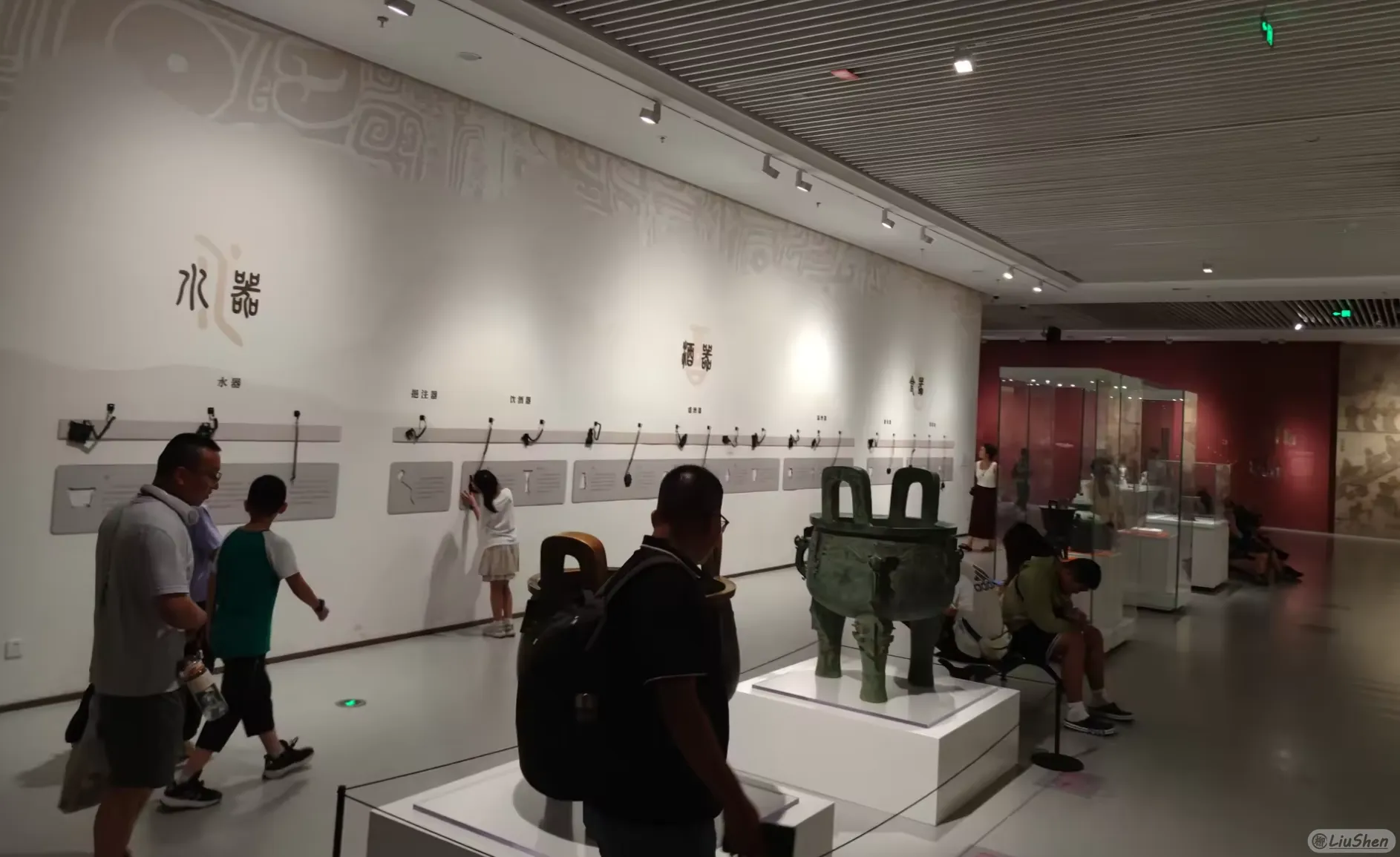
This gallery centers on a long age of fragmentation after the brief reunification under the Western Jin: the period of the Sixteen Kingdoms and the Northern and Southern Dynasties. It was a time utterly different from the Tang peak—one of conflict, migration, shifting regimes, and ethnic integration. Xiongnu, Xianbei, Jie, Di, Qiang, and other peoples entered the Central Plains, established states in the north, and left lasting marks on Shaanxi.
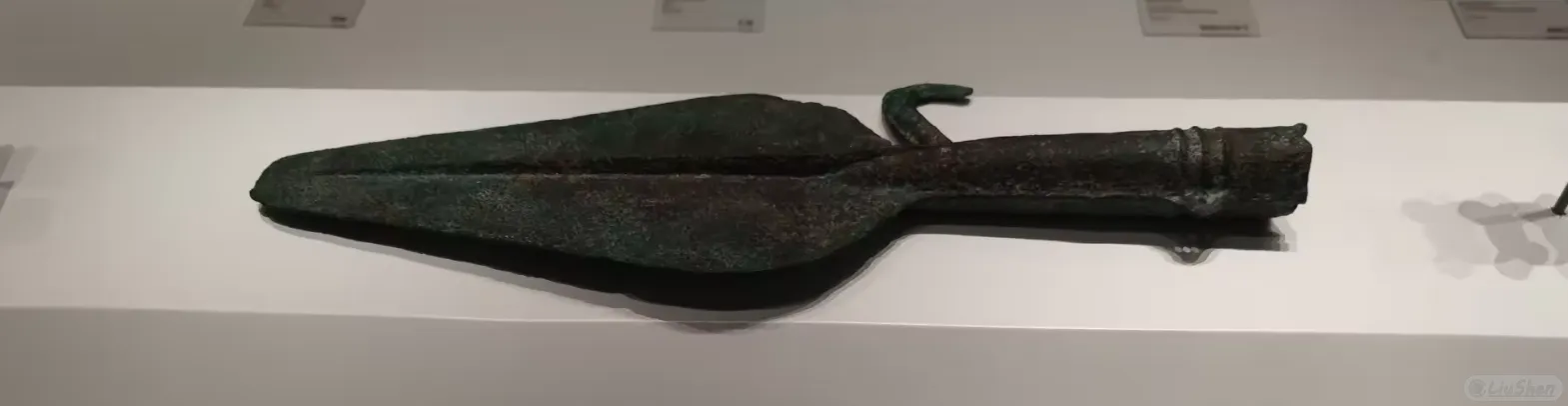
Heavy armor and weapons still seemed to carry the atmosphere of battle. Bronze vessels and stone carvings suggested that ordinary life continued beneath the violence. What made me stop the longest, though, were the Buddhist statues. Their compassionate faces and soft lines felt like a kind of quiet answer to the turmoil around them. One line from the exhibition text stayed with me: the dream of escaping human suffering made religion a spiritual support for the people.
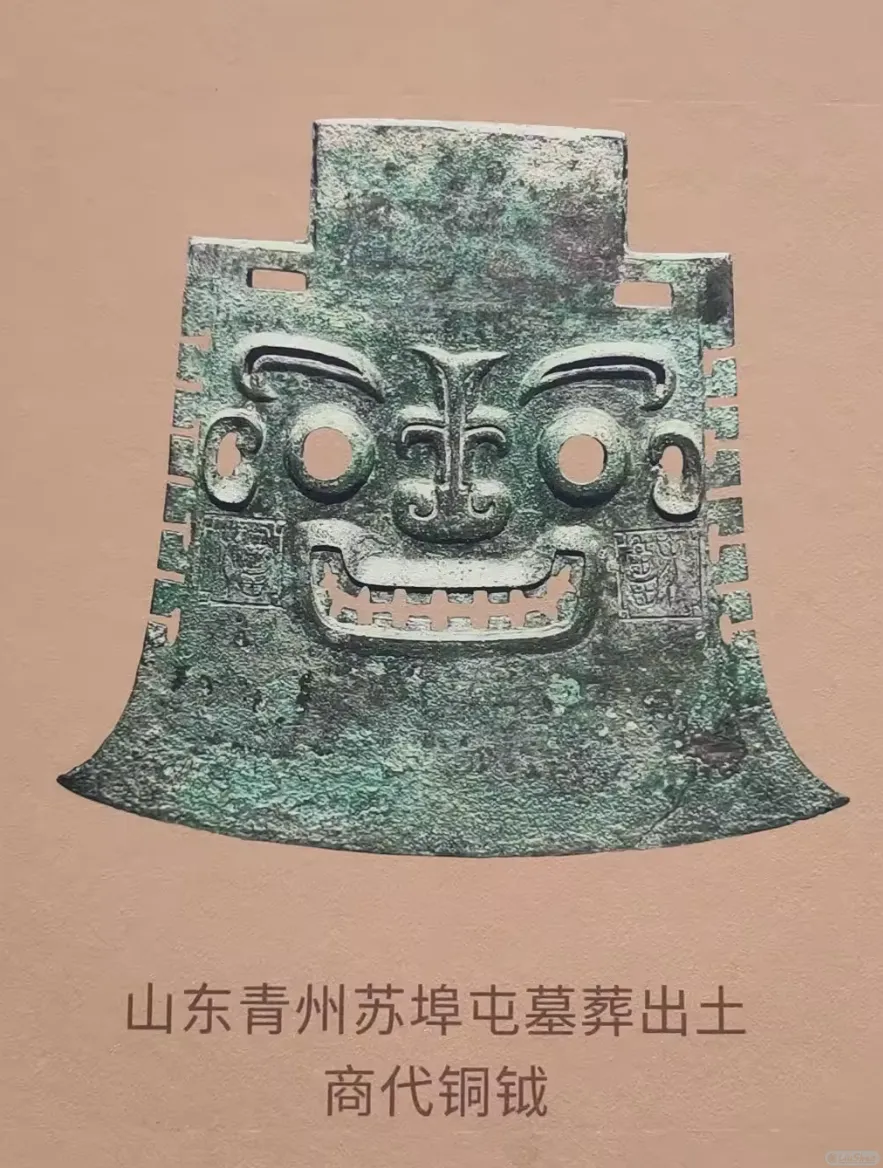
Guanzhong, as an important region of migration and settlement at the time, produced a distinctive local culture—one shaped both by steppe influences and by the continuation of Central Plains traditions. Even amid warfare, Buddhism spread, the Silk Road remained active, and new cultural forms emerged from conflict and coexistence.
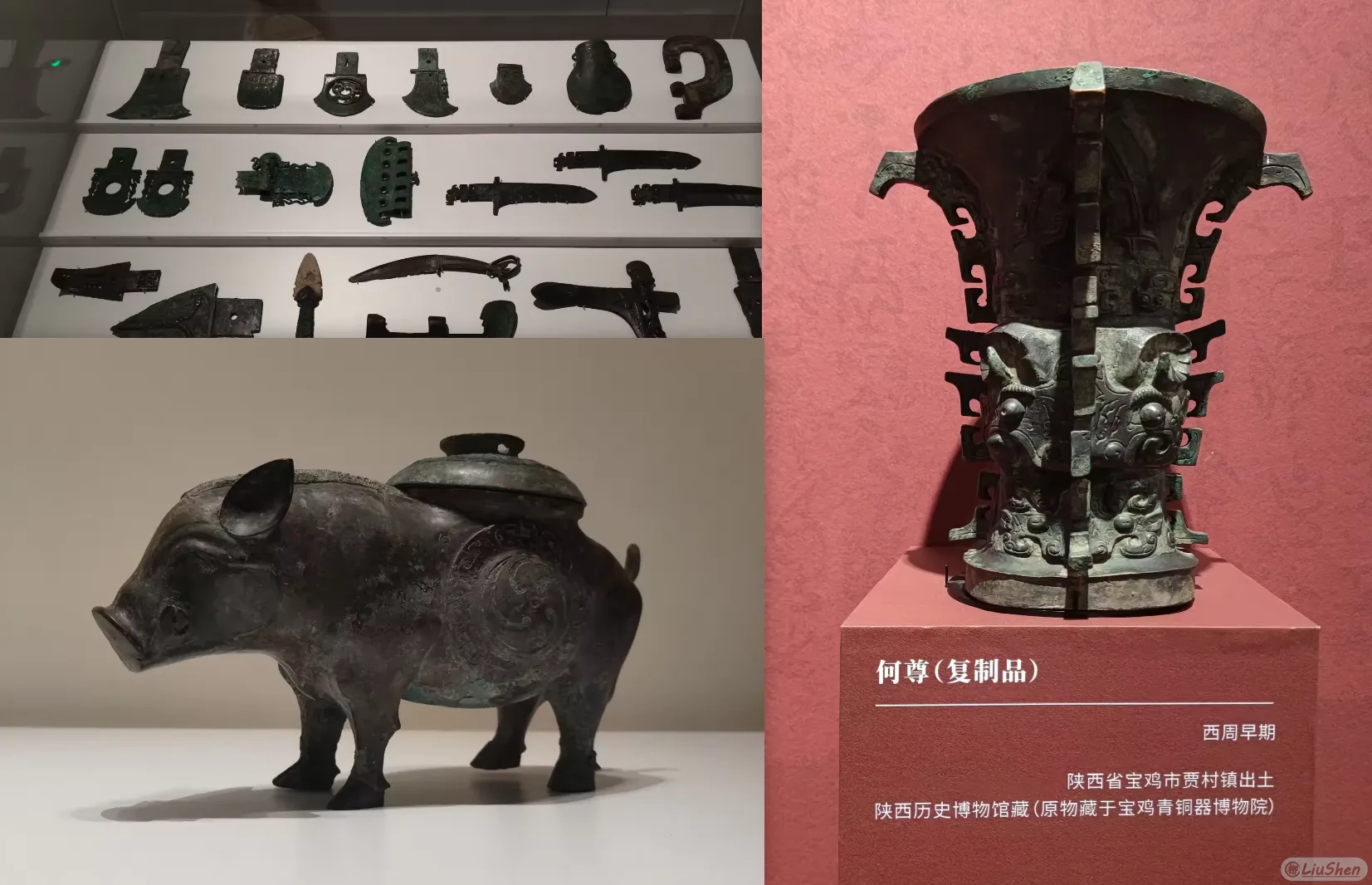
If Hall 4 showed the glitter of a great age, Hall 5 showed another truth of history: resilience. Less dazzling, perhaps, but in some ways even more moving.
Hall 2: Han splendor and the fractured centuries after it
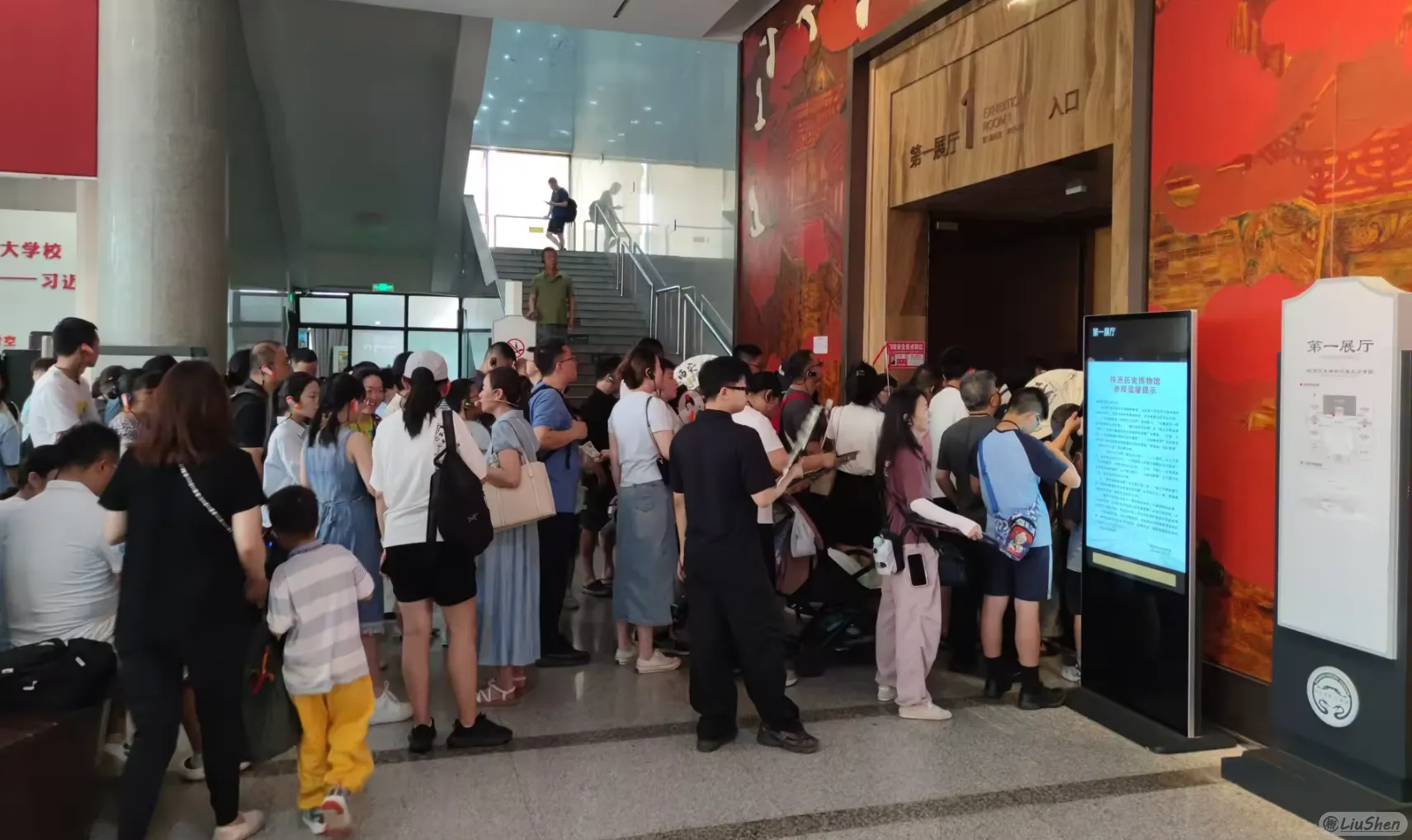
Because Hall 1 was packed, we pushed it to the very end and headed upstairs first.
Hall 2, on the second floor, covers two broad periods: the Western Han and the Wei, Jin, Northern and Southern Dynasties. Together they present both the material civilization and the spiritual life of those centuries.
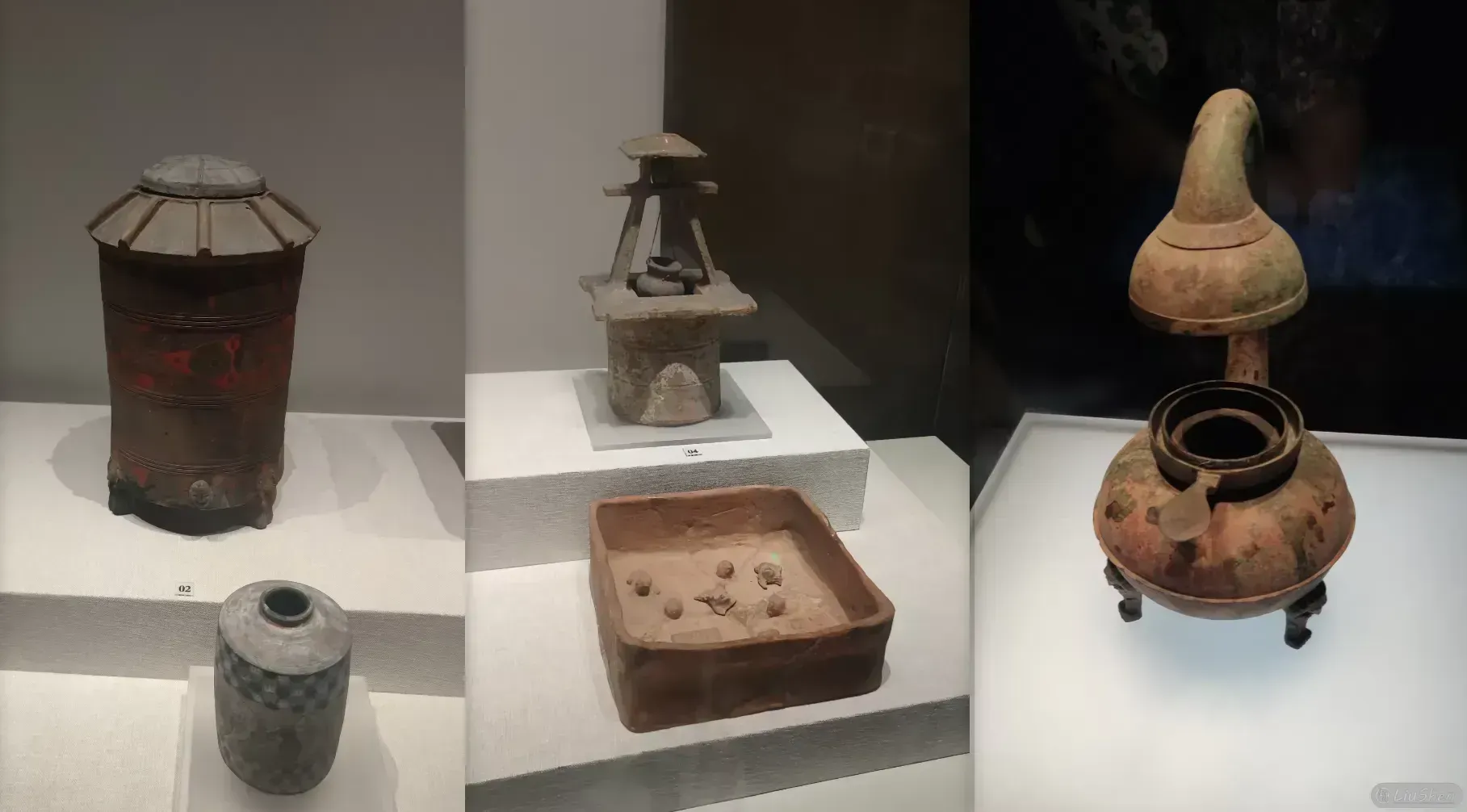
The Western Han section returns visitors to the first great flourishing age of ancient China. With Chang’an as its capital, the Han empire expanded across a vast territory. As the Silk Road opened, Chang’an—its eastern starting point—grew into the center of East Asian civilization and a true international metropolis. Through Han capitals, tombs, and artifacts, the gallery shows an advanced economy, rich social life, grand artistic culture, and the rising spirit of a powerful age.
The later section turns to the centuries of competition, migration, and integration. Warhorses, armor, seals, and weapons speak of unstable power struggles; Buddhist imagery reflects people’s search for inner stability in an era of long conflict. This part of the museum makes you feel both the violence of history and the endurance of culture.
A line from the display text summarizes the period well: the north saw frequent warfare, regime change, internal migration, conflict, and fusion among many groups. At the same time, agricultural civilization and steppe civilization advanced through exchange and complementarity, the Silk Road remained prosperous, and the eastward spread of Buddhism helped stimulate cultural and artistic development.
Hall 3: Sui and Tang, the age of confidence
Hall 3 felt like stepping into the peak itself—the Sui and Tang, often treated as the summit of ancient Chinese civilization.
The first thing that struck me was the introduction to the urban layout of Tang Chang’an. The city was organized with strict axial symmetry: palace city to the north, imperial city in the center, the outer city regular and orderly, with eleven north-south avenues and fourteen east-west streets forming a checkerboard plan. It was not only the classic model of the ward-based Chinese capital, but also a planning template that influenced later East Asian capitals.
From the models and diagrams, I could almost see the city: broad avenues, mighty palaces, bustling markets, foreign merchants, camel caravans, and all the movement and noise of a true world capital.
The objects in the cases—Tang gold and silver wares, sancai figures, gilt bronzes, secret-color porcelain—each revealed something about the way people lived in that age. A gold bowl with mandarin duck and lotus-petal decoration suggested courtly luxury at its most refined. An openwork silver incense ball showed craftsmanship so subtle that it felt almost impossible. Looking at it, I couldn’t help imagining it once swaying gently in someone’s hand, carrying the fragrance of incense through rooms filled with music and dancing.
The painted and glazed musician and dancer figures were equally vivid. Female dancers with elaborate coiffures and graceful robes seemed ready to move the moment one looked away. Through them, the exhibition conveyed an era that was energetic, healthy, cosmopolitan, and visually exuberant.
In the Silk Road section, objects with clear foreign styles—glass from Central Asia, silver from Western Asia, containers linked to South Asian aromatics—quietly confirmed the openness of Tang Chang’an. What impressed me most was not just China’s capacity to absorb outside influence, but the way it transformed what it absorbed into something uniquely brilliant.
Models and images of Tang imperial mausoleums, scattered across the Guanzhong Plain like stars, gave another view of the period: strict order, immense scale, and a political-aesthetic confidence equal to the city itself.
Hall 3 did not hit me with the same concentrated visual shock as Hall 4, but it won me over through scale and depth. It made the word prosperity feel concrete: confidence, openness, intensity, and creativity all at once.
Hall 1: where the long story begins
When we finally entered Hall 1, the sense of time deepened even further. This gallery stretches from prehistory through Xia, Shang, Zhou, Qin, and Han—a vast sweep of thousands of years.
At the beginning were traces of early settlement: painted pottery and stone tools from Banpo, simple but beautiful, carrying the memory of the transition from hunting to agriculture, from wandering to settled life.
Then came the bronzes of Xia, Shang, and Zhou—dense decoration, heavy forms, and an unmistakable ritual gravity. These were not just useful vessels but embodiments of power, ceremony, and social order. I lingered in front of a square ding, struck by how something so old could still feel so stern.
Farther in, the Qin and Han sections introduced a new kind of force: weapons from Qin, stately gilt bronze from Han, objects that seemed to belong equally to conquest and court ceremony. It was here that the museum’s broader message came together for me. History is not only about wars and institutions; it is also about the long continuity of making, building, believing, and passing things on.
Hall 1 felt like a silent epic. From primitive pottery to monumental bronzes, from ancient ritual order to imperial expansion, it gave a sense of why Chinese civilization has endured.
National Treasures Hall
The National Treasures Hall is relatively independent from the main sequence of galleries and much smaller in scale. It is also quieter. Rather than packing the room with original artifacts, it uses models, reconstructions, and multimedia interpretation to explain some of the museum’s most famous pieces and their historical significance.
Because of that, it felt less visually exciting than the earlier galleries and more like a focused learning corner. I did not take many photos there, but if you are interested in how important relics are studied and contextualized, it is worth a stop.
Lunch: the Xi’an trio
By around two in the afternoon, we were done with the museum and absolutely starving. Near SEG Plaza, we found a Weijia Liangpi and ordered what might as well be Xi’an’s classic trio: liangpi, roujiamo, and a drink.
There was one funny little mishap. When I ordered, I specifically asked for the burger to be cut in half so my brother and I could share it. The staff not only cut the burger—they also cut the roujiamo in half. At that point I couldn’t help laughing. Maybe roujiamo really is the Chinese hamburger after all.
Anrenfang: a Tang neighborhood beneath your feet
After leaving the museum, our first stop was the Anrenfang Site Exhibition Hall. The site lies within what used to be Anrenfang, one of the urban wards of Tang Chang’an. Archaeological remains were preserved in situ, and an exhibition hall was built above them.
What makes this place interesting is that it does more than display old bricks. Through digital projections, models, and reconstructed scenes, it recreates daily life in Tang Chang’an—tea houses, music and dance, clothing, traffic, and the rhythms of ward life.
One of the most memorable parts is the protected underground area. Through transparent flooring, you can see Tang foundations, bricks, roof tiles, and drainage structures lying directly below. A thousand-year-old urban skeleton is simply there under your feet. That method of preserving the remains in place gives the whole experience a strange immediacy, as if the city is speaking from beneath the floor.
Xi’an has a saying: one shovel into the ground and you uncover half of Chinese history. It sounds exaggerated until you spend time in the city. Roads, subway lines, new buildings—construction here can turn up ancient wells, tombs, or structural remains with surprising frequency. And often the response is not removal, but protection where they are found, with exhibitions built around them.
That is what Xi’an feels like at its most distinctive: a modern city with history layered directly under everyday life.
Anrenfang is also remarkably photogenic. The interior and exterior spaces use Tang-inspired design elements—corridors, eaves, wooden latticework, and carefully framed light—to create a strong historical atmosphere.
A lot of Hanfu enthusiasts were there when we visited. People in flowing traditional clothing moved through the hallways and courtyard spaces, and the effect was so complete that it almost felt like a temporary collapse of time. Even without trying, it was easy to take striking photos where historical remains and revived costume culture existed in the same frame.
Upstairs, there is a large sand-table model of Chang’an. Streets are integrated with digital screens simulating crowds, carts, horses, and market life. Looking down from above, you get a more immersive sense of the order and bustle of the city than a static model could provide.
Elsewhere in the hall, there are reconstructed tea and dining setups, detailed architectural miniatures, and wall texts describing the historical figures once associated with Anrenfang. It comes across not just as a neighborhood of ordinary urban life, but also as a site of literary and cultural refinement.
China Qinqiang Art Museum
From Anrenfang we continued to the China Qinqiang Art Museum. Right at the entrance were miniature models of Qinqiang opera stages from different regions, each with carved beams, painted details, and their own local architectural character. Nearby stood a stone plaque from a traditional performance guild hall and a reconstructed viewing scene with tiny figures posed as an audience.
Farther in was a wall dedicated to classic Qinqiang repertoire. The display of preserved scripts was especially striking—rows of printed and bound texts lined up like echoes of performances long past.
Display cases held head ornaments, accessories, costume fasteners, stage weapons, and theatrical props. The precision of the decorative work was enough to make you stop. Even on older regional stages, attention to costume and ornament was anything but casual.
One corner unexpectedly stirred up childhood nostalgia: a small display of illustrated booklets, the kind that recorded stories and helped operatic traditions circulate among ordinary people.
On the second floor, the presentation became even more vivid. Full character models represented the major role types—sheng, dan, jing, mo, and chou—with makeup, costume, posture, and presence all carefully rendered. Up close, it became clear that Qinqiang is not just known for a robust singing style. It is a fully integrated art form where drama, movement, costume, and visual design all matter.
Hiding from the heat at Xinhua Bookstore
By that point, the outdoor temperature was hard to ignore again, so we ducked into Xinhua Bookstore to cool off for a while.
The first floor no longer felt like a conventional bookstore alone. It was filled with carefully arranged craft shops, cultural merchandise, handmade objects, and elegant stationery. Upstairs, reached by a wooden staircase, was a tea room with a distinctly old-style atmosphere. The scent of tea mixed with paper and ink in a way that made the whole place suddenly feel calm.
Then came the books.
I found a corner and opened Liu Cixin’s Three-Body trilogy, which I had been wanting to read for a long time. I happened upon a passage from The Remembrance of Earth’s Past that I liked very much:
“Children, when you were very young, adults taught you that where there’s a will, there’s a way. Now I’m going to tell you that this is not true. Only things that conform to the laws of science and the laws of social development can be accomplished. In fact, most of the things you want to do cannot be done, no matter how hard you try. Your responsibility is to eliminate ninety-nine out of a hundred impossible things and find the one that can be done. This is extremely difficult, but it is what you must do.”
It reads like more than science fiction. It feels like a blunt reminder about reality itself. Unfortunately, time was short. I only made it to page 111 before I had to close the book and leave.
Kaiyuan Mall: back to the living city
From the bookstore, my brother and I went to Kaiyuan Mall. After the old-world atmosphere of Anrenfang and the Qinqiang museum, this was a complete shift: modern, busy, and unmistakably urban.
As one of Xi’an’s long-established commercial centers, Kaiyuan carries both recognizable brands and a trace of the city’s older shopping culture. The location near the Bell Tower puts it right in the middle of one of Xi’an’s most active areas. The mall is large and tall, and from the higher floors you can catch glimpses of the streets and city lights below.
There is no heavy historical atmosphere here, but that is exactly the point. If the museum helps you understand the city’s past, Kaiyuan shows its everyday pulse in the present.
While walking around, we discovered a small surprise: on the fifth floor there is an outdoor platform open to visitors. From there you can climb a bit higher to a terrace or viewing point. Above you is the mall’s exposed structural frame; beyond it, the city spreads out in buildings and evening light.
Standing there, I had a strange feeling of stepping out of a history book and back into reality. In the morning, I had been moving through artifacts thousands of years old. By late afternoon, I was looking at present-day Xi’an from above.
The outdoor area also has a few playful installations. A giant robot model stands in one corner, and a metallic structure called the “Gate of the Future” makes for a surprisingly fun photo spot. The feeling there was the opposite of the museum’s weightiness—it was airy, relaxed, and a little futuristic.
Since the Bell Tower could already be seen from Kaiyuan, we skipped going there separately. Before it got too late, we started heading home, with one final stop still left on the way: Xi’an MixC, to see its much-talked-about “Tree of Life.”
Xi’an MixC and the Tree of Life
The last stop of the day was Xi’an MixC. The moment we entered, the central atrium was dominated by the enormous Tree of Life. Its trunk rises upward through the interior space, while its leaves carry shifting light effects across built-in screens. The whole thing looks as if it belongs in a science-fiction film.
When we were there, the lighting was not fully turned on, so it probably looked less dramatic than it can at full effect. Even so, it was impressive enough.
Beyond that centerpiece, the mall itself is extremely open in design. The high atrium and broad glass curtain walls let daylight and artificial lighting mix in clean, futuristic lines. Luxury brands, fashion, and restaurants sit inside a space that feels polished almost to the point of unreality.
That contrast summed up the whole day perfectly. In the morning we had been looking at bronze, pottery, tomb objects, and Tang relics. By night, we were standing under a luminous digital tree in one of the city’s most modern commercial spaces.
When the day finally ended
From the historical depth of the morning to the cultural stops of the afternoon and the neon-like glow of the evening, the day felt like moving along a timeline that tied ancient, modern, and even slightly futuristic Xi’an together.
The bronze vessels and figurines of the museum, the Chang’an reconstructions at Anrenfang, the costumes and percussion echoes of the Qinqiang museum, the unexpectedly sharp words from a novel at Xinhua Bookstore, the rooftop breeze at Kaiyuan, and the glowing Tree of Life at MixC—all of it kept replaying in fragments.
Standing in that atrium at the end of the day, I felt a strong kind of temporal dislocation. Hours earlier I had been staring at bricks and relics from over a thousand years ago. Now I was inside a glass-and-light environment that felt almost futuristic. That sharp contrast may be one of Xi’an’s greatest strengths. It does not hide its age, and it does not stop being contemporary either.
When it was finally time to leave, we took Metro Line 2 home. I still felt reluctant for the day to end.
Maybe the value of a trip is not how far you go. Maybe it lies in being able, within a single day, to carry away the weight of history, the warmth of culture, the rhythm of city life, and even a glimpse of the future—all at once.
There are still places in Xi’an I have not properly seen. Another museum visit, a real stop at the Bell Tower, the parts of the city I had to skip this time—they can wait for the next meeting.
Photo of the day
Sky, grassland, a boy running.