In winter, getting out of bed just to turn off the bedroom light feels especially annoying. The switch in my room isn’t by the bedside, so this had been bothering me for a while. I always assumed smart home gadgets would cost too much, so I never seriously looked into them—until I came across a video about a Bluetooth power switch.
A cheap way to make a light smarter
The device is very simple: a Bluetooth-controlled on/off switch that sits between the power supply and the lamp’s transformer.
The wiring ended up being:
power supply → Bluetooth switch → lamp transformer → lamp
That was enough to make the light controllable. The switch itself was inexpensive, only a little over a dozen yuan. Since installation required telling the neutral wire from the live wire, I also bought a voltage tester for just over 1 yuan. The whole setup went together pretty smoothly.
App control worked, but it was a bit slow
After that, I could control the light through the Mi Home app. That solved the basic problem, but there was still one annoyance: without a gateway, I had to connect to the device each time before controlling it, which took a little too long.
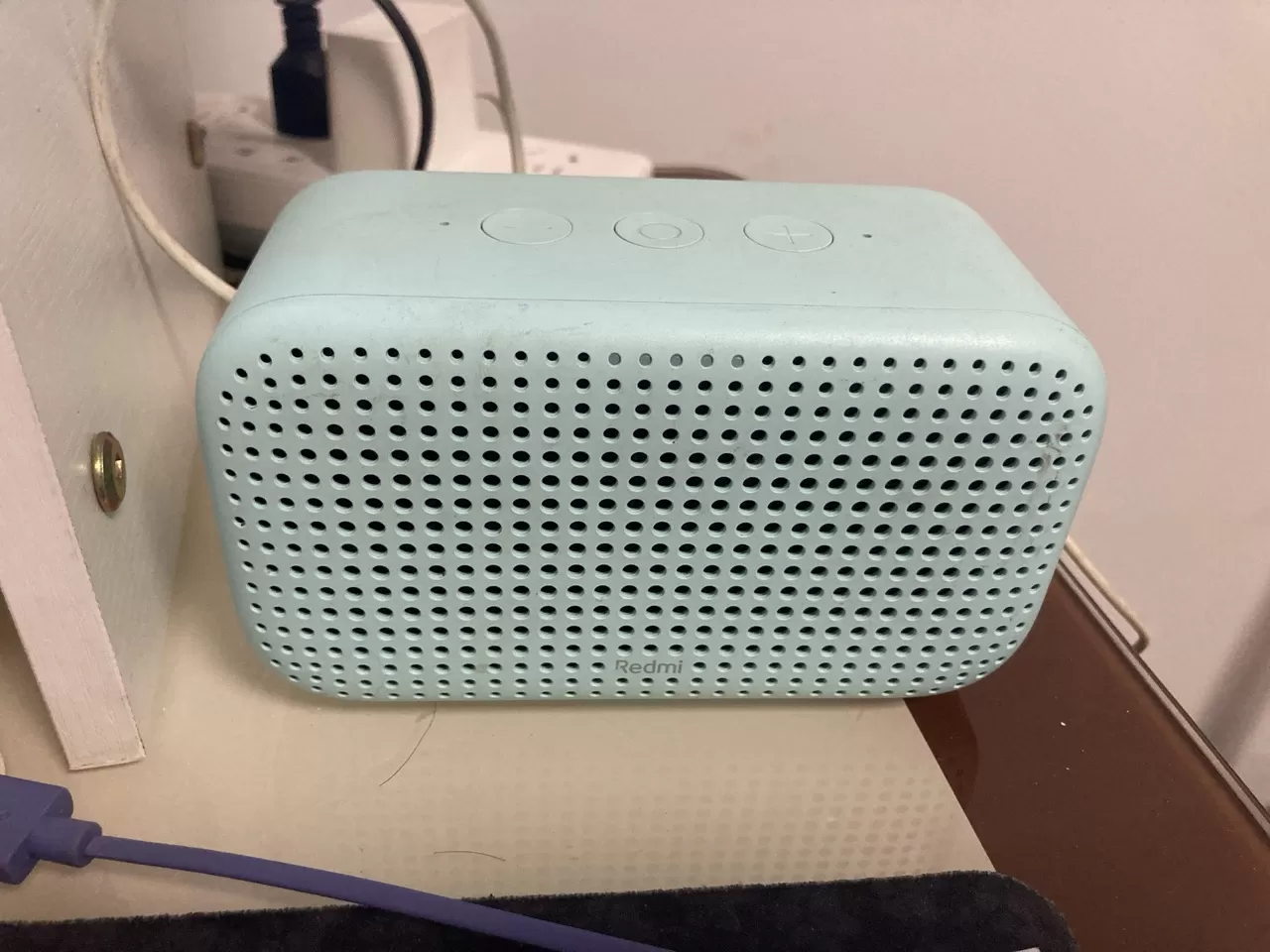
So I started thinking about adding a Xiaomi smart speaker. In the end, I found a Redmi Xiaoai Speaker Play for 36 yuan with shipping included.
The speaker introduced a new problem
Once the speaker arrived, another issue showed up: I don’t have a wired internet connection at home, and the Xiaomi speaker needs internet access for voice recognition to control the light. Without a network, a smart speaker is basically useless.
Fortunately, someone I know had previously bought a router to relay the Wi-Fi from a nearby Hanting hotel, so I ended up using that shared connection. In testing, it turned out to be fairly stable—just a little slow to respond, which is honestly kind of funny.
One annoying side effect: the light still glows faintly
There was one problem I didn’t expect. The lamp is made up of several LED beads, and each one needs only a small amount of power. Even when the Bluetooth switch turns the light off, the switch still lets a tiny current pass through so it can remain on standby.
That small current is enough to make the LED beads emit a faint glow. If you’re picky about things like that, it’s hard not to notice.
I looked around and found people saying that a safety capacitor could fix it, so I bought two to try. Unfortunately, that still didn’t solve the issue. Maybe the parameters of what I bought didn’t actually match what the setup needed. At this point, though, I can’t really be bothered to keep tinkering with it, so for now I’m just leaving it as it is.