At dusk, the sound of gongs and drums drifted in from outside. I went out to look and found that a touring opera troupe had arrived right at the doorstep—one of those send-opera-to-the-countryside performances. I hurried to fetch a small stool. That evening’s show was a comedy, Xilou Hui (The Meeting at the West Tower).
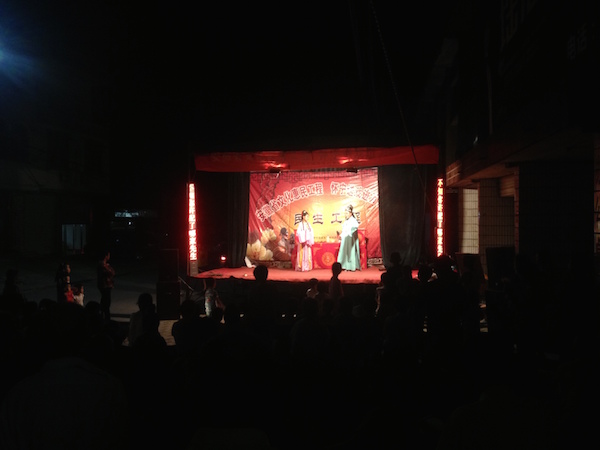
Below the stage, the crowd was not quite a sea of people, but it was lively enough.
It brought back the Huangmei opera performances in my village when I was a child. They usually took place in summer, during the slack farming season, or around the first month of the lunar year. Adults would finish dinner early, bring their children along, and watch with obvious pleasure. We children, meanwhile, ran around the stage, slipped backstage to look at the performers, and were always chased out.
Even in the rainy plum season, when there were no shows, a few enthusiasts liked to gather with one erhu and sing all afternoon. Later, someone in the village bought a cassette recorder. On afternoons, it would play loudly while people listened and talked about the plot as if they were watching a performance.
Growing up in that atmosphere, we naturally came to love Huangmei opera. From traditional works such as Tianxian Pei, Niulang Zhinü and Nü Fuma to shorter pieces like Bu Beida and Wang Xiaoliu Da Doufu, we knew them all.
After I left my parents, whenever the weather turned rainy and overcast for days, I liked to put on a Huangmei opera recording. It felt quiet and warm, and no matter how heavy my worries were, I could leave them behind for a while.
Huangmei opera: the tag my hometown wears, the memory I carry.