When people talk about the fiercest warrior of the Three Kingdoms era, Lü Bu is usually the first name that comes up.
His reputation was not built on self-praise, but on the opponents used to measure him. The most famous example is the battle at Hulao Pass, where Liu Bei, Guan Yu, and Zhang Fei fought him together. The story presents it as three against one, and even if Liu Bei’s martial strength is set aside, Guan Yu and Zhang Fei are still counted among the top fighters of the age. Even so, Lü Bu could not be easily brought down.
There is an even more striking episode later on: six of Cao Cao’s top generals—Xu Chu, Dian Wei, Xiahou Dun, Xiahou Yuan, and others—closed in on him together. By any standard, that was an overwhelming lineup. Yet Lü Bu did not collapse under the pressure. He may not have cut them all down, but he still managed to fight his way clear and escape intact.
So his status as the era’s foremost powerhouse is not hard to understand. But there is also an odd pattern in these stories: throughout the Three Kingdoms tales, Lü Bu seems to show a particular caution toward Zhang Fei. Not quite fear—but definitely wariness.
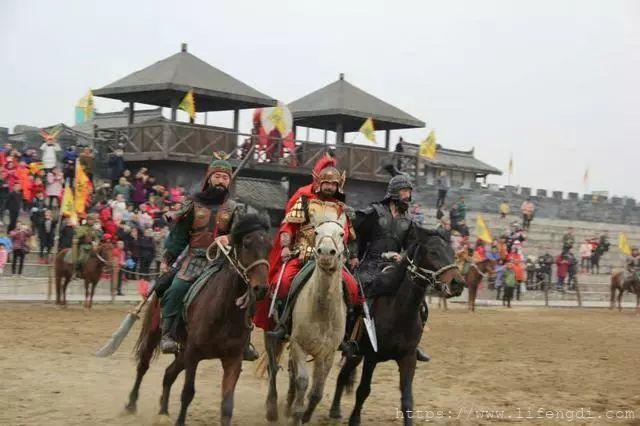
Zhang Fei had a famously explosive temper, and whenever he ran into Lü Bu, he went out of his way to insult him.
The first time was at Hulao Pass. Zhang Fei cursed Lü Bu as a “three-surnamed slave,” a savage insult aimed at his repeated changes of allegiance. Lü Bu was never going to swallow that. He immediately charged into battle, which eventually turned into the famous one-against-three clash. In the end, he was forced to withdraw.
The second time was even more awkward. By then, Lü Bu had attached himself to Liu Bei’s side, so at least on the surface they were allies. Lü Bu invited Liu Bei to a banquet. When Lü Bu’s wife and daughter came out to pay their respects, Liu Bei behaved with deliberate humility and kept saying he did not dare accept such courtesy. Lü Bu then addressed him as “worthy younger brother.” That single phrase set Zhang Fei off. Pointing straight at Lü Bu, he rebuked him: my elder brother is of imperial lineage—what gives you the right to call yourself his elder brother?
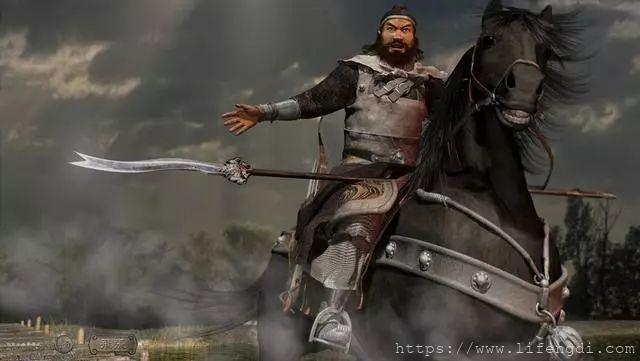
Liu Bei, of course, knew how to smooth things over. He quickly stepped in and said that his third brother was blunt by nature and meant no offense, asking Lü Bu not to take it to heart. At that point, there was not much Lü Bu could do except swallow his anger.
The third incident was even more blatant. Zhang Fei seized 150 of Lü Bu’s horses. That was not a stray misunderstanding; it was a direct provocation. Lü Bu responded by fighting Zhang Fei for a hundred bouts. Once again, however, Liu Bei stepped in as peacemaker, returned the horses, and settled the matter.
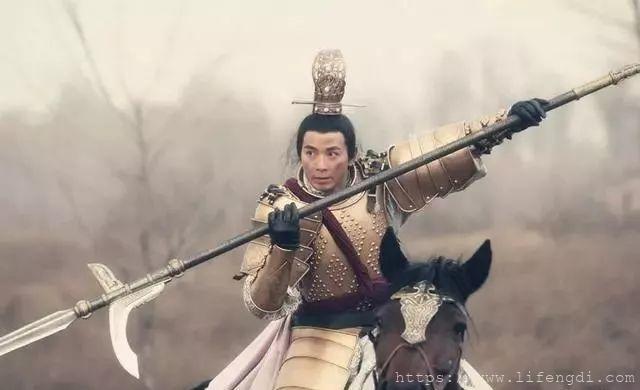
It is too simple to explain all this by saying Zhang Fei was reckless or thoughtless. He was rough in manner, but he was not merely a hothead. If he repeatedly targeted Lü Bu, there was probably more behind it than personal temper. It is hard to imagine him doing this again and again without at least tacit approval from Liu Bei.
That makes Liu Bei’s role especially interesting. By allowing Zhang Fei to play the aggressor while he himself stepped in afterward to calm things down, Liu Bei could preserve his image as the reasonable and benevolent one. One brother played the hard line; the other played the conciliator.
And what about Lü Bu? It is not as though he was known for patience or a mild disposition. So why did he keep restraining himself? The most plausible answer is that he was wary not just of Zhang Fei alone, but of the combined strength behind him. Zhang Fei stood with Liu Bei and Guan Yu. However formidable Lü Bu was, he had reason to think twice before forcing an all-out break with all three brothers.
That may be why Zhang Fei could curse him, challenge him, even rob him of horses, and still come through without disaster. Lü Bu was not afraid in the ordinary sense—but he clearly had reasons to be cautious.