Our ancestors left behind several old Minnan-style houses, and in them lived generations of relatives from the same clan.
In those days, life followed the sun. People went out to work at daybreak and returned when darkness fell. During the slack season, with little to do in the fields, everyone stayed indoors. After a while, boredom settled in. A few easygoing adults would call out to one another, pull out a worn deck of playing cards with chipped corners and missing edges, and gather around the polished stone table to play “Forty Points.” I was curious and often squeezed in to watch, unwilling to leave even after standing there for a long time.
The adults played cards and chatted as they went, moving from one household’s affairs to another’s, their talk drifting wherever it pleased.
After enough gossip, the conversation would usually turn to farm work. Someone once complained, “My eldest uncle always favors others and looks down on me. Every time there’s work nobody wants to do, he gives it to me. One day I’ll have to settle this with him properly.”
Someone immediately replied, “The team leader is your own uncle. What is there to settle?”
Another person added, “Maybe that uncle of yours is saving those jobs especially for you. They may be tiring, but not everyone gets the chance. Look at it this way: by the end of the year, you earn quite a few more work points than the rest of us.”
“Who cares about those few work points?” the man grumbled. “He only calls me because no one else wants the work.”
Then someone at the table grew impatient. “Can we just focus on the cards? Why talk about all that? Whether you spend a day in the hills or a day by the sea, at least you’re earning work points. That’s better than earning none.”
That sounded reasonable enough. The cards continued, and the conversation wandered off in another direction.
Southern Fujian has always had little land and many people. The sea lies in front, the mountains behind. Because of that, people there often said, “One day up the mountain, one day down to the sea.” It meant that work was work wherever one went, a way of saying that a person simply did the day’s duty and collected the day’s points.
That was the language of the collective era, when people worked for work points. It also reflected a way of thinking particular to that time.
Years passed. After reform and opening up, the land could no longer hold so many lives. Going out to work became another path. Many years later, I had grown used to a different kind of livelihood: working in a private company had become the ordinary necessity of making a living.
One year, the company’s sewage pipe became clogged. I was in charge of administrative matters then, so calling someone to clear it naturally fell to me. After I made the call, a thin, tall man in his forties arrived. We agreed on a price, and he started working from the upper section of the pipe downward.
In the end, he managed to open the upper pipe, but the water still drained very slowly. Clearly, the problem was not in that section.
We discussed it for a while. He said, “It can’t be blocked only here. It must be the lower pipe.”
I nodded. Following the pipeline down, we eventually found the trouble at a U-shaped section downstairs. To remove the waste stuck inside, he had to saw off that bend in the pipe and let the sewage from above rush through. The consequence was obvious: the wastewater would spray out and splash all over him.
He did not hesitate. He found a ladder, climbed up, and set to work. After some effort, he cut through the pipe. Sewage burst out, and the blockage was finally cleared.
When he came down, his face, hands, and clothes were stained with filth. He did not stop to wipe himself clean. Instead, he picked up a new section of pipe, climbed the ladder again, and repaired the part he had sawed off. Only after that did he rinse his hands briefly, take out a curled receipt book, and write out the bill.
After paying him, I took the damp receipt from his hand and said with real gratitude, “You are truly responsible. If it were someone else, once the price had been agreed and the upper pipe was cleared, he might have left it at that.”
He smiled and said, “When you ride on someone’s boat, you want that boat to run well. Your company is an old customer of mine. Of course I have to do the job properly.”
Hearing that, I felt I had encountered another phrase that belonged to another age, and another way of thinking shaped by life itself.
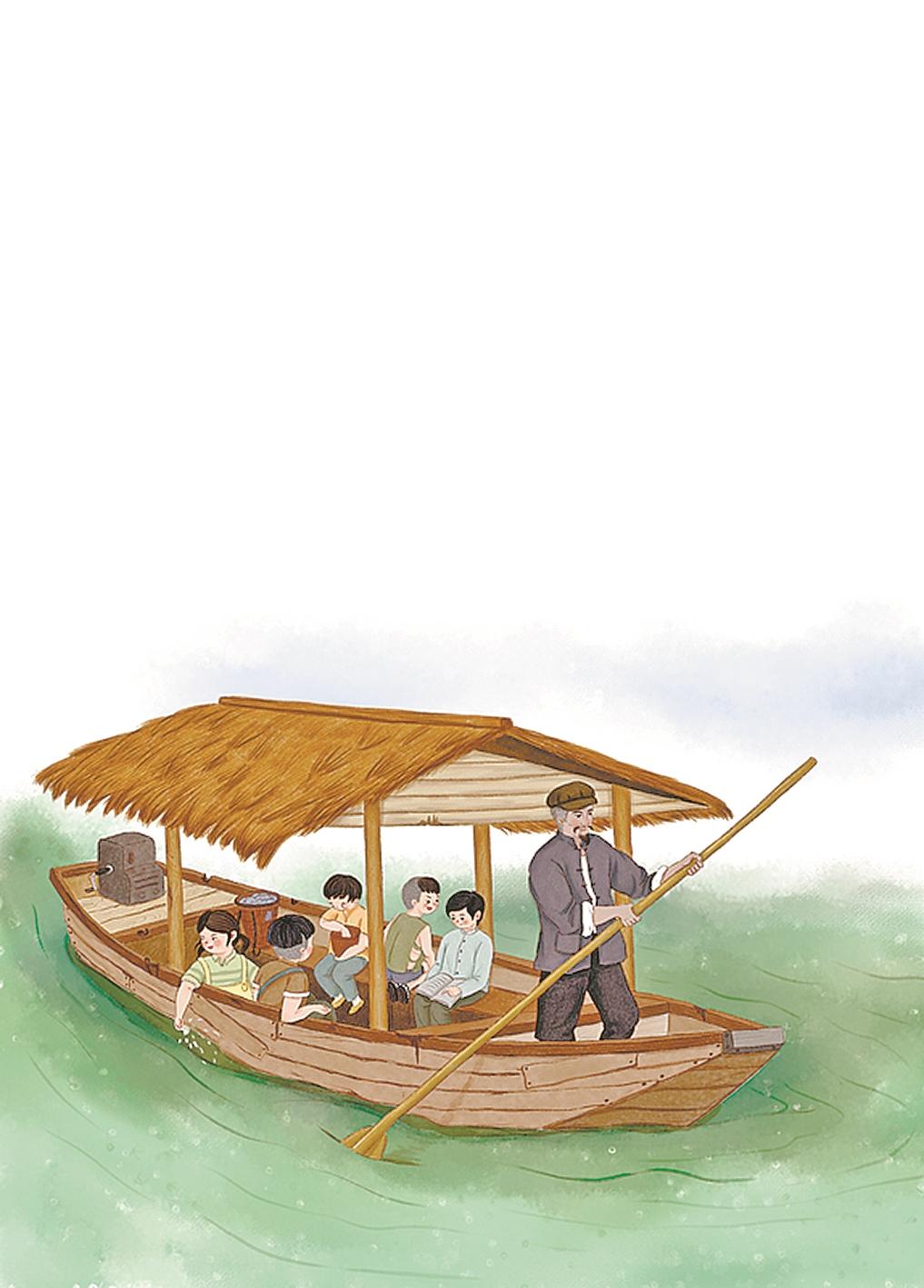
“When you ride on someone’s boat, you want that boat to run well” means just what it says. If you are aboard another person’s boat, you naturally hope the voyage is smooth and the boat moves quickly. When the boat runs well, everyone aboard benefits. It is the same idea as sharing a vessel and weathering the crossing together. If the boat capsizes, those sitting in it will fall into the water too; what follows needs no explanation.
I believe this. Wherever we work, only when the company earns a profit can those who depend on it share in the benefits of its growth.